

Introduction
Rapid breathing in dogs means your dog is breathing faster than normal, even when resting. Dogs usually breathe quietly and steadily. But when the breaths become quick, shallow, or heavy, it can be a sign that something is not right. Sometimes it is normal, such as after exercise or in hot weather. Other times, it may point to a health problem.
It can be worrying to see your dog breathing fast for no clear reason. You may wonder if your pet is in pain or danger. Many dog owners feel confused about when to stay calm and when to act quickly. Knowing the difference can help you protect your dog’s health and avoid serious problems.
In this guide, you will learn the common causes of rapid breathing in dogs, the key symptoms to watch for, and when you should contact a vet. You will also understand what is normal and what is not, so you can make better decisions for your pet.
What Is Rapid Breathing in Dogs?

Rapid breathing in dogs means your dog is taking more breaths than normal in a short time. It may look like fast chest movements or quick, shallow breaths. This can happen when a dog is resting or sleeping, which makes it easier to notice. Normal breathing is calm and steady, so any sudden increase can feel unusual.
Sometimes rapid breathing is normal. It can happen after exercise, during hot weather, or when a dog is excited. But if it happens without a clear reason, it may be a sign of a problem. It could be linked to pain, stress, or health issues like heart or lung conditions. That is why it is important to watch your dog closely and notice any changes.
What Is a Normal Breathing Rate for Dogs?
A normal breathing rate for dogs is usually calm and steady. Most healthy dogs take about 15 to 30 breaths per minute when they are resting. You can check this by watching your dog’s chest rise and fall. If the breathing is smooth and quiet, it is generally normal.
The rate can change depending on activity and condition. After running, playing, or feeling excited, dogs may breathe faster for a short time. Warm weather can also increase breathing slightly. But if your dog is resting and still breathing very fast, it may not be normal and should be checked more carefully.
How to Tell If Your Dog Is Breathing Too Fast
You can check your dog’s breathing by looking at how fast the chest moves. A normal breath is one rise and one fall. Count the breaths for half a minute, then double it. If your dog is calm or sleeping and still breathing very quickly, that is not normal. Healthy breathing should be slow, steady, and quiet.
There are also some warning signs you should not ignore. These signs can show that your dog may be having trouble:
- Very fast breathing while resting
- Shallow or uneven breaths
- Mouth open without exercise or heat
- Strange sounds like wheezing or heavy panting
- Low energy or acting different than usual
Common Causes of Rapid Breathing in Dogs

Rapid breathing in dogs can happen for simple, everyday reasons. Dogs often breathe faster after running, playing, or being in a warm place. Excitement or fear can also speed up their breathing for a short time. In these situations, the breathing should slow down once your dog rests and cools off.
Sometimes, fast breathing is a sign of a health issue. It may happen when a dog is in pain or not feeling well. Problems with the heart or lungs can also make breathing quicker than normal. Here are some common causes to be aware of:
- Overheating or too much heat
- Stress, fear, or anxiety
- Pain from injury or illness
- Heart-related problems
- Lung infections or breathing issues
- Something blocking the airway
Exercise, Heat, and Normal Panting
Dogs often breathe faster during exercise. This is normal and helps them cool down. When a dog runs, plays, or walks for a long time, the body needs more oxygen. So the breathing becomes quick and heavy for a short time. After rest, it should slowly return to normal.
Heat is another common reason for fast breathing. Dogs do not sweat like humans, so they use panting to cool their body. This is called normal panting. It usually happens in hot weather or after physical activity. Once the dog cools down, the breathing becomes calm again.
Normal vs Exercise vs Heat Breathing in Dogs
| Situation | Breathing Pattern | Behavior of Dog | Is it Normal? | What You Should Do |
| Light Exercise | Faster, but steady | Active, playful | Yes | Let dog rest after activity |
| Heavy Exercise | Very fast, deep panting | Tired, tongue out | Yes (temporary) | Provide water and rest |
| Hot Weather | Fast panting, open mouth | Seeking shade, slow movement | Yes (if mild) | Move to cool place |
| Overheating | Very fast, constant panting | Weak, restless | No (dangerous) | Cool down + vet help |
| Excitement | Short burst of fast breathing | Alert, energetic | Yes | Wait for calm down |
Stress, Anxiety, and Pain
Stress and anxiety can make a dog breathe faster than normal. Dogs may feel stressed in new places, loud environments, or when left alone. When this happens, their body reacts by increasing breathing and heart rate. The breathing usually becomes shallow and quick, but it should calm down once the dog feels safe again.
Pain is another important cause of rapid breathing. If a dog is hurt or uncomfortable, it may start breathing fast even while resting. This is the body’s way of reacting to discomfort. Unlike normal panting, pain-related breathing does not improve quickly and may continue until the problem is treated.
| Cause | Breathing Pattern | Common Triggers | Other Signs | Is it Serious? | What You Should Do |
| Stress | Fast, light breathing | Vet visits, travel, loud noise | Restlessness, pacing | Usually mild | Calm environment |
| Anxiety | Fast, shallow panting | Separation, fear, new people | Shaking, hiding, whining | Moderate | Comfort and reassurance |
| Pain | Continuous rapid breathing | Injury, illness, internal pain | Limping, crying, low energy | Often serious | Vet check needed |
| Emotional fear | Sudden fast breathing | Thunderstorms, fireworks | Hiding, trembling | Mild to moderate | Keep dog safe and calm |
| Chronic stress | Ongoing fast breathing | Poor environment, neglect | Behavior changes | Can become serious | Improve care + vet advice |
Signs and Symptoms to Watch For
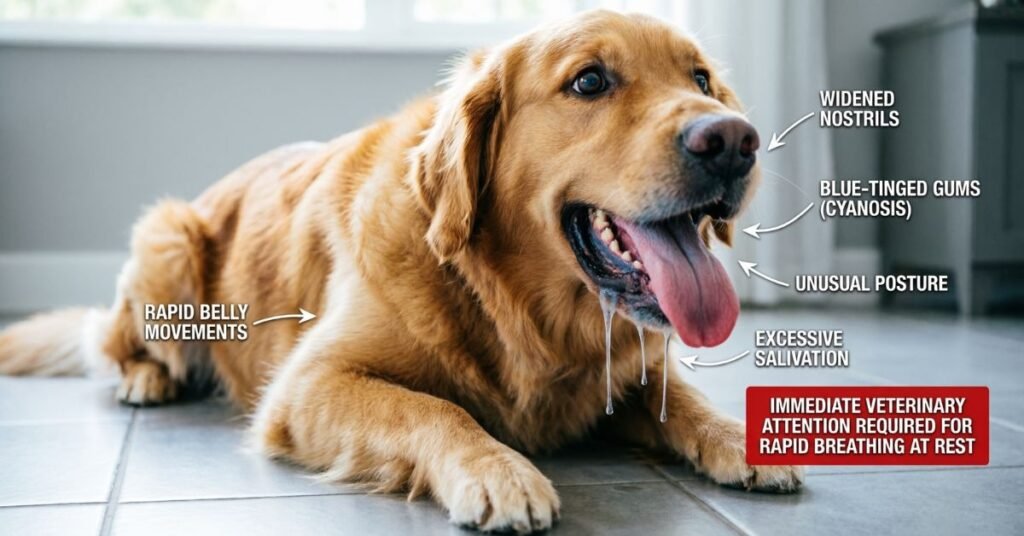
When a dog has rapid breathing, you should carefully watch for other signs. Breathing changes alone may not tell the full story. Look at your dog’s behavior, energy level, and overall condition. These details help you understand if the situation is mild or serious.
Some common warning signs often appear with abnormal breathing. These include:
- Breathing that stays fast even at rest
- Open-mouth breathing without heat or exercise
- Unusual sounds like wheezing or gasping
- Low energy or weakness
- Loss of appetite or hiding behavior
- Gums that look pale or bluish
Lethargy, Coughing, or Blue Gums
Lethargy means your dog has low energy and seems very tired. If your dog is breathing fast along with weakness, it can be a warning sign. Coughing may also appear when there is a problem in the lungs or airways. These signs together often show that your dog is not feeling well and may need medical attention.
Blue or pale gums are more serious. This can mean your dog is not getting enough oxygen. It is not normal and should never be ignored. If you notice this with rapid breathing, it is important to act quickly.
| Symptom | What It Looks Like | Possible Meaning | Level of Concern | What You Should Do |
| Lethargy | Very tired, slow movement | Illness, pain, infection | Moderate to High | Monitor closely |
| Coughing | Repeated or dry cough | Lung or airway issue | Moderate to High | Vet check recommended |
| Blue gums | Gums look blue or gray | Low oxygen in body | Emergency | Seek vet immediately |
| Pale gums | Light pink or white gums | Poor circulation or shock | High | Urgent vet visit |
| Weakness | Trouble standing or walking | Serious internal problem | High | Immediate care needed |
When to Worry About Rapid Breathing in Dogs
Rapid breathing in dogs is not always dangerous. It can happen after play, exercise, or excitement. But you should start to worry if the breathing stays fast even when your dog is resting. If there is no clear reason like heat or activity, it may be a sign of a health problem.
You should take it seriously if other symptoms appear with fast breathing. This includes weakness, coughing, restlessness, or trouble standing. Also, if your dog’s gums look pale or blue, it can mean low oxygen. In these cases, it is best to contact a vet as soon as possible.
Emergency Warning Signs
Some signs of rapid breathing in dogs can mean a serious emergency. These signs should never be ignored. If they appear, your dog may need immediate veterinary care. Fast breathing along with sudden changes in behavior is often a strong warning that something is wrong.
Watch closely for these emergency signs:
- Breathing that is very fast and does not slow down
- Gums turning blue, gray, or very pale
- Collapsing or sudden weakness
- Severe coughing or choking sounds
- Extreme restlessness or panic
- Trouble standing or walking
When to Call or Visit a Vet
You should call or visit a vet if your dog’s rapid breathing does not improve. If your dog is resting but still breathing fast, it is not normal. It can mean there is an underlying health problem. Waiting too long may make the condition worse.
You should also go to a vet if other symptoms appear with fast breathing. This includes coughing, weakness, loss of appetite, or unusual behavior. If you are unsure, it is always safer to get a professional opinion. A vet can check your dog and find the real cause.
Diagnosis and Treatment of Rapid Breathing in Dogs
When a dog has rapid breathing, a vet first tries to find the cause. The vet will check your dog’s body, breathing rate, and overall condition. They may ask questions about recent activity, diet, or behavior changes. To get a clear answer, tests are often required. These can include blood tests, X-rays, or heart and lung checks.
Treatment depends on the real cause of the problem. Some dogs only need rest and cooling if the issue is mild. Other cases may need medication or emergency care. The goal is to help the dog breathe normally again and treat the main health issue.
Diagnosis and Treatment Overview
| Step / Condition | What Vets Do | Possible Treatment | Outcome Goal |
| Physical Exam | Check breathing, heart, gums | Basic care or monitoring | Identify visible signs |
| Blood Tests | Check infection or organ issues | Medication if needed | Find hidden problems |
| X-rays / Imaging | Look at lungs and heart | Targeted treatment | Detect internal issues |
| Mild overheating | Check temperature and hydration | Cooling and fluids | Restore normal breathing |
| Infection cases | Identify bacteria or virus | Antibiotics or medicine | Remove infection |
| Heart or lung disease | Deep diagnosis required | Long-term treatment plan | Improve breathing function |
How Veterinarians Diagnose the Problem
Veterinarians start by carefully examining your dog. They check breathing rate, heart rate, and body temperature. They also look at the gums, chest movement, and overall behavior. The vet may ask questions about when the fast breathing started and if anything unusual happened before it.
After the basic check, the vet may recommend tests to find the exact cause. These tests help rule out serious problems and confirm a diagnosis. Common tests include blood work, X-rays, and sometimes heart or lung scans. This step helps the vet understand what is affecting your dog’s breathing.
How to Prevent Rapid Breathing in Dogs
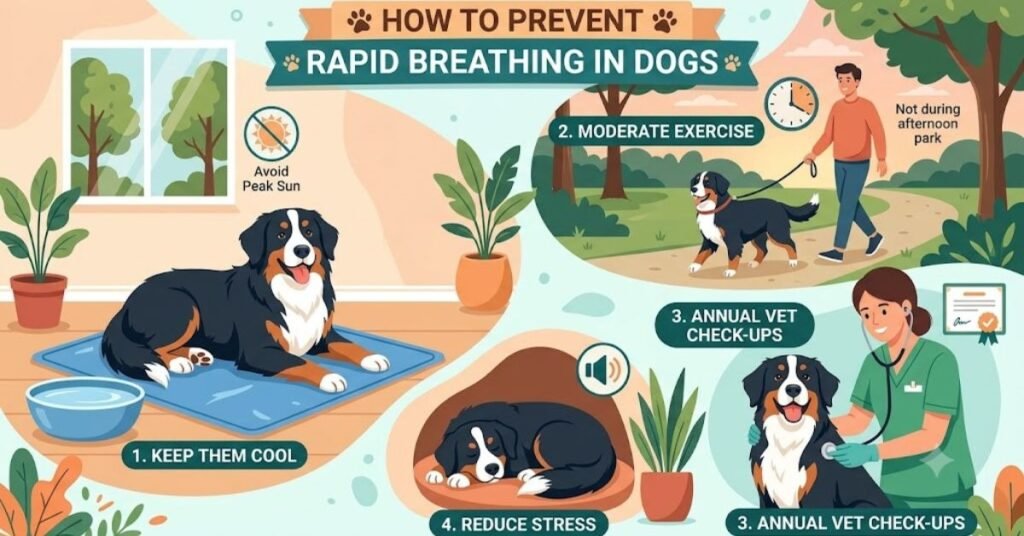
You can reduce the risk of rapid breathing in dogs by taking good daily care. Keep your dog in a cool and comfortable environment, especially during hot weather. Avoid over-exercising your dog in high temperatures. Regular health checkups also help find problems early before they become serious.
Healthy habits make a big difference in your dog’s breathing and overall health. Try to maintain a balanced routine that includes rest, food, and light exercise. This helps your dog stay calm and strong.
- Keep fresh water available all the time
- Avoid walks during peak heat hours
- Provide shade and cool resting areas
- Do not over-exercise your dog
- Keep your dog at a healthy weight
- Schedule regular vet visits
Keeping Your Dog Cool and Healthy
Keeping your dog cool is very important for healthy breathing. Dogs can overheat easily, especially in hot weather. Always provide shade and fresh water. Try to keep your dog indoors or in a cool place during the hottest part of the day. This helps prevent fast breathing caused by heat.
A healthy routine also supports better breathing. Give your dog regular but not heavy exercise. Avoid overexertion, especially in warm weather. A balanced diet and proper rest also keep your dog strong and active. By staying cool and healthy, the chances of breathing problems are much lower.
Conclusion
Rapid breathing in dogs can be normal in some situations. It often happens after exercise, excitement, or hot weather. In these cases, the breathing usually returns to normal after rest. Still, it is important to observe your dog.
Sometimes, fast breathing can point to a health problem. Issues like pain, stress, heart disease, or lung problems can cause it. That is why you should not ignore it if it happens without a clear reason. Early attention can make a big difference.
Always watch for other warning signs. These include coughing, weakness, blue gums, or unusual behavior. If more than one symptom appears, the situation may be serious. In such cases, quick action is important.
Taking care of your dog’s health, keeping them cool, and visiting the vet when needed can help prevent problems. With proper care and attention, your dog can stay safe, healthy, and comfortable.
FAQs
1. What is rapid breathing in dogs?
Rapid breathing in dogs means your dog is breathing faster than normal. It may happen during rest or sleep without a clear reason. Sometimes it is normal, but it can also signal a health problem. Watching the situation carefully helps you understand the cause.
2. Is rapid breathing in dogs always dangerous?
No, it is not always dangerous. Dogs can breathe fast after exercise, excitement, or heat. This is usually normal and temporary. But if it continues at rest, it may need veterinary attention.
3. When should I worry about my dog’s fast breathing?
You should worry if fast breathing happens while your dog is resting. It is more serious if it comes with coughing, weakness, or blue gums. These signs can point to a medical issue. In such cases, a vet visit is important.
4. Can stress cause rapid breathing in dogs?
Yes, stress and anxiety can cause fast breathing. Loud noises, travel, or being alone can trigger it. The breathing usually slows down when the dog feels calm again. If it continues, it should be checked.
5. How can I help my dog with rapid breathing?
Keep your dog in a cool, quiet place and let them rest. Offer fresh water and avoid any stress or heavy activity. Monitor their condition closely. If breathing does not improve, contact a vet quickly.

DogsVibes Editorial Team creates trusted, research-based dog care content to help pet owners keep their dogs healthy, happy, and safe.