

Introduction
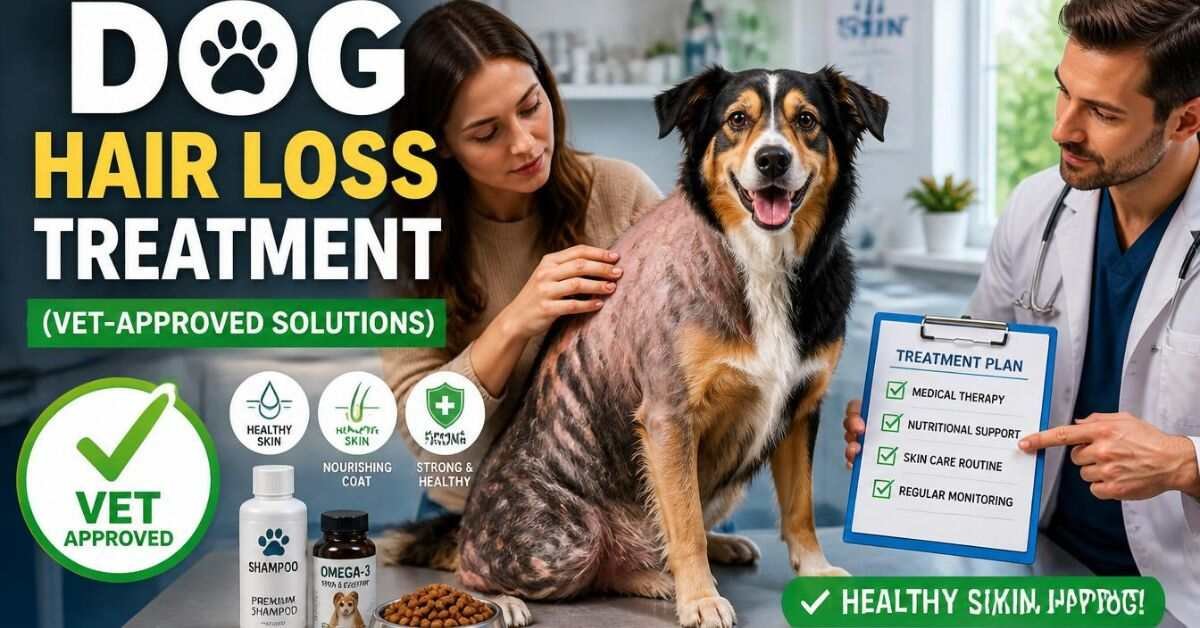
Dog hair loss, also called alopecia, is a common problem in many dogs. It happens when a dog starts losing fur in patches or all over the body. Sometimes it is normal, like seasonal shedding. But in other cases, it can be a sign of a health issue that needs attention.
If you notice bald spots, itching, or too much shedding, it can be worrying. Many dog owners feel confused about what is causing it and how to fix it. The good news is that there are simple ways to understand the problem and take the right steps before it gets worse.
In this guide, you will learn about the main causes of dog hair loss and the best dog hair loss treatment options. We will also cover easy home remedies, vet treatments, and tips to keep your dog’s coat healthy and strong.
What Is Dog Hair Loss (Alopecia)?
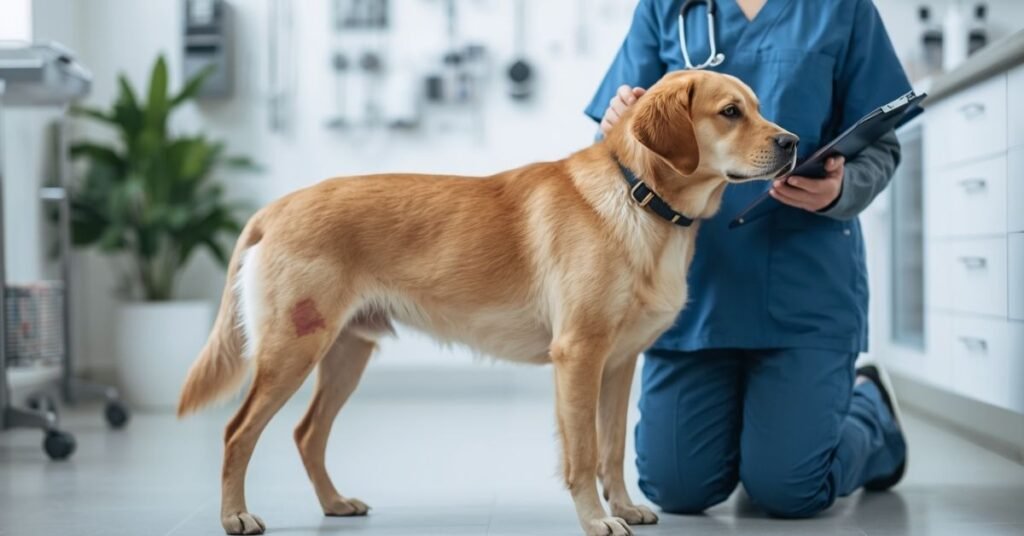
Dog hair loss, also called alopecia, means your dog is losing fur in certain areas or across the whole body. It can show up as thin hair, bald spots, or uneven patches. Some hair loss is normal, especially during seasonal shedding. But when it looks unusual or excessive, it may be a sign of a problem.
Alopecia is not a disease on its own. It is usually a symptom of something else, like allergies, infections, parasites, or poor nutrition. In some cases, stress or hormonal changes can also cause hair loss. Understanding the reason behind it is important for choosing the right treatment and helping your dog grow healthy fur again.
When Should You Worry About Dog Hair Loss?
You should start to worry when your dog’s hair loss looks unusual or happens too quickly. Small shedding is normal, but bald patches, red skin, or constant itching are not. If your dog keeps scratching, licking, or biting the same area, it may be a sign of a skin problem or infection.
Hair loss with other symptoms needs attention. Watch for signs such as wounds, bad odor, swelling, or changes in behavior. If your dog seems uncomfortable or the hair is not growing back, it is better to act early. Getting help at the right time can prevent the problem from getting worse.
Common Causes of Dog Hair Loss
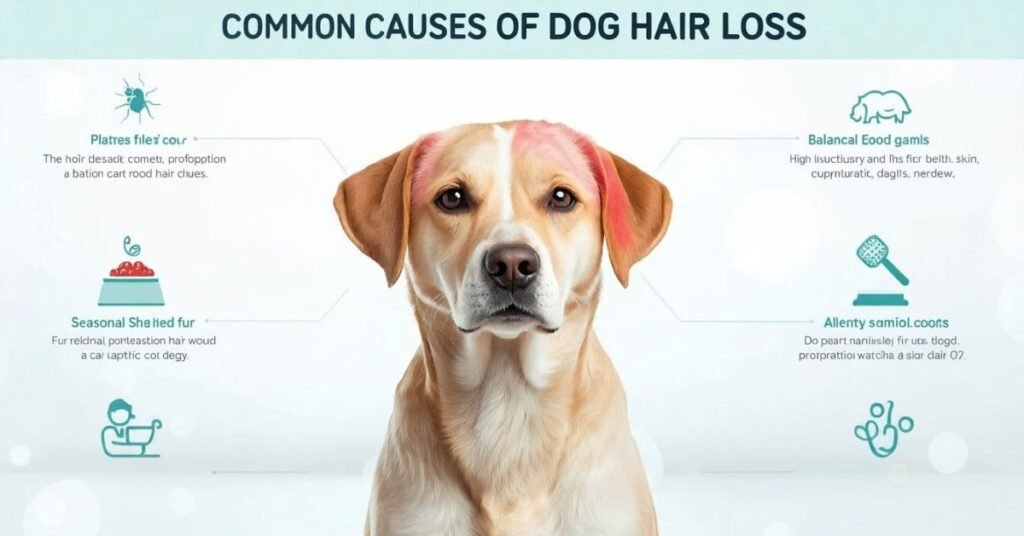
Dog hair loss can happen for many different reasons. Sometimes it is simple, like seasonal shedding. Other times, it can be linked to health problems. Finding the real cause is important so you can choose the right treatment and help your dog feel better.
Some common causes of dog hair loss include:
- Allergies (food, dust, or fleas)
- Parasites like fleas, ticks, or mites
- Skin infections (bacterial or fungal)
- Poor diet or lack of important vitamins
- Hormonal problems like thyroid issues
- Stress or anxiety
- Frequent licking or scratching
Allergies, Fleas, and Skin Infections
Allergies, fleas, and skin infections are some of the most common reasons for dog hair loss. Dogs can be allergic to food, pollen, dust, or flea bites. These allergies cause itching, redness, and constant scratching. Over time, this can lead to hair loss and skin damage.
Fleas and infections make the problem worse. Flea bites can cause severe itching, while bacterial or fungal infections can spread quickly on the skin. If not treated on time, they can create bald patches and discomfort. Early care and proper treatment can help stop hair loss and keep your dog’s skin healthy.
| Cause | Common Symptoms | Main Reason | Treatment Options |
| Allergies | Itching, redness, licking paws | Reaction to food, dust, pollen, or fleas | Change diet, antihistamines, medicated shampoos |
| Fleas | Scratching, tiny black spots, skin irritation | Flea infestation on the skin | Flea control products, medicated baths |
| Bacterial Infection | Red skin, sores, bad smell | Bacteria entering damaged skin | Antibiotics, topical creams |
| Fungal Infection (Ringworm) | Circular bald patches, flaky skin | Fungal growth on skin | Antifungal creams, medicated shampoos |
| Mites (Mange) | Hair loss, scabs, intense itching | Tiny parasites under the skin | Special medicated treatments, vet care |
Hormonal Imbalances and Nutritional Deficiencies
Hormonal imbalances can cause slow and steady hair loss in dogs. These problems often do not cause much itching, but the coat becomes thin and dull. Common issues include thyroid problems and other hormone disorders. Dogs may also gain weight, feel tired, or have dry skin along with hair loss.
Nutritional deficiencies are another major cause. If a dog is not getting enough vitamins, minerals, or protein, the coat can become weak. Poor diet can lead to hair fall, slow regrowth, and unhealthy skin. Feeding a balanced diet and adding the right supplements can improve your dog’s coat over time.
| Issue | Common Symptoms | Main Cause | Treatment Options |
| Hypothyroidism | Hair thinning, weight gain, low energy | Low thyroid hormone levels | Thyroid medication, regular vet checkups |
| Cushing’s Disease | Hair loss on the body, tthe the thin skin, increased thirst | High cortisol levels | Medication, long-term management |
| Protein Deficiency | Weak coat, hair fall, slow growth | Low protein intake in the diet | High-quality protein diet |
| Vitamin Deficiency | Dry skin, dull coat, shedding | Lack of essential vitamins (A, E, B) | Vitamin supplements, a balanced diet |
| Omega-3 Deficiency | Dry, itchy skin, hair loss | Lack of healthy fats | Fish oil supplements, improved diet |
| Zinc Deficiency | Crusty skin, hair loss around the face | The zinc levels | Zinc supplements, proper nutrition |
Stress, Anxiety, and Seasonal Shedding
Stress and anxiety can also cause hair loss in dogs. When a dog feels nervous or bored, it may lick, chew, or scratch the same area again and again. This behavior can damage the skin and lead to bald spots. Changes in routine, loud noises, or lack of attention can increase stress levels.
Seasonal shedding is normal and happens when the weather changes. Dogs lose old hair to make room for new growth. This type of hair loss is usually even and not linked with redness or wounds. Good grooming and a healthy routine can help manage shedding and keep the coat in good condition.
| Cause | Common Symptoms | Main Reason | Treatment Options |
| Stress | Excessive licking, chewing, and hair loss in one area | Changes in environment, loneliness | More playtime, attention, calming, and routines |
| Anxiety | Scratching, restlessness, patchy hair loss | Fear, loud noises, separation anxiety | Training, calming aids, vet advice |
| Boredom | Repetitive licking, dull coat | Lack of activity or stimulation | Exercise, toys, mental stimulation |
| Seasonal Shedding | Even hair fall, no skin irritation | Natural coat changes with seasons | Regular brushing, proper diet |
| Environmental Changes | Mild shedding, slight stress signs | Weather or routine changes | Maintain routine, proper grooming |
Symptoms and Signs of Hair Loss in Dogs
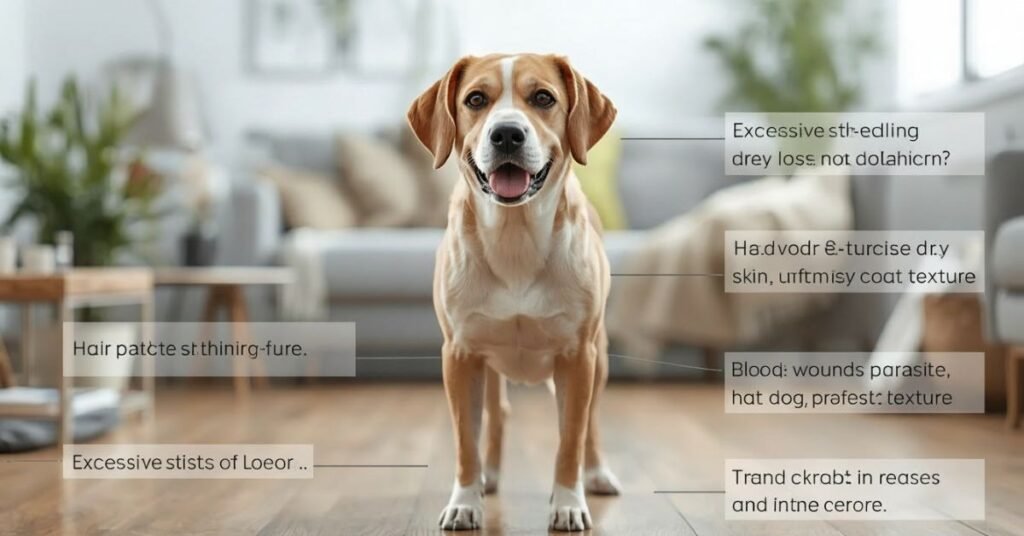
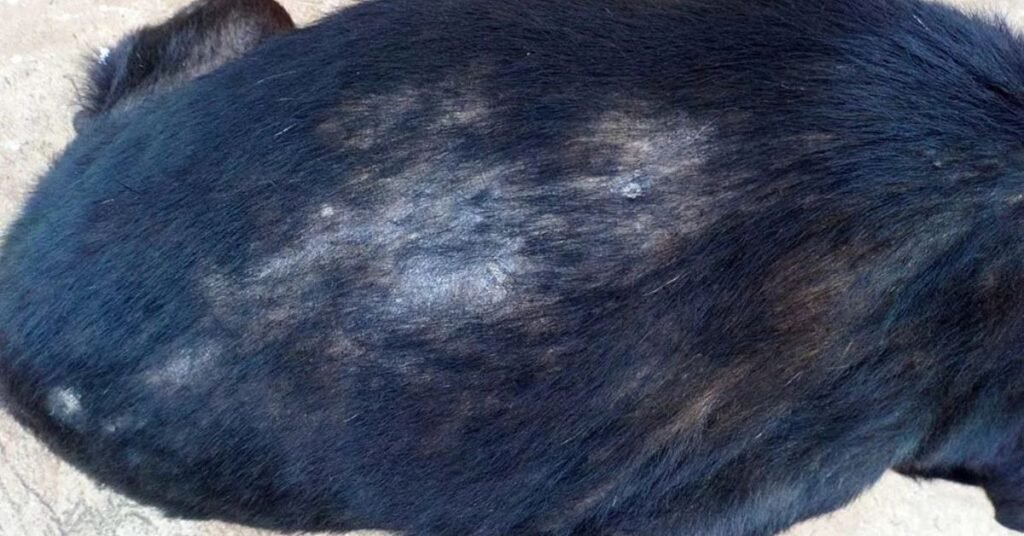
Hair loss in dogs can look different in each case. Some dogs lose hair in small patches, while others may have thinning fur all over the body. You may also notice changes in the skin, like redness or dryness. Paying attention to these signs early can help you find the cause and start treatment on time.
Here are some common symptoms and signs to watch for:
- Bald patches or uneven hair loss
- Excessive shedding or a thinning coat
- Red, irritated, or inflamed skin
- Constant scratching, licking, or biting
- Dry, flaky, or scaly skin
- Sores, scabs, or bad smea ll
- Slow or no hair regrowth
How Vets Diagnose Dog Hair Loss
Vets use different methods to find the real cause of dog hair loss. They start by checking your dog’s skin, coat, and overall health. They may also ask questions about diet, behavior, and when the hair loss started. This helps them understand what might be causing the problem.
To confirm the cause, vets may use some simple tests, such as:
- Skin scraping to check for mites or parasites
- Blood tests to find hormonal or health issues
- Allergy testing for food or environmental triggers
- Fungal tests to detect infections like ringworm
- Biopsy in rare cases for serious skin conditions
Skin Tests, Blood Tests, and Biopsy
Vets use different tests to find the exact cause of hair loss in dogs. Skin tests are usually the first step. They help check for parasites, infections, or other skin problems. Blood tests are also common and can show hormonal issues or hidden diseases that affect the coat.
In some cases, a biopsy may be needed. This means taking a small sample of skin to study it closely. It is usually done when the cause is not clear or when serious conditions are suspected. These tests help vets choose the best treatment and improve your dog’s recovery.
| Test Type | Purpose | What It Detects | How It Is Done | When It Is Needed |
| Skin Scraping | Check skin surface | Mites, parasites | A small sample was scraped and examined | When itching or mange is suspected |
| Fungal Test | Identify infections | Ringworm and other fungi | Hair or skin sample tested in a lab | When bald patches or flaky skin appear |
| Allergy Test | Find allergens | Food or environmental allergies | Blood or skin testing | When constant itching or reactions occur |
| Blood Test | Check overall health | Hormonal issues, diseases | Blood sample taken and analyzed | When hair loss is linked with other symptoms |
| Biopsy | Detailed skin analysis | Serious skin conditions, tumors | A small skin sample was examined under a microscope | When other tests do not give clear results |
Best Dog Hair Loss Treatment Options
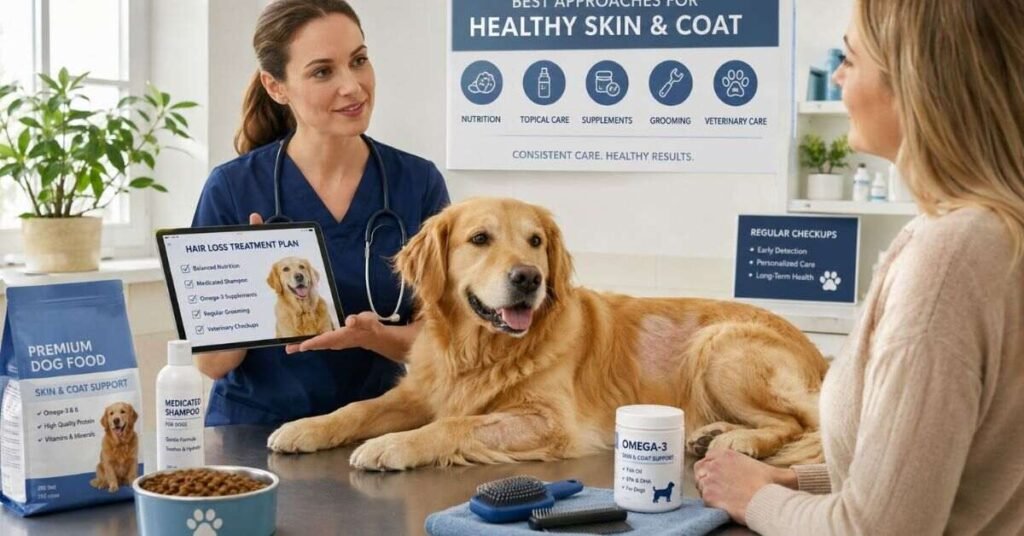
The best dog hair loss treatment depends on the main cause of the problem. Some dogs need medical care, while others improve with simple changes at home. It is important to treat the root cause instead of just the symptoms. This helps stop hair loss and supports healthy hair growth.
Here are some common dog hair loss treatment options:
- Medications for infections, allergies, or hormonal issues
- Medicated shampoos to soothe skin and reduce irritation
- Flea and tick treatments to remove parasites
- A balanced diet with proper nutrients and vitamins
- Supplements like omega-3 for healthy skin and coat
- Regular grooming to keep the coat clean and strong
Topical Treatments and Medicated Shampoos
Topical treatments and medicated shampoos are helpful for many skin and hair problems in dogs. They work directly on the affected area and help reduce itching, redness, and infections. These treatments are easy to use and often give quick relief when used properly.
Medicated shampoos can clean the skin and remove harmful bacteria, fungi, or allergens. Topical creams and sprays also support healing and improve skin health. Using the right product for your dog’s condition can help control hair loss and promote healthy fur growth.
| Treatment Type | Purpose | Best For | How It Helps | Usage Tips |
| Medicated Shampoo | Clean and treat skin | Infections, allergies, dandruff | Removes bacteria, soothes irritation | Use 2–3 times a week or as advised |
| Antifungal Shampoo | Fight fungal infections | Ringworm, yeast infections | Kills fungus and reduces spread | Leave on skin for a few minutes before rinsing |
| Antibacterial Cream | Treat skin infections | Cuts, sores, bacterial issues | Helps heal wounds and prevent infection | Apply to the affected area only |
| Anti-itch Spray | Reduce itching | Allergies, dry skin | Soothes skin and stops scratching | Use as needed, avoid overuse |
| Moisturizing Lotion | Hydrate skin | Dry, flaky skin | Restores moisture and improves coat | Apply after bathing |
| Flea Treatment (Topical) | Remove parasites | Fleas and ticks | Kills parasites and prevents re-infestation | Use monthly or as directed |
Dog Hair Loss Treatment at Home
You can treat mild dog hair loss at home with simple care and routine changes. Start by keeping your dog clean and well-groomed. Regular brushing helps remove loose hair and improves blood flow to the skin. A clean coat can reduce irritation and support healthy hair growth.
A healthy diet also plays a big role in recovery. Give your dog balanced food with enough protein, vitamins, and healthy fats. You can also add safe supplements like omega-3 to improve skin health. Make sure your dog feels relaxed and stress-free, as calm behavior can help reduce hair loss over time.
Natural Remedies for Dog Hair Loss
Natural remedies can help reduce dog hair loss in mild cases. They are gentle on the skin and easy to use at home. These remedies can soothe irritation, improve skin health, and support hair regrowth. However, they work best when the problem is not severe.
You can try these simple natural remedies:
- Coconut oil to moisturize skin and reduce dryness
- Oatmeal baths to calm itching and irritation
- Aloe vera to soothe inflamed skin
- Fish oil for healthy skin and a stronger coat
- Apple cider vinegar (diluted) to help with mild infections
- Regular grooming to remove dead hair and dirt
Diet, Supplements, and Grooming Tips
A healthy diet is very important for your dog’s skin and coat. Dogs need good-quality protein, vitamins, and healthy fats to keep their fur strong. If the diet is poor, hair can become weak and start falling out. Adding the right supplements can also support better skin health and faster hair growth.
Grooming is just as important as diet. Regular brushing removes loose hair and keeps the coat clean. It also improves blood flow and helps natural oils spread on the skin. A good routine of feeding, supplements, and grooming can reduce hair loss and keep your dog looking healthy.
| Category | Item | Benefits | Best For | Usage Tips |
| Diet | High-Protein Food | Supports hair growth and strength | Weak or thinning coat | Choose quality dog food with real meat |
| Diet | Omega-3 Fatty Acids | Improves skin health, reduces dryness | Dry, itchy skin | Add fish oil or omega supplements |
| Diet | Vitamins (A, E, B) | Boosts coat shine and repair | Dull coat, hair fall | Use vet-approved supplements |
| Supplements | Fish Oil | Reduces inflammation, improves coat | Skin irritation, shedding | Add small doses in meals |
| Supplements | Zinc | Helps skin healing and hair growth | Skin issues, hair thinning | Give only the recommended amount |
| Grooming | Regular Brushing | Removes loose hair, improves circulation | All dogs | Brush 2–3 times a week |
| Grooming | Gentle Shampoo | Keeps skin clean and healthy | Sensitive skin | Avoid harsh chemicals |
| Grooming | Bath Routine | Removes dirt and allergens | Outdoor dogs | Bathe every few weeks |
How to Prevent Hair Loss in Dogs
Preventing hair loss in dogs starts with good daily care. Keep your dog clean and follow a regular grooming routine. Brush the coat often to remove loose hair and dirt. Use gentle shampoos and avoid harsh products that can irritate the skin.
A healthy lifestyle also helps prevent hair loss. Feed your dog a balanced diet with the right nutrients. Protect your dog from fleas, ticks, and infections. Make sure your dog gets enough exercise and stays stress-free. Simple care and early attention can keep your dog’s coat healthy and strong.
When to See a Veterinarian for Dog Hair Loss
You should see a veterinarian if your dog’s hair loss looks serious or does not improve. Bald patches, red skin, or constant itching are warning signs. If your dog keeps scratching, licking, or seems uncomfortable, it may be more than a simple problem.
You should also get help if you notice wounds, swelling, a bad smell, or no hair regrowth. Hair loss with other symptoms like weight changes or low energy can point to health issues. Early treatment from a vet can prevent the problem from getting worse and help your dog recover faster.
Can Dog Hair Grow Back After Hair Loss?
Yes, dog hair can grow back after hair loss in many cases. It depends on the cause and how early the problem is treated. If the issue is mild, like seasonal shedding or minor skin irritation, hair usually grows back on its own. With proper care and treatment, most dogs can regain a healthy coat.
However, in some cases, hair may take longer to grow back. If the cause is hormonal, genetic, or severe skin damage, regrowth can be slow or uneven. Giving the right treatment, good nutrition, and proper grooming can improve the chances of healthy hair coming back.
Conclusion
Dog hair loss is a common problem that many pet owners face. It can happen for many reasons, including allergies, parasites, poor diet, stress, or underlying health conditions. While some cases are mild, others require prompt attention. Recognizing the signs early and starting the right Dog Hair Loss Treatment can help prevent further hair loss and support faster recovery.
The most effective Dog Hair Loss Treatment depends on identifying the root cause. A veterinary examination is often the first step toward an accurate diagnosis and personalized care plan. Treatment may include medications, medicated shampoos, dietary changes, supplements, or lifestyle adjustments. Combining professional veterinary advice with proper home care often produces the best results.
Preventing future hair loss is just as important as treating it. Regular grooming, a balanced diet, stress reduction, and routine health checkups can help maintain healthy skin and a strong coat. Supplements such as omega-3 fatty acids may also support coat health. With patience and consistency, the right Dog Hair Loss Treatment can help your dog regain a healthy, shiny coat and enjoy a happier, more comfortable life.
FAQs
1. Why is my dog losing hair suddenly?
Sudden hair loss in dogs can be caused by allergies, parasites like fleas or mites, infections, or hormonal problems. Stress and changes in diet can also trigger shedding. Observing other symptoms and consulting a vet can help identify the exact cause.
2. Can home remedies stop my dog’s hair loss?
Home remedies can help with mild hair loss, such as dry skin or minor irritation. Natural treatments like coconut oil, oatmeal baths, and proper grooming can soothe the skin and support hair growth. Severe or persistent hair loss should always be checked by a vet.
3. How long does it take for a dog’s hair to grow back?
Hair regrowth depends on the cause and severity of hair loss. For minor shedding or skin irritation, hair may return in a few weeks. If caused by hormonal or genetic issues, regrowth may take several months and may require medical treatment.
4. Are certain dog breeds more prone to hair loss?
Yes, some breeds are more prone to hair loss due to genetics or coat type. Breeds like Dalmatians, Dachshunds, and Chinese Shar-Peis may experience patchy hair loss or skin sensitivity. Regular grooming and proper nutrition can help reduce risks.
5. How can I prevent my dog from losing hair?
Prevention includes a balanced diet, regular grooming, flea and tick control, and stress management. Ensuring your dog has proper vitamins and supplements for skin health also helps. Early attention to itching or bald spots can stop hair loss from becoming severe.

DogsVibes Editorial Team creates trusted, research-based dog care content to help pet owners keep their dogs healthy, happy, and safe.