

Introduction
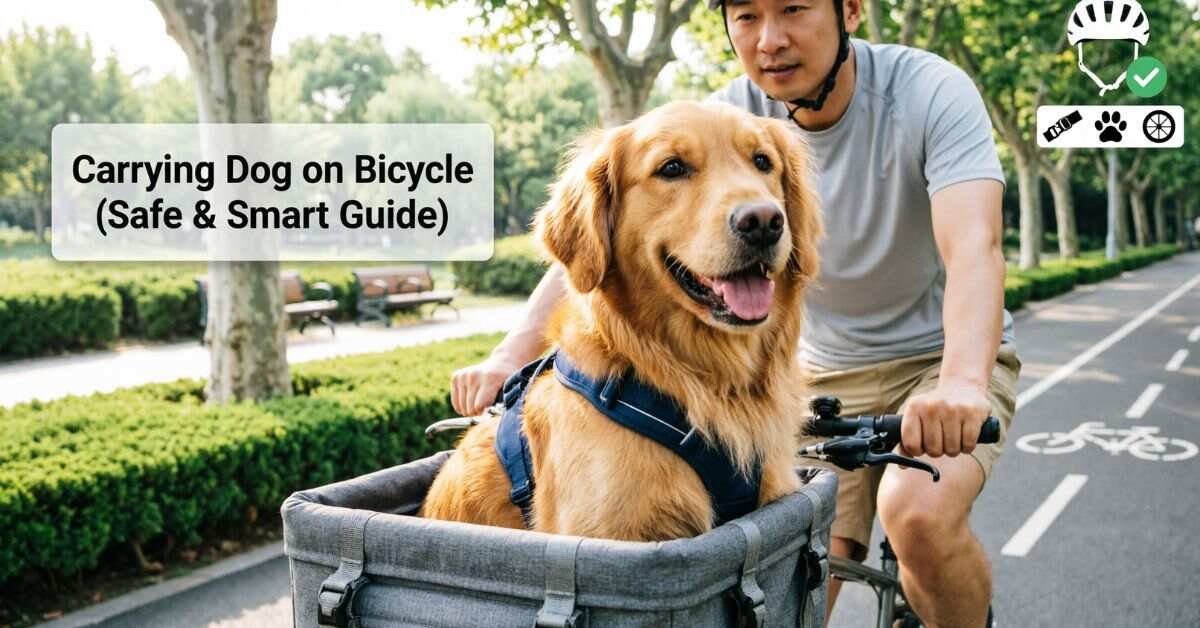
Carrying a dog on a bicycle means taking your pet along safely while you ride. People use special baskets, carriers, or trailers made for dogs. These tools keep your dog secure and comfortable during the ride. It is a fun way to travel together and enjoy the outdoors.
But here is the problem. Not all dogs feel safe on a moving bike. Some may get scared, jump, or lose balance. A small mistake can lead to serious injury for both you and your dog. That is why learning the right way is so important before you start.
In this guide, you will learn how to carry your dog safely on a bicycle. We will cover the best gear, simple safety tips, and common mistakes to avoid. By the end, you will feel more confident and ready to enjoy smooth and safe rides with your dog.
Is Carrying a Dog on a Bicycle Safe
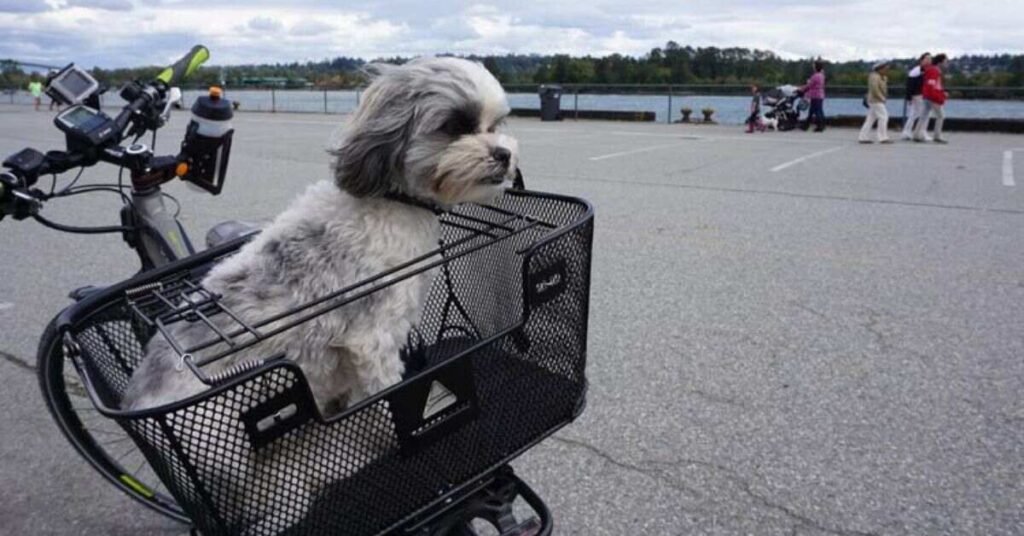
Carrying a dog on a bicycle can be safe if you do it the right way. It depends on your dog’s size, behavior, and the equipment you use. Small and calm dogs are usually easier to carry. Big or very active dogs may not feel comfortable. Safety should always come first. You must make sure your dog feels secure and relaxed during the ride.
There are risks if you are not careful. Sudden movements, traffic, or poor balance can cause accidents. But with proper training and the right gear, it can be a fun experience. Begin with short rides and give your dog time to adjust.Always check your setup before riding.
Important safety tips:
- Use a secure dog carrier or basket
- Make sure your dog is properly strapped in
- Avoid busy roads and heavy traffic
- Start with short and slow rides
- Keep your dog calm and comfortable
- Always watch your balance while riding
Best Ways for Carrying Dog on Bicycle
There are several safe ways to carry your dog on a bicycle. The best method depends on your dog’s size and comfort level. Small dogs can sit in a front basket or a backpack carrier. Medium dogs may do well in a rear-mounted carrier. Larger dogs are usually safer in a bike trailer. Always choose a setup that keeps your dog stable and secure.
Comfort and balance are very important. Your dog should not feel scared or cramped. Soft padding and proper ventilation can help a lot. Make sure your dog is safely strapped in and cannot jump out. Take time to test the setup before going on longer rides.
Popular carrying options:
- Front-mounted bike basket for small dogs
- Backpack carrier for short trips
- Rear rack carrier for better balance
- Bike trailer for medium to large dogs
- Harness or safety leash for extra security
Dog Bike Trailers Safest Option
A bike trailer offers a secure and comfortable way to transport your dog. Attached behind the bicycle, it rides close to the ground, helping maintain stability. The enclosed space gives your dog room to sit or stretch out while reducing the impact of bumps and sudden movements.
Trailers are great for medium to large dogs. They also work well for older dogs who cannot run long distances. Most trailers come with covers for shade and protection. Your dog stays secure inside and cannot jump out easily. This makes the ride safer and less stressful for both of you.
Why bike trailers are a safe choice:
- Low center of gravity for better balance
- More space for your dog to move
- Protection from wind, dust, and sun
- Secure enclosure to prevent jumping out
- Smooth and stable ride on most roads
Front & Rear Bike Baskets
Bike baskets are a popular option for transporting small dogs on a bicycle. Front-mounted baskets allow you to easily watch your pet during the ride, while rear baskets provide extra space and improved stability for slightly larger small dogs. These carriers are simple to install and convenient for everyday cycling. However, they are best suited for lightweight dogs that can remain calm and comfortable while the bike is moving.
These baskets must be strong, secure, and well-attached to the bike. You should always use a safety strap or harness inside the basket. Without proper safety, your dog can jump out or lose balance. Front baskets are more interactive, while rear baskets feel more stable for longer rides.
| Feature | Front Basket | Rear Basket |
| Best for | Very small dogs | Small to small-medium dogs |
| Visibility | High (you can see your dog) | Low (behind you) |
| Balance | Less stable | More stable |
| Comfort | Moderate space | More space |
| Safety level | Medium | Higher |
| Ideal use | Short rides, calm dogs | Longer rides, steadier trips |
| Risk level | Higher if dog moves | Lower with proper setup |
| Rider control | Slightly affected | Less affected |
Backpacks and Wearable Carriers
For small, relaxed dogs, backpack and wearable carriers can be a convenient transportation option. These carriers allow your pet to ride securely on your back or chest, leaving your hands free to steer and balance the bicycle. They work well for short rides and quick errands but are generally recommended only for lightweight dogs due to comfort and safety considerations.
A dog backpack carrier should provide both comfort and security during the ride. Look for a design with proper ventilation, soft interior padding, and sturdy straps that can be adjusted for a secure fit. An uncomfortable or poorly balanced carrier may cause stress and discomfort for your dog. Before heading out, make sure the backpack fits correctly and keeps your pet safely supported.
| Feature | Backpack Carrier | Chest Carrier | Side Sling Carrier |
| Best for | Very small dogs | Small dogs | Tiny, calm dogs |
| Position | On your back | On your front | On your side |
| Control level | Good | Very good | Moderate |
| Comfort | High if padded | High visibility for dog | Less stable |
| Safety level | Medium | Higher | Medium-low |
| Ventilation | Good (varies by model) | Good | Limited |
| Ideal use | Short rides, light travel | Short city rides | Very short trips |
| Rider balance | Can feel back weight | Better balance | Uneven balance |
Cargo Bikes for Dogs
Cargo bikes for dogs are specially designed bicycles with a large front or rear space. This space is made for carrying pets safely and comfortably. They are a great option for medium to large dogs that cannot fit in small baskets or carriers. The wide base gives better balance and makes the ride more stable.
These bikes are strong and built to handle extra weight. Your dog has more room to sit, lie down, or relax during the ride. Many cargo bikes also come with safety straps and covers for protection. They are perfect for longer rides and city travel with your dog.
How to Choose the Right Dog Carrier for Your Bike
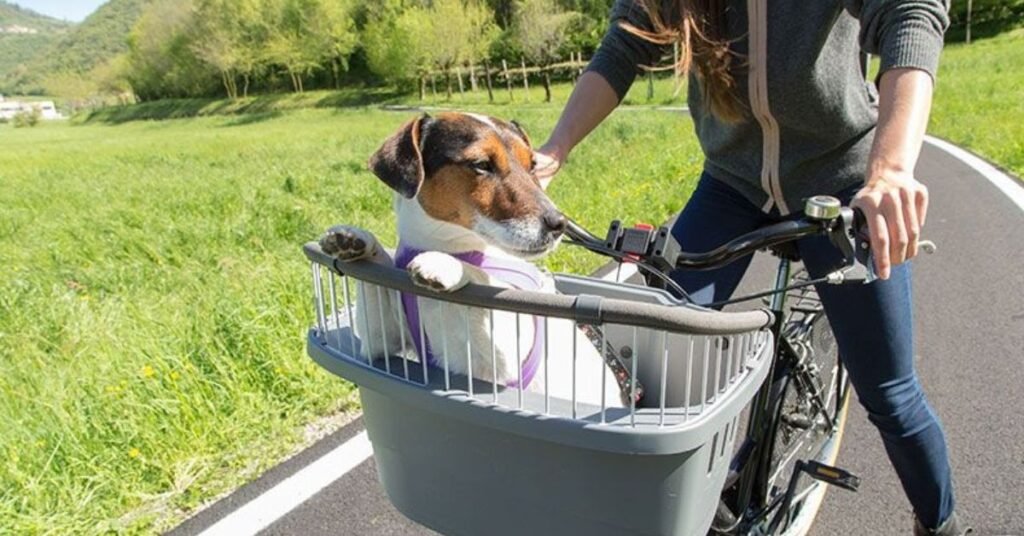
Choosing the right dog carrier for your bike is very important for safety and comfort. You should always think about your dog’s size, weight, and behavior. A calm small dog may need a simple basket, while a bigger dog may need a trailer or cargo bike space. The right choice helps avoid accidents and keeps your dog relaxed during the ride.
You should also check the quality and safety features before buying a carrier. Strong straps, good ventilation, and soft padding are very important. The carrier should fit your bike properly and not affect your balance. Always test it with short rides before going on longer trips.
Things to consider when choosing:
- Dog size and weight
- Type of bike you have
- Safety straps and harness points
- Comfort and padding inside
- Airflow and ventilation
- Stability during movement
Dog Size, Weight & Breed Factors
Dog size, weight, and breed are very important when choosing a bike carrier. Small dogs are usually easier to carry and fit in baskets or backpacks. Medium and large dogs need more space and stronger support, like trailers or cargo bikes. Some breeds are more active, so they may need extra safety straps to stay secure during the ride.
Heavier dogs also need stronger carriers that can handle their weight without shaking or breaking. You should always check the weight limit before using any carrier. The breed’s behavior also matters. Calm dogs adjust easily, while energetic dogs may try to move a lot. This can affect balance and safety while riding.
| Factor | Small Dogs | Medium Dogs | Large Dogs |
| Weight Range | Light | Moderate | Heavy |
| Best Carrier Type | Basket / Backpack | Rear carrier / Trailer | Cargo bike / Trailer |
| Stability Need | Low | Medium | High |
| Safety Straps | Basic | Strong straps needed | Heavy-duty straps required |
| Comfort Level | Easy to manage | Needs more space | Needs maximum space |
| Risk Level | Low | Medium | Higher if not secured |
| Example Breeds | Chihuahua, Pomeranian | Beagle, Cocker Spaniel | Labrador, German Shepherd |
Safety Features That Matter Most
Safety features are very important when carrying a dog on a bicycle. They help keep your dog secure and reduce the risk of accidents. A good carrier should hold your dog firmly without making them uncomfortable. It should also stay stable while you are riding on different road conditions.
You should always check the build quality and safety design before using any carrier. Strong straps, secure locks, and good ventilation can make a big difference. Reflective parts can also help you stay visible at night. These small details can greatly improve your dog’s safety during every ride.
Key safety features to look for:
- Strong and adjustable safety straps
- Secure locking system or buckles
- Non-slip and stable base
- Good ventilation for airflow
- Soft padding for comfort
- Reflective strips for night visibility
- Easy-to-attach and stable mounting system
Comfort, Ventilation & Stability
Comfort, ventilation, and stability are very important for a safe bike ride with your dog. Your dog should feel relaxed inside the carrier, not stressed or cramped. Soft padding helps reduce pressure on their body. Good airflow keeps them cool and calm during the ride, especially in hot weather.
Stability is also very important while cycling. The carrier should not shake or tilt during movement. A stable setup helps prevent accidents and keeps your dog safe on bumpy roads. Always test the carrier before longer trips to make sure everything feels secure.
| Feature | Why It Matters | What to Look For |
| Comfort | Keeps dog relaxed during ride | Soft padding, enough space |
| Ventilation | Prevents overheating | Mesh windows, airflow holes |
| Stability | Prevents shaking and accidents | Strong frame, tight mounting system |
| Cushioning | Reduces body pressure | Thick, washable padding |
| Air Circulation | Keeps dog calm and fresh | Open design or mesh sides |
| Balance | Helps rider control bike | Even weight distribution |
| Shock Absorption | Smooth ride on rough roads | Padded base or suspension design |
| Safety Comfort Mix | Ensures safe and happy ride | Balanced design with straps + padding |
Preparing Your Dog for Bicycle Rides
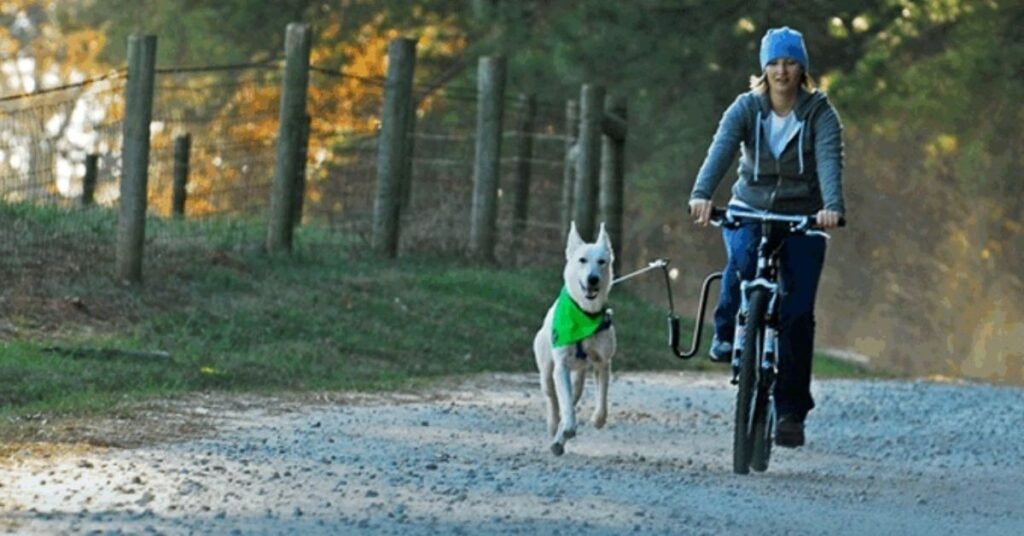
Before taking your dog on a bicycle ride, proper preparation is very important. Do not rush into long rides. First, let your dog explore the carrier while it is not moving. Allow them to smell, sit, and relax inside it. This helps your dog feel safe and build trust with the setup.
Once your dog is comfortable, start training slowly with very short rides. Choose a quiet and safe place with no heavy traffic. Keep the speed low and watch your dog closely. Give praise and breaks if needed. Step-by-step practice helps your dog adjust naturally and enjoy the ride without fear.
Training Your Dog Around a Bike
Training your dog around a bike is an important first step before riding together. Start by letting your dog see and sniff the bicycle while it is not moving. This helps them get used to its shape and sound. You can also gently walk the bike beside your dog so they do not feel scared.
Next, slowly introduce movement in a safe and quiet place. Walk the bike while your dog stays calm beside it or inside the carrier. Use a leash if needed for control and safety.Reward good behavior with treats and positive praise.This helps your dog connect the bike with positive feelings and reduces fear.
Building Confidence with Short Rides
Building confidence with short rides is very important for your dog. Start with very small trips around a quiet and familiar area. Keep the speed slow and the ride smooth. This helps your dog feel safe and understand that bicycle rides are normal.
Gradually increase the ride time as your dog becomes more comfortable. Always watch their body language during the ride. If they look nervous, stop and give them a break. With patience and regular practice, your dog will start to enjoy the experience and feel more confident each time.
Teaching Basic Safety Commands
Basic safety commands are very important for safe bicycle rides with your dog. They help your dog understand what you expect during the ride. Start training in a calm space with no distractions. Use short, clear words and keep your tone gentle and steady.
Practice the same commands every day so your dog learns faster. Reward them right away when they listen correctly. This builds strong understanding and good habits. With time, your dog will respond quickly and stay calm even during movement or noise.
Essential Safety Tips When Riding With Your Dog
Riding a bicycle with your dog can be fun, but safety must always come first. You should never rush or take your dog on busy roads in the beginning. Start in quiet areas where there is less traffic and noise. Always make sure your dog is properly secured before starting the ride.
Keep your speed slow and steady during the ride. Watch your dog closely for any signs of stress or discomfort. Take breaks if needed and never force a long ride. A careful and calm approach makes the experience safe and enjoyable for both of you.
Important safety tips:
- Always secure your dog with a harness or straps
- Avoid busy roads and heavy traffic
- Keep rides short in the beginning
- Check the carrier before every ride
- Ride at a slow and stable speed
- Watch your dog’s behavior carefully
Safety Gear for Dogs and Cyclists
Safety gear is very important when riding a bicycle with your dog. It helps protect both you and your pet from accidents and sudden movements. Your dog should always be placed in a secure carrier with proper straps. As a cyclist, you should also wear the right protective equipment for your own safety.
Good safety gear improves control and makes the ride more stable. It also helps you stay visible on the road, especially in low light or traffic. Always inspect your gear before every ride to make sure everything is strong and properly fitted.
Essential safety gear:
- Secure dog harness or safety straps
- Strong and stable bike carrier or basket
- Helmet for the cyclist
- Reflective vest or strips for better visibility
- Front and rear bike lights
- Non-slip gloves for better control
- Safety leash clip inside the carrier
Weather, Hydration & Break Planning
Weather plays a big role when riding a bicycle with your dog. Hot sun, heavy rain, or strong wind can make the ride unsafe. Make sure to review the weather conditions before heading out.Try to ride in cooler times of the day like morning or evening.
Hydration and breaks are also very important. Your dog can get tired or dehydrated quickly, especially in warm weather. Always carry fresh water and stop for short breaks during the ride. Never push your dog too hard, and keep the journey slow and comfortable.
| Factor | Why It Matters | What You Should Do | Best Practice |
| Weather Check | Prevents unsafe riding conditions | Check forecast before ride | Avoid extreme heat or rain |
| Temperature Control | Stops overheating in dogs | Ride in cooler hours | Morning or evening rides |
| Hydration | Prevents dehydration | Carry water and bowl | Offer water every 10–15 minutes |
| Break Timing | Reduces stress and tiredness | Stop during long rides | Take short breaks often |
| Heat Safety | Protects against heatstroke | Avoid midday sun | Stay in shaded routes if possible |
| Rain Safety | Prevents slipping and discomfort | Avoid wet roads | Use cover or postpone ride |
| Wind Conditions | Maintains balance and control | Check wind strength | Avoid strong windy days |
Choosing Safe Routes and Terrain
Picking the right route is one of the most important parts of safe cycling with your dog. Always go for peaceful paths where movement is slow and predictable. Dogs feel more secure when the environment is calm and not full of noise or sudden distractions. A steady ride helps them stay relaxed and balanced.
The terrain should be smooth, simple, and easy to control. Avoid difficult roads that can shake the carrier or disturb your dog. Start with short, familiar routes and only increase difficulty when your dog is fully comfortable. Safety and stability should always guide your choice of path.
| Route Element | Why It Matters | Best Option | What to Avoid |
| Road Mood | Affects dog’s stress level | Calm and quiet areas | Loud, chaotic streets |
| Surface Feel | Impacts ride smoothness | Soft paved or even roads | Broken, rocky ground |
| Movement Level | Helps focus and control | Low activity zones | Crowded moving traffic |
| Path Shape | Supports balance | Straight, wide roads | Sharp curves, tight turns |
| Ground Strength | Keeps carrier stable | Firm and even terrain | Loose gravel or sand |
| Distractions | Reduces fear response | Open, simple surroundings | Markets or noisy places |
| Route Familiarity | Builds confidence | Known local paths | Completely new risky routes |
Common Mistakes to Avoid When Carrying Dog on Bicycle
Many people make simple mistakes when carrying their dog on a bicycle. These mistakes can make the ride unsafe or stressful for the dog. One common mistake is choosing the wrong carrier size. Another is starting long rides without proper training. These errors can affect balance, comfort, and safety.
It is also important not to rush the process.Dogs need time to adjust to the bike and movement. Ignoring safety checks can also lead to accidents. Always take things slowly and focus on your dog’s comfort first.
Common mistakes to avoid:
- Using an unsafe or loose carrier
- Skipping training before real rides
- Riding too fast with a new setup
- Ignoring your dog’s stress signals
- Not securing straps properly
- Choosing busy or dangerous roads
Best Setup for Small Dogs
The best setup for small dogs on a bicycle should be safe, stable, and comfortable. Small dogs need extra protection because they are light and can move easily. A front basket, backpack carrier, or rear seat can work well if it is properly secured. The main goal is to keep your dog steady and relaxed during the ride.
Always make sure the setup is strong and well-fitted to your bike. Add soft padding inside the carrier to improve comfort. Use safety straps so your dog cannot jump out. Start with short rides so your dog can slowly get used to the feeling of movement.
Best setup tips for small dogs:
- Use a strong and stable basket or carrier
- Add soft padding for comfort
- Secure your dog with a harness strap
- Choose a well-ventilated design
- Keep weight balanced on the bike
- Start with very short practice rides
Options for Large or Active Dogs
Large or active dogs need strong and spacious carrying options on a bicycle. Regular baskets or backpacks are not safe for them. They require more stable setups that can handle their weight and movement. A bike trailer or cargo bike is usually the best choice for these dogs.
These options give your dog enough space to sit or lie down comfortably. They also reduce the risk of imbalance while riding. Active dogs need secure straps because they may move a lot during the ride. Always choose a setup that is strong, stable, and well-ventilated.
Best options for large or active dogs:
- Bike trailers with strong frames
- Cargo bikes with large seating space
- Heavy-duty safety harness systems
- Shock-absorbing trailer floors
- Enclosed carriers with good ventilation
- Wide and stable wheel base for balance
Senior Dogs and Special Care Needs
Senior dogs need extra care when being carried on a bicycle. Their joints are weak and they may feel pain during movement. So, the ride must be very smooth and slow. Comfort is more important than speed or distance. Always watch your dog closely for any signs of stress or tiredness.
You should also choose soft and stable carriers for older dogs. Avoid bumpy roads and long rides. Give them frequent breaks and fresh water. A calm and gentle approach helps senior dogs enjoy the ride safely.
| Care Factor | Why It Matters | Best Practice | What to Avoid |
| Comfort | Reduces joint pain | Soft padding and cushions | Hard or stiff carriers |
| Speed | Prevents stress | Slow and steady riding | Fast or sudden cycling |
| Ride Length | Avoids fatigue | Short trips only | Long continuous rides |
| Surface | Protects joints | Smooth, flat roads | Rough or uneven paths |
| Breaks | Helps recovery | Frequent stops | No rest during ride |
| Temperature | Prevents overheating | Cool weather rides | Hot midday rides |
| Stability | Ensures safety | Stable bike trailers | Unbalanced baskets |
Carrying Options Based on Dog Size & Age
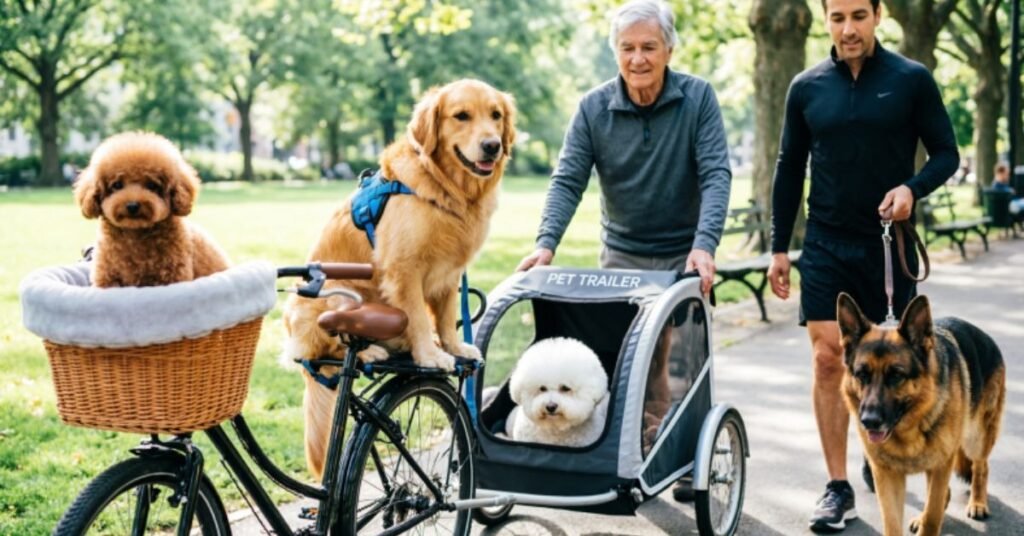
Choosing the right carrying option depends on your dog’s size and age. Small dogs usually fit well in baskets or backpack carriers. Medium dogs need more stable space like rear carriers or small trailers. Large dogs are safer in bike trailers or cargo bikes because they need more room and balance support.
Age also plays a big role in choosing the right setup. Puppies need short, gentle rides with full safety support. Senior dogs need soft cushioning and slow rides to avoid strain. Always match the carrier to your dog’s comfort level and physical condition.
Best carrying options by size and age:
- Small dogs: Front basket or backpack carrier
- Medium dogs: Rear carrier or small bike trailer
- Large dogs: Bike trailer or cargo bike setup
- Puppies: Short rides with padded, secure carriers
- Senior dogs: Stable trailer with extra comfort and slow speed
What is the safest way to carry a dog on a bike?
The safest way to carry a dog on a bike is to use a proper, secure carrier that matches your dog’s size and weight. A well-designed bike trailer is often the safest option, especially for small to large dogs. It keeps your dog stable, protected, and away from the wheels and road hazards. Safety always depends on the right setup and proper use.
You should also make sure your dog is strapped in safely and feels comfortable inside the carrier. Never let your dog ride without proper support or protection. Start with short, slow rides to help them adjust. Always check the equipment before every trip.
Safest methods include:
- Bike trailer for best stability and protection
- Strong front or rear baskets for small calm dogs
- Secure harness with safety straps inside carrier
- Padded and ventilated seating area
- Slow and controlled riding speed
- Short practice rides before long trips
Is it legal to ride a bike with a dog?
In many places, riding a bike with a dog is allowed, but the rules can be different depending on the area. Some regions do not have clear laws, while others may have restrictions for safety reasons. It is always important to check local traffic rules before taking your dog on a bicycle ride.
Even if it is legal, you must still ride responsibly. Your dog should not cause danger to you, itself, or others on the road. Always use a safe carrier and keep full control of your bike. Responsible riding helps avoid problems and keeps everyone safe.
Key points to remember:
- Laws vary by city or country
- Always check local traffic rules
- Dog must be safely secured at all times
- Do not disturb other road users
- Safety is more important than legality
Conclusion
Carrying a dog on a bicycle can be a fun and safe activity when done correctly. It helps you spend more time with your dog outdoors. But safety should always come first. The right setup makes a big difference.
You must choose the correct carrier based on your dog’s size, age, and behavior. A secure and comfortable space keeps your dog calm during the ride. Never rush the process. Training and patience are very important.
Always follow safety rules while riding. Use proper gear and avoid risky roads or bad weather. Keep rides short in the beginning. Slowly increase time as your dog gets used to it.
In the end, every dog is different. Some may enjoy bike rides quickly, while others need more time. With care, attention, and practice, bicycle rides can become a safe and happy experience for both you and your dog.
FAQs
1. Is it safe to carry a dog on a bicycle?
Yes, it can be safe if done correctly. You must use a proper carrier and safety straps. Start with short rides and avoid busy roads. Safety always depends on preparation and control.
2. What is the best way to carry a dog on a bike?
The best way depends on your dog’s size. Small dogs can use baskets or backpacks. Medium and large dogs are safer in trailers or cargo bikes. Always choose a stable and secure setup.
3. Can all dogs enjoy bicycle rides?
Not all dogs enjoy it at first. Some need more training and time to adjust. Calm dogs usually adapt faster. Always watch your dog’s behavior and comfort level.
4. How long should a beginner bike ride be with a dog?
Start with very short rides of 5 to 10 minutes. Keep the speed slow and steady. Gradually increase the time as your dog becomes comfortable. Never rush the training process.
5. What safety gear is needed for biking with a dog?
You should use a secure harness or carrier with straps. Reflective gear and bike lights are also important. For the rider, a helmet is necessary. Proper gear keeps both you and your dog safe.
