

Introduction
Paraphimosis is a condition that affects male dogs. It occurs when the penis comes out of the sheath but cannot go back in. This is not something that fixes itself easily. The exposed tissue starts to swell and dry out. Without quick attention, it can become a painful and dangerous situation for your dog.
As a dog owner, seeing something unusual with your pet can be alarming. You may not know what is happening or what to do next. That panic is completely understandable. But the more you know about this condition, the faster you can act. And in cases like paraphimosis, acting fast truly matters.
This condition can affect any male dog regardless of age or breed. Several things can trigger it, including mating, grooming, injury, or even a small hair wrapped around the penis. Once it happens, the tissue outside swells up quickly. Your dog may start licking the area, seem restless, or have trouble urinating. The right treatment at the right time can help your dog recover fully and comfortably.
What Is Paraphimosis in Dogs?

Paraphimosis in dogs is when a male dog’s penis comes out of the prepuce but cannot go back in. The prepuce is the skin that normally covers and protects the penis. In a healthy dog, the penis goes in and out without any problem. But in paraphimosis, it gets stuck outside. This causes swelling, dryness, and a lot of discomfort for your dog.
There is a difference between this condition and a normal erection. A normal erection goes away on its own within a few minutes. But paraphimosis does not resolve on its own. The longer the penis stays exposed, the worse the swelling gets. The tissue can dry out and even lose blood supply over time. This is why paraphimosis is considered a medical condition that needs prompt attention.
How Common Is Paraphimosis in Dogs?
Paraphimosis is not an everyday occurrence, but it is not unheard of either. Vets across the USA do come across this condition on a regular basis. Any male dog can develop it at some point in his life. It does not matter if your dog is young or old. Being aware of this condition as a dog owner is always a smart move.
Some dogs face a higher chance of developing this condition than others. Here are a few things that can increase the risk:
- Unneutered male dogs are more frequently affected
- Dogs that have recently mated can develop it shortly after
- Long-haired dogs are at risk due to hair wrapping around the penis
- A narrow preputial opening makes retraction naturally harder
- Rough or improper grooming around the area can also trigger it
- Dogs with weak prepuce muscles due to age may struggle with retraction
Is Paraphimosis in Dogs a Medical Emergency?

Paraphimosis is not something you should wait and watch. It needs attention as soon as you notice it. The exposed tissue starts to swell within a short period of time. That swelling gets worse with every passing minute. Blood flow to the area begins to get restricted. This can lead to serious tissue damage if ignored.
Not every case is a life-or-death situation right away. But every case has the potential to become one. If the penis stays outside for more than 30 minutes, call your vet immediately. Do not try to fix it yourself without guidance. Delaying treatment can result in permanent damage to the tissue. In severe cases, surgical intervention may become necessary. So yes, paraphimosis should always be treated as an urgent medical situation.
How Serious Is It If Left Untreated?
Leaving paraphimosis untreated is a very risky decision. The exposed tissue dries out quickly without the protection of the prepuce. Swelling increases with every passing hour. Blood circulation to the area becomes weaker and weaker. The tissue starts to lose oxygen and nutrients. This can lead to cell death in the affected area.
If the condition is ignored for too long, the damage can become permanent. The tissue can turn dark and begin to die. This is called necrosis. At this stage, surgery becomes the only option. In some cases, the damage is so severe that partial or full amputation of the penis may be required. This is a painful and completely avoidable outcome. Getting your dog treated early saves him from unnecessary suffering and serious long-term consequences.
Common Symptoms of Paraphimosis in Dogs
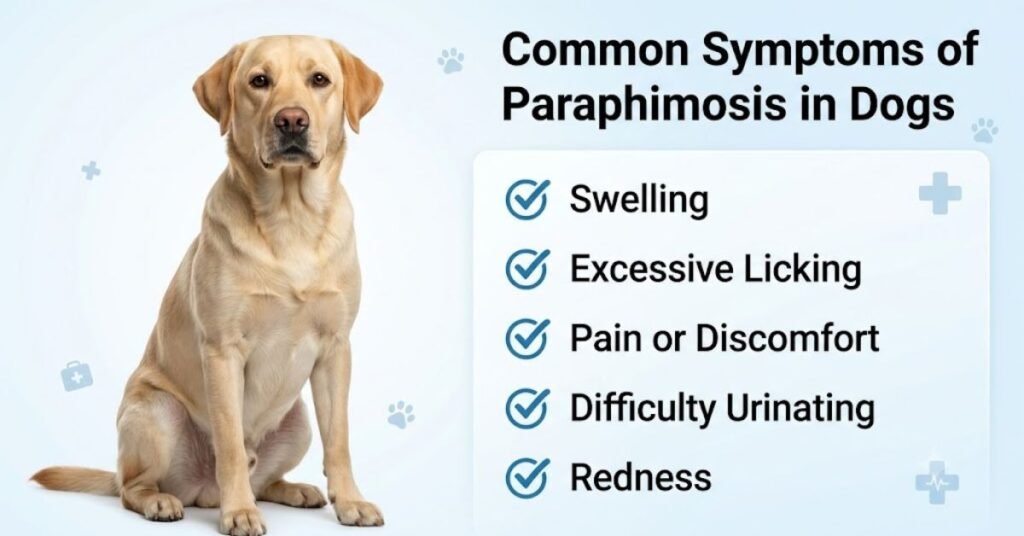
Paraphimosis has some very clear signs that you can spot at home. First and foremost, the most obvious symptom is the penis staying outside the prepuce. Your dog will likely seem uncomfortable and restless. Additionally, he may keep licking the exposed area repeatedly. The tissue may look swollen, red, or dry. In some cases, it can even appear discolored or darker than usual.
Symptoms to watch out for include:
- Exposed penis that does not retract back into the sheath
- Excessive licking of the genital area
- Swelling and redness around the exposed tissue
- Discoloration of the tissue turning purple or dark
- Difficulty urinating or a weak urine stream
- Restlessness and discomfort making your dog unable to settle
- Dry or cracked tissue due to prolonged exposure
- Whimpering or signs of pain when the area is touched
Mild vs Severe Symptoms
Not all cases of paraphimosis look the same. Some dogs show mild symptoms that can be managed quickly at home. Others develop severe symptoms that require immediate veterinary care. Therefore, understanding the difference between mild and severe symptoms is very important. Early identification can save your dog from serious complications. Additionally, knowing where your dog stands helps you make faster and better decisions.
Here is a detailed comparison table to help you understand the difference clearly:
| Symptom | Mild Case | Severe Case |
| Penis Position | Slightly exposed | Fully exposed and stuck |
| Tissue Color | Normal pink color | Dark red, purple, or black |
| Swelling Level | Minor swelling | Severe and rapid swelling |
| Tissue Condition | Slightly dry | Cracked, dry, or dying tissue |
| Pain Level | Mild discomfort | Intense pain and sensitivity |
| Licking Behavior | Occasional licking | Constant and aggressive licking |
| Urination | Slightly difficult | Completely blocked or very painful |
| Dog’s Behavior | Mildly restless | Highly distressed and agitated |
| Tissue Smell | No unusual smell | Foul odor due to tissue damage |
| Time of Exposure | Less than 30 minutes | More than 30 minutes or longer |
| Treatment Needed | Home first aid may work | Immediate vet visit is necessary |
| Risk of Damage | Low risk | High risk of permanent damage |
What Causes Paraphimosis in Dogs?
Paraphimosis does not happen without a reason. Several things can trigger this condition in male dogs. Sometimes the cause is physical. Other times it can be related to an underlying health issue. Therefore, understanding the root cause helps you prevent it from happening again. Additionally, knowing the cause also helps your vet choose the right treatment plan for your dog.
Here are the most common causes of paraphimosis in dogs:
- Mating activity is one of the most frequent triggers of this condition
- Hair or debris wrapped around the base of the penis can block retraction
- A narrow preputial opening makes it physically difficult for the penis to retract
- Injury or trauma to the penis or surrounding area can cause swelling and blockage
- Infections or inflammation in the preputial area can prevent normal retraction
- Neurological issues can affect the muscles responsible for retraction
- Prolonged erection due to excitement or stimulation can also lead to paraphimosis
- Improper grooming around the genital area can accidentally trigger the condition
- Tumors or growths near the prepuce can physically block the penis from retracting
- Weak preputial muscles, especially in older dogs,s make retraction harder
Can Grooming or Mating Trigger Paraphimosis?
Yes, both grooming and mating can absolutely trigger paraphimosis in dogs. These are actually two of the most common causes seen by vets. During mating, the penis becomes fully erect and engorged with blood. Sometimes it simply does not retract back into the prepuce afterward. Additionally, the excitement and physical activity involved in mating puts extra stress on the preputial muscles. Therefore, dogs that mate regularly are at a higher risk of developing this condition.
Grooming is another trigger that many dog owners do not think about. Furthermore, long-haired dogs are especially vulnerable during grooming sessions. Loose hairs can wrap tightly around the base of the penis without anyone noticing. Consequently, this hair ring acts like a rubber band and cuts off proper blood flow. As a result, the penis cannot retract back into the sheath normally. Additionally, rough handling of the genital area during grooming can cause irritation and swelling. Therefore, always make sure your dog is groomed carefully and gently by a professional who is experienced with male dogs. However, if you groom your dog at home, always check the area thoroughly after each session to make sure everything looks normal.
How to Handle Paraphimosis in Dogs at Home
Discovering paraphimosis in your dog can feel overwhelming at first. However, staying calm is the most important thing you can do. Acting quickly and carefully at home can make a big difference in early cases. Therefore, knowing the right steps beforehand prepares you for this situation. Additionally, home care is only suitable for mild cases that have just started. Consequently, if the condition looks severe or has been going on for a while, skip home care and go straight to your vet.
Here are some important things to keep in mind before attempting home care:
- Act within the first 30 minutes, as delays make the condition worse
- Do not use force to push the penis back in, as this can cause injury
- Keep the area moist by applying a water-based lubricant like KY Jelly
- Use clean hands and avoid touching the area with dirty fingers
- Keep your dog calm and prevent him from licking the area excessively
- Use an e-collar to stop your dog from making the situation worse
- Never use petroleum jelly or oily substances as they can cause further irritation
- Check for hair rings carefully around the base of the penis and remove them gently
Gently Clean and Lubricate the Area
Cleaning and lubricating the exposed area is the very first step you should take. Therefore, start by washing your hands thoroughly before touching anything. Use a clean soft cloth or sterile gauze to gently wipe the exposed tissue. Additionally, use lukewarm water to clean any dirt or debris from the area. Do not scrub or rub harshly, as the tissue is already sensitive and swollen. Consequently, being gentle during this step prevents any additional irritation or damage to the tissue.
After cleaning, lubrication is the next important step. Furthermore, a water-based lubricant like KY Jelly works best for this purpose. Apply a generous amount of lubricant directly onto the exposed tissue. Additionally, make sure the lubricant covers the entire exposed area evenly. This helps reduce swelling and keeps the tissue moist and protected. As a result, the lubricated tissue becomes easier to manipulate back into the prepuce. However, never use petroleum jelly, coconut oil, or any oily substance as a lubricant. Therefore, always keep a water-based lubricant at home if you own a male dog. Consequently, having it ready means you can act fast without wasting any precious time.
Try to Manually Retract the Penis
Once the area is clean and well lubricated, you can attempt a gentle retraction. Therefore, use two fingers to carefully push the prepuce forward over the penis. Do not pull the penis itself, as this can cause serious injury. Additionally, apply slow and steady pressure without any sudden or forceful movements. Consequently, gentle and patient handling gives you the best chance of success. Furthermore, if the penis does not retract after a few careful attempts, stop immediately. Forcing it will only make the swelling worse and cause more pain for your dog.
However, manual retraction is not always possible at home. Sometimes the swelling is too severe for the penis to slide back in. Therefore, do not keep trying if your dog is showing signs of intense pain. Additionally, watch your dog’s reaction closely during every step of the process. As a result, if he cries, snaps, or becomes highly agitated, stop right away. Consequently, pushing through your dog’s pain signals can lead to further injury and trauma. Furthermore, a failed home attempt does not mean you did anything wrong. Instead, it simply means your dog needs professional veterinary care as soon as possible. Therefore, call your vet immediately after an unsuccessful retraction attempt at home.
How Veterinarians Diagnose and Treat Paraphimosis in Dogs
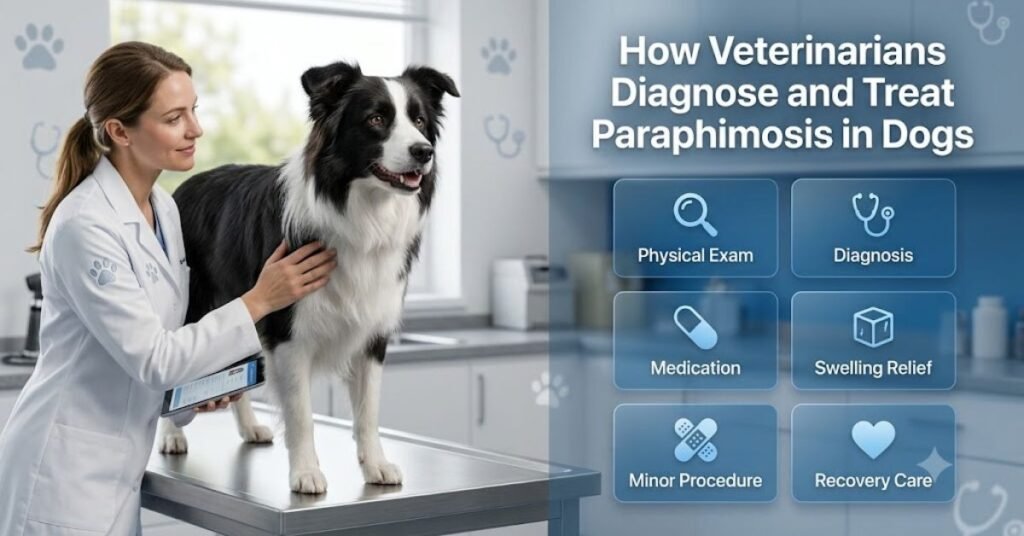
Taking your dog to the vet is the safest and most reliable option. Therefore, a professional diagnosis ensures that the exact cause is identified correctly. Vets do not just treat the visible symptom. Additionally, they look for any underlying condition that may have triggered the paraphimosis. Consequently, a proper diagnosis prevents the condition from recurring in the future. Furthermore, the examination is usually quick and straightforward in most cases. As a result, your dog can start receiving the right treatment without any unnecessary delay.
Here is what the diagnosis and treatment process typically looks like:
- Physical examination of the exposed tissue to assess swelling and damage
- Checking for hair rings or any foreign material around the base of the penis
- Evaluating blood flow to determine if the tissue is still healthy or damaged
- Sedation or pain relief may be given to keep your dog calm during treatment
- Manual retraction is attempted by the vet using proper lubrication and technique
- A hypertonic solution like sugar water may be applied to reduce swelling before retraction
- Preputial opening enlargement may be performed if the opening is too narrow
- Stitches or surgical correction may be needed in severe or recurring cases
- Amputation is considered only as a last resort when tissue damage is irreversible
- Antibiotics or anti-inflammatory medication may be prescribed after treatment
Recovery, Prevention, and Long-Term Management
Recovery from paraphimosis depends on how quickly the condition was treated. Therefore, dogs that received early treatment tend to recover much faster. Most mild cases resolve within a few days with proper care. Additionally, severe cases that required surgery may take a few weeks to heal completely. Consequently, following your vet’s aftercare instructions is essential during this period. Furthermore, keeping the area clean and preventing your dog from licking it speeds up the healing process. As a result, using an e-collar during recovery is strongly recommended by most vets.
Here is a detailed guide covering recovery, prevention, and long-term management:
| Category | What To Do | Why It Matters |
| Wound Care | Clean the area gently with lukewarm water daily | Prevents infection and promotes healing |
| Medication | Give prescribed antibiotics and anti-inflammatory drugs on time | Reduces swelling and fights infection |
| E-Collar Use | Keep the e-collar on until fully healed | Stops licking and further irritation |
| Follow Up Visits | Attend all scheduled vet appointments | Ensures proper monitoring of recovery |
| Grooming | Check the genital area carefully after every grooming session | Prevents hair rings from forming |
| Mating Supervision | Monitor your dog closely after every mating activity | Allows early detection of paraphimosis |
| Neutering | Consider neutering to reduce recurrence risk | Lowers hormonal triggers significantly |
| Diet and Health | Maintain a healthy weight and balanced diet | Supports overall muscle tone and health |
| Exercise | Avoid excessive physical activity during recovery | Prevents strain on the healing area |
| Long Hair Management | Trim hair around the genital area regularly | Reduces risk of hair ring formation |
| Regular Checkups | Schedule routine vet visits every 6 months | Helps detect any recurring issues early |
| Owner Awareness | Learn the early signs of paraphimosis | Enables faster response in future cases |
Can Paraphimosis in Dogs Go Away on Its Own?
Paraphimosis does not go away on its own in most cases. Therefore, waiting and hoping for it to resolve naturally is a dangerous approach. The exposed tissue continues to swell with every passing minute. Additionally, the longer it stays outside the prepuce, the more damage it causes. Consequently, what starts as a mild case can quickly turn into a severe medical emergency. Furthermore, the tissue can dry out, lose blood supply, and begin to die without any treatment. As a result, taking a wait-and-see approach puts your dog at serious risk of permanent damage.
However, there are very rare situations where extremely mild cases may show slight improvement with immediate home care. Therefore, applying lubrication and keeping the area moist can sometimes help in the earliest stages. Additionally, removing a hair ring quickly after noticing it may allow the penis to retract on its own. Consequently, acting within the first few minutes gives you the best possible chance of a natural resolution. Furthermore, even if the situation seems to improve at home, a vet visit is still strongly recommended. As a result, only a professional can confirm that the tissue is fully healthy and undamaged. Therefore, never assume the problem is completely resolved just because the penis has retracted back into the sheath.
Conclusion
Paraphimosis in dogs is a medical emergency that every male dog owner should recognize. Knowing the causes, symptoms, treatment options, and prevention strategies helps you respond quickly if it happens. Early action is essential because the longer the penis remains exposed, the greater the risk of swelling, tissue damage, infection, and reduced blood flow.
If you notice your dog’s penis staying outside the prepuce for more than a short time, do not wait for the problem to resolve on its own. Gentle first aid, such as keeping the tissue clean and lubricated, may help in the earliest stages, but veterinary care is the safest option. Prompt treatment greatly improves the chances of a full recovery and reduces the risk of complications.
Preventing paraphimosis is equally important. Regular grooming around the prepuce, checking your dog after breeding, scheduling routine veterinary exams, and considering neutering when appropriate can all lower the risk. Staying informed and acting without delay are the best ways to protect your dog’s health and ensure he continues to live a comfortable, happy life.
FAQs
1. Can paraphimosis in dogs go away on its own?
Paraphimosis rarely resolves without treatment. The exposed tissue can quickly become swollen and dry, making it even harder for the penis to retract. If it does not return to its normal position within about 30 minutes, contact your veterinarian immediately.
2. Is paraphimosis painful for dogs?
Yes. Most dogs experience pain and discomfort. Common signs include excessive licking, whining, restlessness, swelling, and difficulty settling down. Early veterinary treatment helps relieve pain and prevents the condition from becoming more serious.
3. What is the difference between paraphimosis and priapism in dogs?
Paraphimosis occurs when the penis cannot retract back into the prepuce, usually because of swelling or a physical obstruction. Priapism is a prolonged erection caused by abnormal blood flow and is not necessarily linked to sexual arousal. Both conditions require prompt veterinary evaluation but are treated differently.
4. Can paraphimosis in dogs be prevented?
In many cases, yes. Keeping the hair around the prepuce trimmed, checking the area after breeding, maintaining good hygiene, and scheduling regular veterinary checkups can reduce the risk. Neutering may also help prevent some underlying causes in certain dogs.
5. When should I take my dog to the vet for paraphimosis?
Seek veterinary care as soon as possible if your dog’s penis remains exposed for more than 30 minutes, or sooner if you notice severe swelling, discoloration, bleeding, difficulty urinating, or signs of significant pain. Even if the penis retracts after gentle home care, a veterinary examination is recommended to identify the underlying cause and prevent future episodes.
