

Introduction
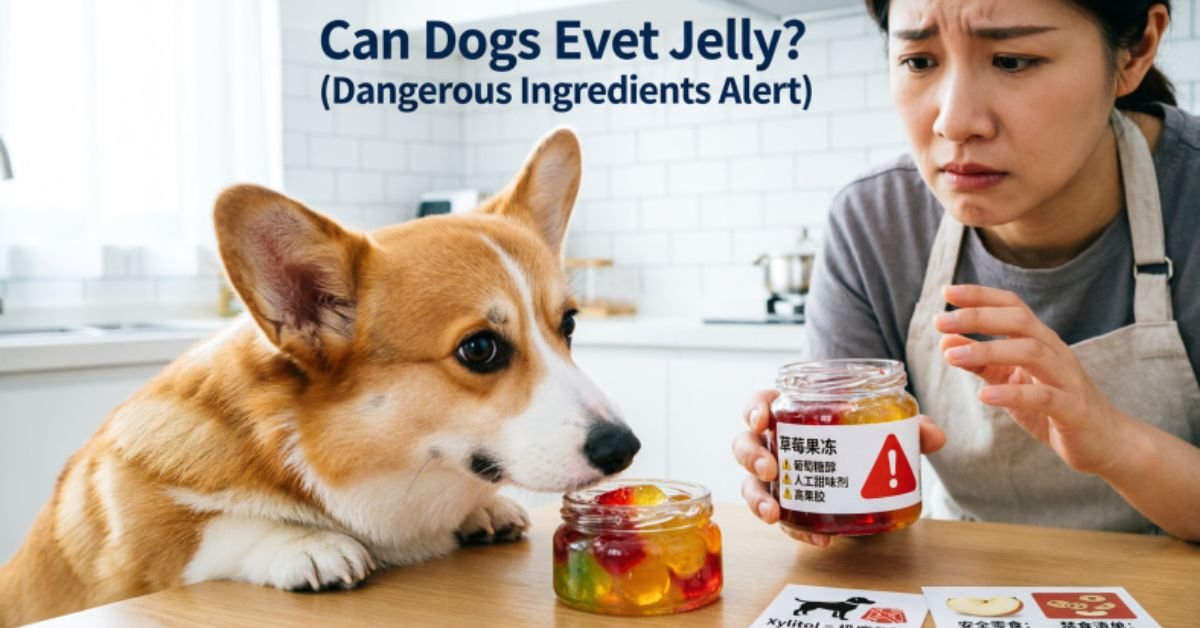
Jelly is a sweet, soft food made from fruit juice, sugar, and gelling agents like gelatin or pectin. People enjoy it on toast, in desserts, or as a quick snack. It often looks harmless because it is fruity and smooth. But jelly is made for humans, not for dogs.
Many dog owners wonder if a small bite of jelly is safe. It may seem like a fun treat to share. However, jelly can hide dangerous ingredients. Some types contain high sugar or artificial sweeteners that can harm your dog. Even a small amount can cause problems in some cases.
The truth is, jelly is not a healthy choice for dogs. While plain versions may not always be toxic, the risks are real. Ingredients like xylitol or grapes can be very dangerous. In this guide, you will learn when jelly is unsafe, what to do if your dog eats it, and better treat options.
Can Dogs Eat Jelly Safely?
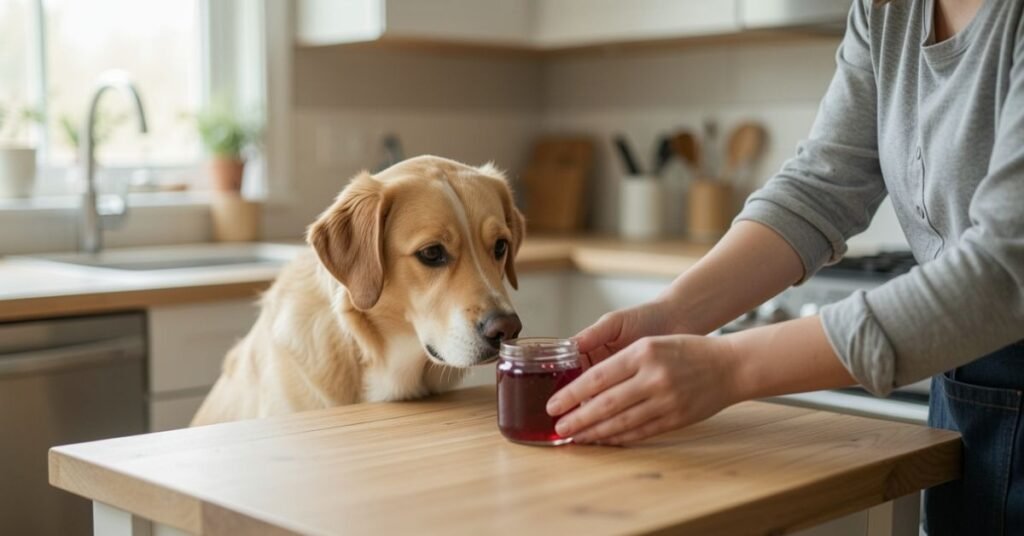
Dogs might lick a tiny bit of plain jelly without immediate harm, but that does not make it safe. Jelly is loaded with sugar and has no real value for your dog’s health. Their bodies are not designed to handle sweet foods. Even small amounts can lead to stomach upset, gas, or diarrhea.
The real risk comes from what’s inside the jar. Some jellies contain xylitol, a sweetener that is extremely dangerous for dogs. Others may use grape-based ingredients, which can also be harmful. Because you cannot always tell what’s in it at a glance, it’s safer to skip jelly altogether and choose treats made just for dogs.
Is Jelly Toxic to Dogs or Just Unhealthy?
Jelly is not always toxic, but it is definitely unhealthy for dogs. Plain jelly without harmful ingredients may not poison your dog right away. Still, it is full of sugar and offers no nutrition. Regular intake can lead to weight gain, dental problems, and stomach issues.
Some types of jelly can be dangerous depending on what they contain. Certain ingredients can turn a simple treat into a serious risk. Always check the label before giving anything to your dog.
- Xylitol (artificial sweetener): Highly toxic and can be life-threatening
- Grape or raisin content: Linked to kidney problems in dogs
- High sugar levels: Can cause obesity and digestive upset
- Artificial colors and flavors: May trigger allergies or sensitivities
When a Small Amount May Be Okay
A tiny taste of plain jelly may be okay in some cases. It should be free from harmful ingredients like xylitol or grapes. The jelly should also be low in sugar and given only once in a while. Even then, it should not become a regular treat for your dog.
Every dog reacts differently to new foods. Some dogs may handle a small amount without any issue. Others may get an upset stomach or loose stools. It is always safer to keep portions very small and watch your dog closely after giving any new food.
What Is Jelly Made Of?
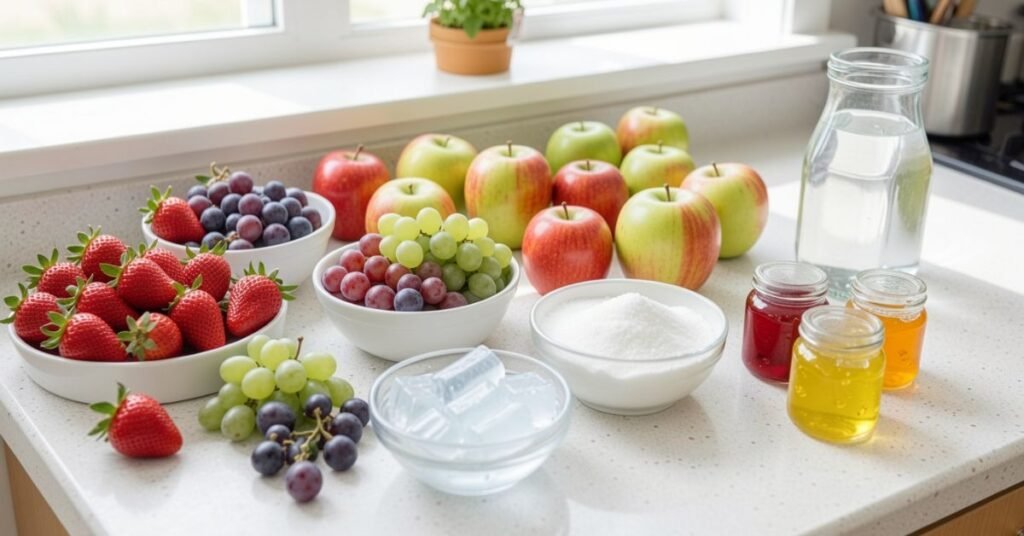
Jelly is a sweet spread made from fruit juice, sugar, and a gelling agent. The gelling agent is usually pectin or gelatin, which gives jelly its firm, wobbly texture. It is cooked and then cooled to set into a smooth, clear form. Many people enjoy it because of its bright color and sweet taste.
Most store-bought jelly also contains extra ingredients. These can include artificial flavors, colors, and preservatives to improve taste and shelf life. Some sugar-free versions use artificial sweeteners instead of sugar. Because of these added ingredients, not all jelly is the same, and some types can be unsafe for dogs.
Common Ingredients in Store-Bought Jelly
Store-bought jelly is usually made with a mix of sweeteners, fruit flavor, and thickening agents. It is designed for long shelf life and strong taste. That is why it often contains more than just natural fruit ingredients. Some of these extras are not suitable for dogs.
Common ingredients you may find in jelly include:
- Sugar or high-fructose corn syrup for sweetness
- Fruit juice or artificial fruit flavoring
- Pectin or gelatin for texture and thickness
- Food coloring to improve appearance
- Preservatives to increase shelf life
- Artificial sweeteners (in sugar-free versions)
Difference Between Jelly, Jam, and Preserves
Jelly, jam, and preserves are often confused, but they are not the same. All three are made from fruit and sugar, but the texture and fruit content are different. Jelly is the smoothest, while preserves have the most fruit pieces. Jam sits in between both.
Each type also affects how it looks and feels. Jelly is clear and firm. Jam is thick and slightly chunky. Preserves are rich and full of fruit pieces, giving a more natural feel.
| Type | Texture | Fruit Content | Appearance | Main Ingredients | Common Use |
| Jelly | Smooth and firm | Fruit juice only | Clear or shiny | Juice, sugar, pectin | Spread, desserts |
| Jam | Thick and soft | Crushed fruit | Slightly chunky | Fruit pulp, sugar, pectin | Toast, baking |
| Preserves | Very chunky | Whole fruit pieces | Rich and textured | Fruit chunks, sugar, syrup | Gourmet spreads |
Why Jelly Can Be Harmful for Dogs
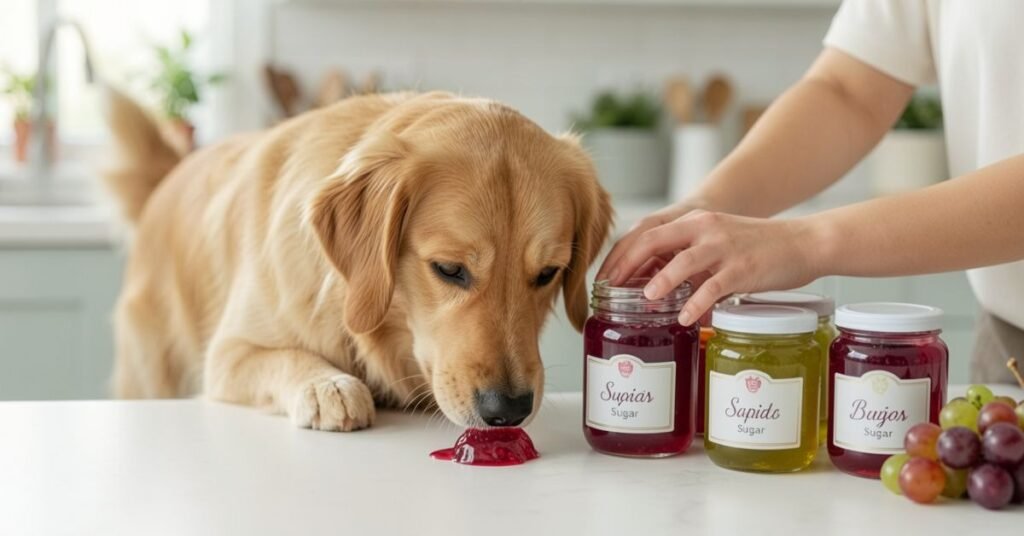
Jelly may look like a harmless sweet treat, but it is not suitable for dogs. It is mainly made of sugar, which dogs do not need in their diet. Their digestive system is not designed for sugary foods. Even a small amount can lead to stomach upset, restlessness, or diarrhea.
The danger also depends on what is added to the jelly. Many store-bought versions include ingredients that can cause health problems. These hidden extras make jelly risky for dogs.
- High sugar content: Can lead to weight gain and poor digestion
- Artificial colors and flavors: May irritate a dog’s system
- Preservatives: Can trigger allergies or sensitivities
- Xylitol (in sugar-free jelly): Extremely toxic and dangerous for dogs
High Sugar Content and Health Effects
Jelly is packed with sugar, and that is the main concern for dogs. Their bodies are not made to process sweet foods regularly. When dogs eat sugary treats, it puts extra pressure on their digestive system. Even a small bite can lead to discomfort or an upset stomach.
Over time, repeated sugar intake can slowly harm a dog’s health. It affects their weight, teeth, and energy levels. Some dogs may also become more prone to serious conditions if sugar becomes part of their diet.
| Health Area | What Sugar Does to Dogs | Early Signs to Watch For | Possible Long-Term Impact |
| Body Weight | Adds empty calories quickly | Sudden weight gain | Obesity and reduced activity |
| Stomach Health | Disrupts normal digestion | Gas, loose stool | Chronic digestive sensitivity |
| Teeth Health | Feeds harmful bacteria in mouth | Bad breath, plaque | Tooth decay and gum disease |
| Energy Levels | Causes sugar spikes and drops | Hyperactivity, tiredness | Weak stamina over time |
Artificial Additives and Preservatives Risks
Many store-bought jellies contain artificial additives and preservatives. These are added to improve color, taste, and shelf life. While they are considered safe for humans in small amounts, dogs can react differently. Their bodies are more sensitive, so these chemicals may cause irritation or discomfort.
Some dogs may show mild reactions after eating foods with additives. Others may develop more serious issues if they eat them regularly. These ingredients can also hide the natural quality of the food and make it harder for dogs to digest properly.
| Additive Type | Why It Is Used in Jelly | Possible Reaction in Dogs | Long-Term Concern |
| Artificial Colors | Make jelly look bright and fresh | Itching, mild allergies | Skin sensitivity |
| Artificial Flavors | Enhance taste | Upset stomach, nausea | Reduced food tolerance |
| Preservatives | Increase shelf life | Diarrhea, bloating | Gut imbalance |
| Synthetic Sweeteners | Replace sugar (in diet versions) | Weakness, toxicity risk (xylitol) | Severe poisoning risk |
Toxic Ingredients to Watch For in Jelly

Not all jelly is safe for dogs because some brands contain toxic ingredients. These harmful substances are often added for sweetness or flavor, especially in sugar-free or flavored versions. Even a small amount can cause serious health issues in dogs.
It is very important to always check what is inside before giving any jelly to your dog. Some ingredients are extremely dangerous and should be avoided completely.
- Xylitol: A sugar substitute that is highly toxic to dogs
- Grapes or grape juice: Can damage a dog’s kidneys
- Raisins: Even small amounts can be harmful
- Artificial sweeteners: May cause weakness or poisoning symptoms
- Caffeine or added stimulants (rare): Can affect the nervous system
Xylitol and Artificial Sweeteners Danger
Xylitol is one of the most dangerous ingredients found in some sugar-free jelly products. It is a common artificial sweetener used to replace sugar. Even a very small amount can cause a sudden drop in blood sugar in dogs. This can become life-threatening within minutes or hours.
Artificial sweeteners may look harmless on the label, but they are not safe for pets. Dogs cannot process these chemicals the same way humans do. That is why sugar-free jelly can sometimes be more dangerous than regular jelly.
| Sweetener Type | Where It Is Found | Effect on Dogs | Severity Level |
| Xylitol | Sugar-free jelly, gums, candy | Rapid blood sugar drop | Extremely Dangerous |
| Sorbitol | Diet foods, low-sugar products | Gas, diarrhea | Mild to Moderate |
| Aspartame | Diet drinks, sugar-free foods | Possible stomach upset | Low to Moderate |
| Sucralose | Processed sugar-free products | Digestive sensitivity | Mild |
Grape-Based Jelly and Toxicity Concerns
Grape-based jelly can be very dangerous for dogs. Grapes and their products are known to be toxic to many dogs, even in small amounts. The exact reason is not fully understood, but they can quickly affect a dog’s kidneys. This makes grape-flavored or grape-juice jelly a serious risk.
Even a small lick of grape jelly should not be ignored. Some dogs may show symptoms quickly, while others may react later. Because of this uncertainty, it is best to avoid any jelly that contains grape ingredients.
- Grape juice or grape puree: Can damage kidneys
- Raisin or grape extracts: Highly unsafe in any amount
- Mixed fruit jellies: May hide grape-based ingredients
- Natural grape flavoring: Still considered risky for dogs
What Happens If a Dog Eats Jelly?
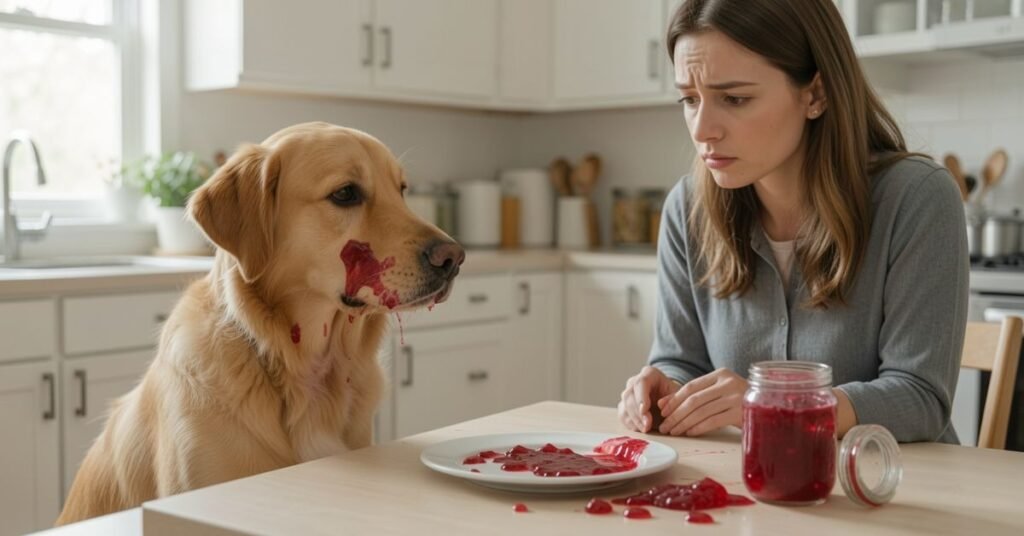
If a dog eats a small amount of jelly, the reaction is usually mild but uncomfortable. Most dogs may get an upset stomach because jelly is very high in sugar. You might notice changes in their digestion or behavior within a few hours. Some dogs may act normal, while others may show signs of discomfort.
The risk becomes more serious if the jelly contains harmful ingredients. Some products include substances that are dangerous for dogs even in tiny amounts. In these cases, symptoms can appear quickly and may need medical attention.
- Stomach upset: Diarrhea, gas, or vomiting
- Low energy or restlessness: Unusual behavior after eating
- Blood sugar drop (xylitol): Weakness, shaking, collapse
- Kidney stress (grape ingredients): Loss of appetite, lethargy
- Allergic reaction: Itching, swelling, or discomfort
Symptoms of Sugar Overload in Dogs
When a dog eats too much sugar from jelly or similar treats, their body reacts quickly. You may notice changes in their energy and digestion. Sugar overload can make them feel uncomfortable and unsettled. Some dogs may become hyper for a short time, then suddenly feel very tired.
In more serious cases, symptoms can affect their overall health and behavior. These signs usually appear within a few hours after eating sugary foods. It is important to watch your dog closely if they have eaten jelly.
- Diarrhea or soft stool
- Gas and bloating
- Restlessness or hyperactivity
- Sudden tiredness or low energy
- Increased thirst
- Mild vomiting in some cases
Emergency Signs That Need a Vet
Sometimes eating jelly can lead to serious health problems in dogs. These problems usually happen if the jelly contains toxic ingredients like xylitol or grapes. In these cases, symptoms can appear quickly and get worse fast. You should never ignore strong or unusual signs in your dog.
If you notice any of the following symptoms, contact a vet immediately. Quick action can save your dog’s life and prevent serious damage.
- Severe vomiting or nonstop diarrhea
- Weakness, collapse, or trouble standing
- Shaking or seizures
- Sudden loss of appetite
- Swollen face or signs of allergic reaction
- Unusual behavior or confusion
- Very low energy or unresponsiveness
What To Do If Your Dog Eats Jelly
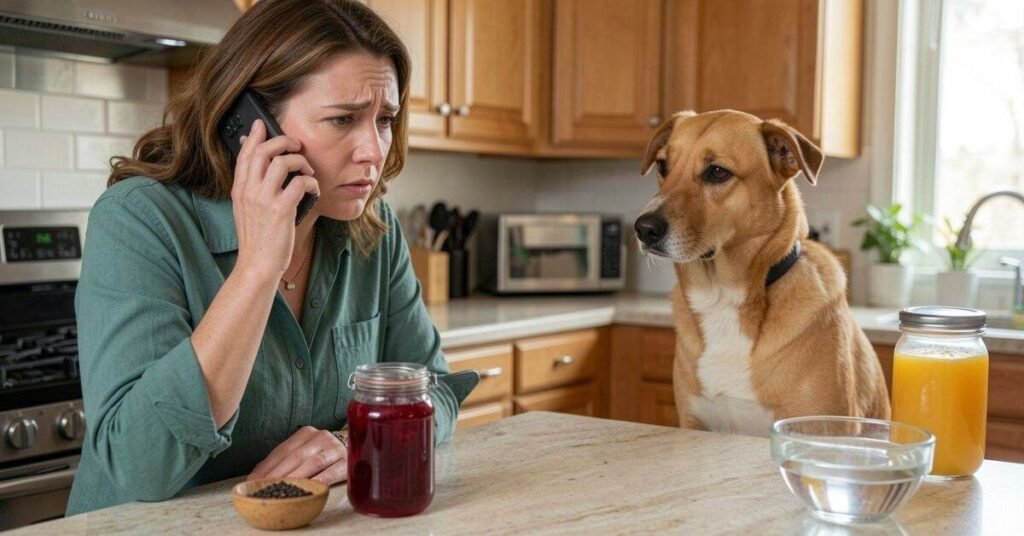
If your dog eats jelly, the first step is not to panic. Try to figure out how much they ate and what type of jelly it was. Check the label if you can, especially for harmful ingredients. Plain jelly is usually less risky, but sugar-free or grape-based jelly can be dangerous.
After that, keep a close eye on your dog for any changes. Symptoms may not show immediately, so monitoring is important for several hours. If anything unusual appears, contact your vet quickly.
- Check the ingredients: Look for xylitol, grapes, or artificial sweeteners
- Remove access: Make sure your dog cannot eat more
- Watch closely: Monitor behavior, energy, and digestion
- Look for warning signs: Vomiting, diarrhea, weakness, or shaking
- Call a vet fast: If toxic ingredients are involved or symptoms appear
Immediate Steps You Should Take
If your dog eats jelly, act quickly but stay calm. First, remove any remaining jelly so your dog cannot eat more. Try to check the packaging or ingredients if possible. This will help you understand if it is plain jelly or something more risky.
Next, keep your dog in a safe and quiet place. Observe them closely for any early signs of discomfort. Note the time they ate it and how much they may have consumed. This information can help your vet if you need to call them.
When to Call Your Veterinarian
You should call your veterinarian if your dog shows any unusual symptoms after eating jelly. Do not wait if you notice vomiting, diarrhea, or extreme tiredness. These signs can mean your dog is reacting badly to something in the jelly. Quick action is always safer.
Also contact a vet immediately if the jelly may contain toxic ingredients. This includes xylitol, grapes, or unknown sugar-free sweeteners. Even a small amount can be dangerous in these cases. If you are unsure, it is better to get professional advice right away.
Is Homemade Jelly Safe for Dogs?
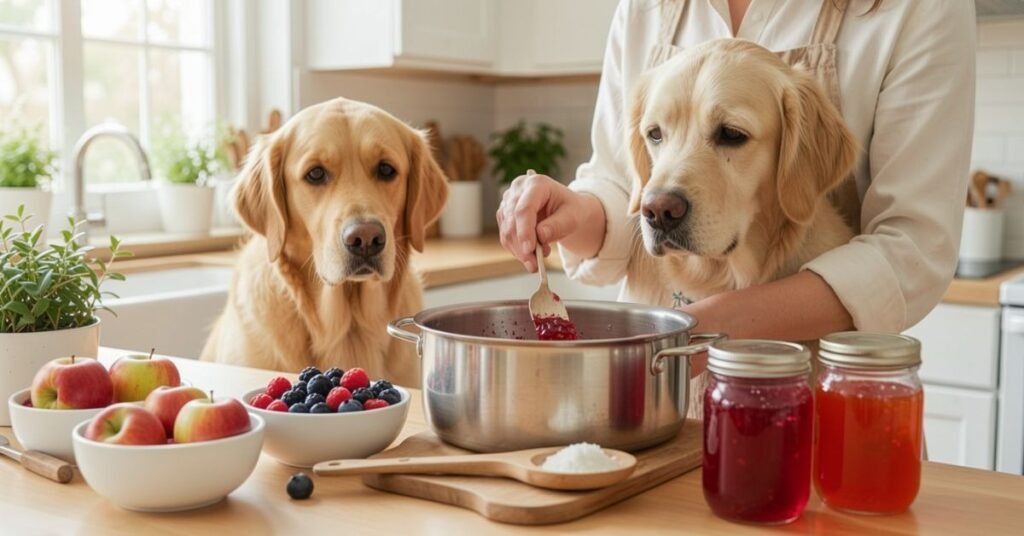
Homemade jelly can be safer than store-bought versions, but it still depends on the ingredients. If it is made with plain fruit and no added sugar, it may be okay in very small amounts. Dogs can handle simple, natural foods better than processed ones. Still, jelly should not become a regular part of their diet.
Even homemade versions need care and attention. Some fruits and sweeteners can still be harmful to dogs. Always keep the recipe simple and dog-friendly. Avoid anything that could upset their stomach or cause long-term health issues.
How to Make Dog-Friendly Jelly Treats
You can make simple jelly treats at home using safe and natural ingredients. The goal is to avoid sugar and harmful additives. Use fresh fruits that are safe for dogs and turn them into a soft, jelly-like snack. Always keep the recipe plain and easy to digest.
Basic steps for dog-friendly jelly:
- Use dog-safe fruits like apple (no seeds) or blueberries
- Blend the fruit with clean water or unsalted broth
- Add plain gelatin or pectin (no sweeteners added)
- Heat gently and mix until fully dissolved
- Pour into small molds and let it set in the fridge
Safe Ingredients You Can Use
When making homemade jelly for dogs, choosing safe ingredients is very important. The ingredients should be natural, simple, and easy for dogs to digest. Avoid anything sweetened or processed. Stick to fresh and dog-friendly options only.
Here are some safe ingredients you can use:
- Blueberries: Rich in antioxidants and safe in small amounts
- Apples (no seeds): Light and easy to digest
- Carrots: Natural sweetness without added sugar
- Pumpkin: Good for digestion and gentle on the stomach
- Plain water or unsalted broth: A safe base for jelly
Healthy Alternatives to Jelly for Dogs
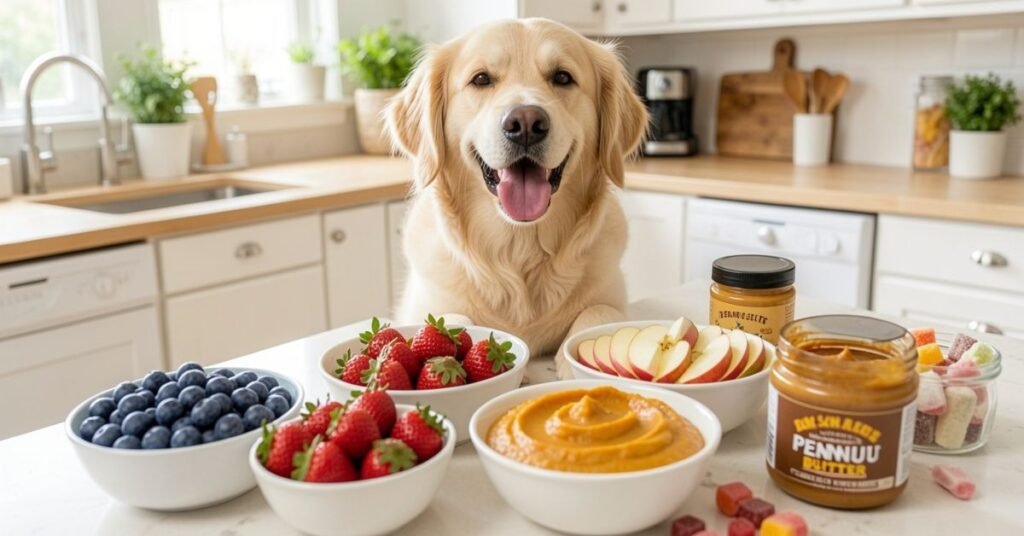
Dogs do not need jelly to enjoy a tasty treat. There are many healthier options that are safer and more natural. These alternatives are low in sugar and provide real nutrition. They are also easier for your dog to digest and enjoy without health risks.
Choosing better snacks helps keep your dog active and healthy. You can replace sugary jelly with simple, dog-friendly foods that support their overall well-being.
- Fresh fruits: Blueberries, apple slices (no seeds), watermelon
- Vegetables: Carrots, cucumber, or steamed pumpkin
- Plain yogurt (unsweetened): Good for digestion in small amounts
- Frozen treats: Blended fruit frozen into small cubes
- Lean proteins: Small pieces of boiled chicken or turkey
Natural Low-Sugar Treat Options
Dogs enjoy treats, but they do not need sugar to be happy. Natural low-sugar options are much safer than jelly. These foods give nutrition without harming your dog’s health. They also help keep weight and digestion under control.
You can easily switch to simple and healthy snacks at home. These options are tasty, fresh, and safe for most dogs when given in moderation.
- Apple slices (no seeds): Light and crunchy treat
- Blueberries: Small, sweet, and full of antioxidants
- Carrot sticks: Good for teeth and low in calories
- Cucumber pieces: Hydrating and refreshing
- Plain boiled chicken: High protein and very safe
- Pumpkin cubes: Gentle on the stomach and filling
Can Jelly Be Used to Hide Medication?
Some dog owners try to use jelly to hide medicine, but it is not a good idea. Jelly is high in sugar and may upset your dog’s stomach. It can also encourage unhealthy eating habits. Even if your dog takes the medicine, the jelly may still cause side effects.
There are safer ways to give medication to dogs. Many dogs accept pills hidden in healthy foods that are better for their health. Always choose options that do not harm your dog in the long run.
- Peanut butter (xylitol-free): Common and tasty option
- Soft dog treats: Designed for hiding pills
- Boiled chicken pieces: Simple and effective
- Cheese (small amount): Works for some dogs
- Vet-approved pill pockets: Safe and specially made for pets
Conclusion
Jelly may look like a fun and harmless treat, but it is not a safe choice for dogs. It is mostly made of sugar and offers no real nutrition for your pet. Even a small amount can cause stomach upset in your dog.
The bigger concern is hidden ingredients. Some jellies contain xylitol, grapes, or artificial additives that can be dangerous. These substances can cause serious health problems, even in small doses.
Because of these risks, jelly should be avoided as a regular treat. Dogs have much healthier and safer food options available. Natural snacks are always a better choice for their long-term health.
In the end, keeping your dog safe is more important than sharing human foods. Always check ingredients before giving anything new. When in doubt, choose simple, vet-approved treats instead.
FAQs
1. Is jelly safe for dogs to eat?
Jelly is not a safe food for dogs, even though a small lick may not always cause harm. It is high in sugar and can upset your dog’s stomach. Some jelly types also contain risky ingredients. It is best to avoid it completely.
2. What should I expect if my dog eats jelly?
Most dogs may show mild stomach issues after eating jelly. This can include gas, soft stool, or slight vomiting. Some dogs may also feel low energy for a short time. The reaction depends on the amount and ingredients.
3. Why is sugar-free jelly more dangerous?
Sugar-free jelly can be riskier than regular jelly. It may include xylitol, a sweetener that is highly poisonous to dogs.Even a tiny amount can cause a sudden drop in blood sugar. This can become a medical emergency very quickly.
4. Can eating jelly harm my dog long-term?
Yes, repeated exposure to sugary foods like jelly can affect your dog’s health. It may lead to weight gain, weak teeth, and digestive problems.Over time, it may also raise the risk of diabetes. Healthy treats are always a better choice.
5. What is the right action after my dog eats jelly?
First, stay calm and check what kind of jelly was eaten. Look at the ingredients for any harmful substances. If it is plain jelly, just watch your dog closely.If harmful ingredients are found, contact your vet right away.

DogsVibes Editorial Team creates trusted, research-based dog care content to help pet owners keep their dogs healthy, happy, and safe.