


Introduction
Yak cheese for dogs is a natural dog chew made from yak and cow milk. It originally comes from the Himalayan region. The milk is boiled, pressed, and dried to make a hard cheese chew. These chews are known for being long-lasting and high in protein. Many dog owners use them as a healthy alternative to common dog treats.
Some dogs love to chew. Boredom is reduced and they are kept busy. But not all chews are safe or healthy for dogs. Some treats break easily or contain harmful ingredients. This is why many pet owners are now choosing natural chews like yak cheese for their dogs.
Dogs can benefit from chewing yak cheese. They can support dental health and provide important nutrients. However, it is also important to understand the right way to give them to your dog. In this guide, you will learn about the benefits, safety tips, and feeding guidelines for yak cheese for dogs.
What Is Yak Cheese for Dogs?
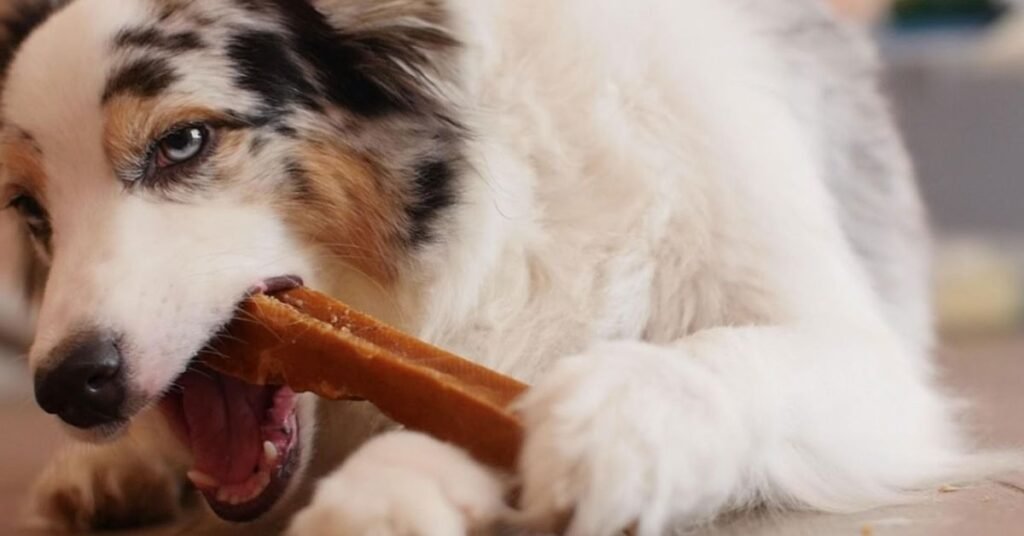
Yak cheese for dogs is a hard dog chew made from yak and cow milk. It comes from the Himalayan region, where people have made this cheese for many years. The milk is boiled and mixed with lime juice and salt. Then it is pressed and dried for several weeks. This process creates a very hard cheese that dogs can chew for a long time.
Dog owners often give yak cheese as a natural and long-lasting treat. It contains simple ingredients and does not usually have artificial additives. Many dogs enjoy chewing it because it is firm and tasty. Yak cheese chews are also known for being high in protein and low in fat compared to many other dog treats.
What Are Himalayan Yak Cheese Chews Made Of?
Himalayan yak cheese chews are made from a few simple and natural ingredients. They come from a traditional recipe used in the Himalayan mountains for many years. The cheese is made by boiling milk and then separating the solid part. After that, it is pressed into blocks and dried for several weeks. This drying process makes the chew very hard and long-lasting for dogs.
Most yak cheese chews do not contain artificial flavors or preservatives. They are usually made with natural dairy ingredients and a small amount of salt. Because of this simple recipe, many dog owners see them as a healthier chew option for their pets.
Common ingredients in Himalayan yak cheese chews include:
- The milk of yaks or a mixture of yaks and cows
- Lime juice (used to separate the milk)
- A small amount of salt
- Natural dairy proteins and minerals from the milk
Nutritional Benefits of Yak Cheese for Dogs
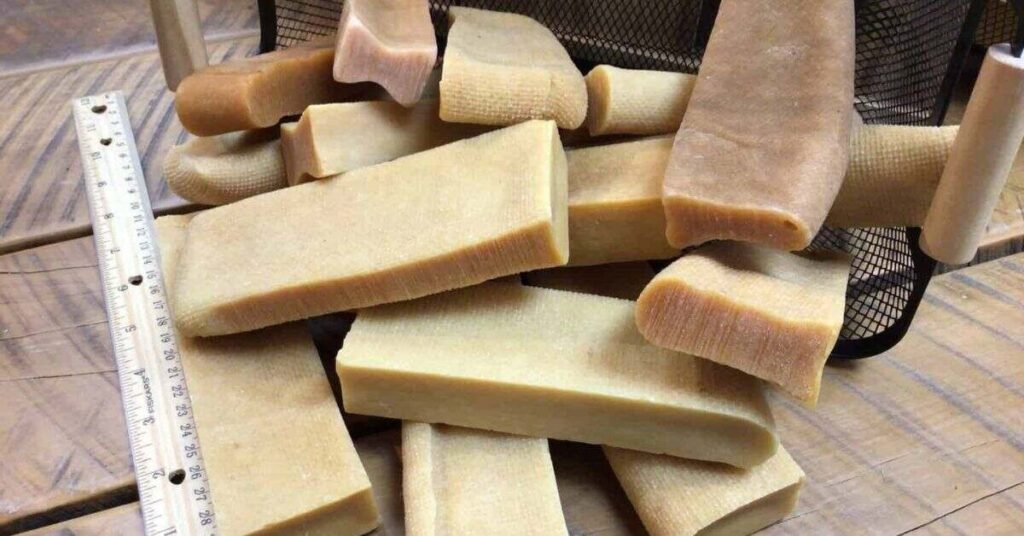
Yak cheese chews provide several useful nutrients for dogs. They are made mainly from milk, which naturally contains protein, calcium, and other minerals. These nutrients help support your dog’s muscles, bones, and overall health. Because the cheese is dried and hardened, the nutrients stay concentrated in the chew.
Another benefit is that yak cheese chews usually have simple and natural ingredients. Many dog owners prefer them because they are free from artificial colors and preservatives. They can also be easier to digest than some heavily processed dog treats. When given in the right amount, they can be a healthy and satisfying chew for many dogs.
Key nutritional benefits of yak cheese for dogs include:
- High protein to support muscle health
- Rich in calcium for strong bones and teeth
- Compared to other dog treats, these are low in fat
- Natural source of minerals from milk
- Long-lasting chew that keeps dogs engaged
Are Yak Cheese Chews Safe for Dogs?
Yak cheese chews are generally safe for most dogs when given the right way. They are made from natural milk ingredients and do not usually contain harmful additives. Many dog owners choose them because they are long-lasting and less messy than some other dog treats. When dogs chew on them slowly, they can enjoy the treat for a long time.
However, safety also depends on how the chew is given. The chew should be the right size for your dog to prevent choking. It is also a good idea to supervise your dog while they are chewing. If the chew becomes very small or sharp, it should be taken away. This helps reduce the risk of choking or dental problems.
Possible Risks and Safety Considerations
Yak cheese chews are generally safe, but there are still some risks to consider. Because the chew is very hard, some dogs may try to bite it too aggressively. This can sometimes lead to tooth damage or small broken pieces. Dogs that chew very fast may also try to swallow large chunks.
Another thing to remember is that every dog is different. Some dogs may have sensitive stomachs or mild dairy intolerance. It is always a good idea to watch your dog the first time they try yak cheese. Giving the correct size chew and supervising your dog can greatly reduce most risks.
| Possible Risk | Why It Can Happen | Signs to Watch For | Safety Tip |
| Choking Hazard | Dog tries to swallow large pieces | Gagging, coughing, trouble swallowing | Give the correct chew size and remove small pieces |
| Broken Teeth | Chew is very hard and dog bites aggressively | Dog avoids chewing, tooth sensitivity | Choose a size suitable for your dog and supervise chewing |
| Digestive Upset | Some dogs are sensitive to dairy | Vomiting, diarrhea, stomach discomfort | Introduce the chew slowly and monitor your dog |
| Allergic Reaction | Rare dairy allergy in some dogs | Itching, swelling, skin irritation | Stop giving the chew and consult a vet |
| Small End Pieces | Chew becomes small after long use | Dog tries to swallow the last piece | Remove the small piece or soften it before giving |
| Overconsumption | Dog chews for too long in one session | Stomach discomfort or loose stool | Limit chewing time and use as an occasional treat |
Dental Health Benefits of Yak Cheese Dog Chews
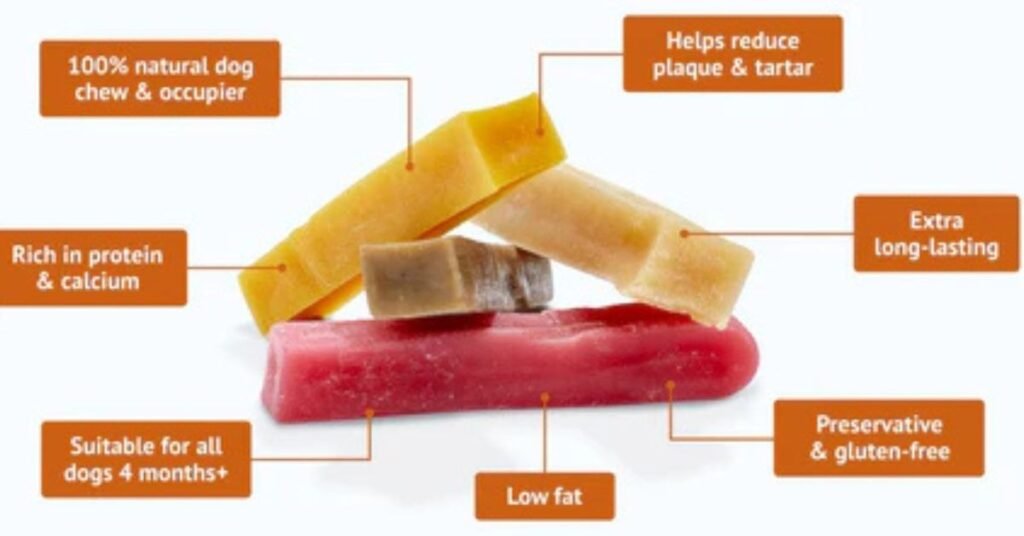
Yak cheese dog chews can help support your dog’s dental health. When dogs chew on these hard treats, the chewing action can help scrape away plaque from their teeth. This natural chewing process may reduce the buildup of tartar over time. As a result, your dog’s teeth can stay cleaner and healthier.
Chewing also helps keep a dog’s gums active and strong. Many dogs enjoy chewing because it is a natural behavior. Giving them a long-lasting chew like yak cheese can keep them busy while also supporting oral hygiene. However, it should not replace regular brushing and proper dental care.
Some dental benefits of yak cheese chews include:
- Helps reduce plaque buildup on teeth
- Supports healthier gums through chewing
- Encourages natural chewing behavior
- May help reduce bad breath over time
How Chewing Supports Teeth and Gum Health
Chewing is a natural behavior for dogs and plays an important role in oral health. When dogs chew on firm treats like yak cheese, the chewing motion rubs against their teeth. This action can help remove small amounts of plaque from the tooth surface. Over time, this may help reduce tartar buildup and keep the mouth cleaner.
Chewing also supports healthy gums. The pressure created while chewing stimulates the gums and improves blood flow. This can help keep gum tissue stronger and healthier. However, chewing should be combined with regular dental care, such as brushing and routine vet checkups.
| Oral Health Benefit | How Chewing Helps | Why It Matters for Dogs | Example with Yak Cheese Chews |
| Plaque Reduction | Chewing creates friction on the tooth surface | Helps remove soft plaque before it hardens into tartar | Hard texture of yak cheese rubs against teeth while chewing |
| Tartar Control | Regular chewing slows plaque buildup | Lower tartar can reduce dental problems over time | Long chewing sessions help maintain cleaner teeth |
| Gum Stimulation | Pressure from chewing massages the gums | Supports better blood circulation in gum tissue | Firm chews encourage steady chewing that activates gums |
| Stronger Teeth | Chewing exercises jaw muscles and teeth | Helps maintain strong teeth and jaw structure | Yak cheese provides a durable chew for longer use |
| Fresher Breath | Removing plaque and food particles reduces odor | Helps control bad breath in dogs | Chewing may clean leftover food from the mouth |
| Mental Satisfaction | Chewing satisfies a dog’s natural instinct | Reduces boredom and stress-related chewing habits | Long-lasting chews keep dogs busy and engaged |
How to Choose the Right Yak Cheese Chew for Your Dog
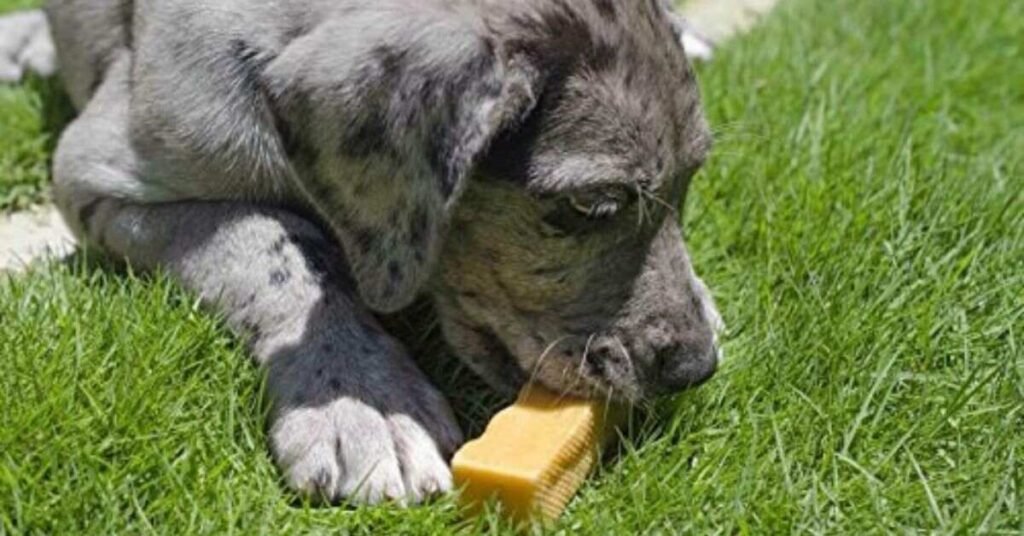
Choosing the right yak cheese chew for your dog is important for both safety and enjoyment. Dogs come in different sizes and chewing habits. A chew that is too small can become a choking risk. Yak cheese chew that is too large may be difficult for a small dog to handle. Picking the correct size helps your dog chew comfortably and safely.
You should also consider your dog’s age and chewing style. Some dogs chew slowly, while others are very aggressive chewers. Hard chews like yak cheese should match your dog’s strength and jaw size. Always supervise your dog during chewing to make sure they are using the treat safely.
Tips for choosing the right yak cheese chew:
- Select a chew size based on your dog’s weight and breed
- Choose thicker chews for strong or aggressive chewers
- Pick smaller chews for small dog breeds
- Avoid very small pieces that can cause choking
- When your dog chews, always keep an eye on him
Choosing the Right Size Based on Dog Weight
Choosing the right size of yak cheese chew based on your dog’s weight is very important. Dogs of different sizes need different chew sizes to stay safe. A chew that is too small may become a choking hazard. On the other hand, a chew that is too large may be hard for a small dog to hold and chew properly.
Dog weight is one of the easiest ways to decide the correct chew size. Larger dogs usually need thicker and longer chews because they have stronger jaws. Smaller dogs should get lighter and smaller chews that are easier to manage. Picking the right size helps your dog enjoy the chew safely and for a longer time.
| Dog Weight | Recommended Yak Cheese Chew Size | Ideal Chew Thickness | Suitable Dog Breeds (Examples) | Why This Size Works |
| Up to 10 lbs (4.5 kg) | Small | Thin and short | Chihuahua, Yorkshire Terrier | Easy to hold and chew for very small mouths |
| 11–25 lbs (5–11 kg) | Medium-Small | Slightly thicker | Pug, Shih Tzu, Dachshund | Balanced size for moderate chewing strength |
| 26–50 lbs (12–23 kg) | Medium | Medium thickness | Beagle, Cocker Spaniel, Border Collie | Durable enough for regular chewing |
| 51–75 lbs (24–34 kg) | Large | Thick and long | Labrador Retriever, Boxer | Strong chew that lasts longer for bigger dogs |
| 76–100 lbs (35–45 kg) | Extra Large | Very thick | German Shepherd, Golden Retriever | Prevents quick breakage from strong jaws |
| Over 100 lbs (45+ kg) | Giant Size | Extra thick and heavy | Great Dane, Mastiff | Designed for powerful chewers and large breeds |
How to Safely Give Yak Cheese to Your Dog
Giving yak cheese to your dog can be safe if done correctly. Always start by choosing the right size chew for your dog’s weight and age. Never leave your dog unattended while chewing. Supervision helps prevent choking or accidental swallowing of large pieces. Introduce the chew slowly, especially if it’s your dog’s first time.
It’s also important to control how often your dog gets yak cheese. Too much can cause digestive upset. Break off small pieces for small dogs or let your dog chew slowly over time. Keep the chew clean and store it in a dry place to maintain its quality.
Tips for safely giving yak cheese to your dog:
- Always supervise your dog while chewing
- Choose the right size chew for your dog’s breed and weight
- Introduce the chew gradually, especially for first-timers
- Limit chewing sessions to avoid digestive upset
- Remove small or sharp pieces before they become a hazard
- Store chews in a cool, dry place to keep them safe and fresh
Portion Size and Feeding Frequency Guide
Portion size and feeding frequency are important when giving yak cheese to your dog. Too much at once can cause stomach upset or diarrhea. Dogs should chew slowly and enjoy the treat over time. Smaller dogs need smaller portions, while larger dogs can handle bigger pieces.
Feeding frequency also matters. Yak cheese should be given as a treat, not a main meal. Most dogs do well with 1–2 chews per week, depending on size and diet. Always monitor your dog while they chew and adjust portions if needed.
| Dog Weight | Recommended Portion Size | Suggested Frequency | Notes |
| Up to 10 lbs (4.5 kg) | Small piece (1–2 inches) | 1 chew per week | Small dogs digest slowly; avoid large pieces |
| 11–25 lbs (5–11 kg) | Medium piece (2–3 inches) | 1–2 chews per week | Moderate chewing; supervise chewing time |
| 26–50 lbs (12–23 kg) | Medium-Large piece (3–4 inches) | 1–2 chews per week | Adjust based on dog’s chewing strength |
| 51–75 lbs (24–34 kg) | Large piece (4–5 inches) | 1–2 chews per week | Can handle longer chewing sessions |
| 76–100 lbs (35–45 kg) | Extra large piece (5–6 inches) | 1–2 chews per week | Strong chewers; supervise to prevent swallowing |
| Over 100 lbs (45+ kg) | Giant piece (6+ inches) | 1–2 chews per week | Very large dogs; monitor chewing closely |
Are Yak Cheese Chews Safe for Puppies?

Yak cheese chews can be safe for puppies, but only if given carefully. Puppies have small teeth and jaws, so very hard chews can sometimes cause dental damage. It is important to choose a chew size that matches your puppy’s age and weight. Always supervise your puppy while they are chewing to prevent choking.
Puppies should start with small pieces and short chewing sessions. Introducing yak cheese gradually helps their digestive system adjust. Not all puppies can tolerate dairy well, so watch for signs of upset stomach. When given correctly, yak cheese can be a healthy and enjoyable treat for puppies.
Tips for giving yak cheese to puppies:
- Choose a small chew suitable for puppy size
- Start with short chewing sessions
- Introduce the chew slowly to monitor digestion
- Supervise your puppy at all times
- Remove small or sharp pieces to prevent choking
- Limit frequency to avoid digestive upset
Yak Cheese for Dogs vs Other Dog Chews
Yak cheese chews are a natural and long-lasting option for dogs. Unlike some treats, they are made from simple milk ingredients without artificial additives. Many dogs enjoy chewing them slowly, which can keep them busy for a long time. Other dog chews, like rawhide or bully sticks, may break easily or contain preservatives, making them less healthy in some cases.
Comparing different chews can help you choose the best option for your dog. Yak cheese chews are low in odor and often easier to digest. They also provide protein and calcium naturally. However, each type of chew has its own benefits depending on your dog’s size, chewing strength, and dietary needs.
| Chew Type | Ingredients | Durability | Digestibility | Odor Level | Nutritional Benefits | Safety Notes |
| Yak Cheese Chews | Yak/cow milk, lime, salt | Very long-lasting | Easy to digest for most dogs | Low | High protein, calcium | Can be hard for aggressive chewers; supervise puppies |
| Rawhide | Animal hides, sometimes additives | Medium | Hard to digest for some dogs | Medium | Minimal nutritional value | Can splinter; choking risk; monitor closely |
| Bully Sticks | Beef pizzle | Medium to long | Easy to digest | Medium | High protein | High calorie; can be expensive |
| Antlers | Naturally shed deer or elk antlers | Very long-lasting | Low digestibility | Low | Minerals (calcium, phosphorus) | Very hard; risk of broken teeth; supervise |
| Rubber Chew Toys | Synthetic rubber, sometimes flavored | Long-lasting | Not digestible | Low | No nutrition | Not edible; can be swallowed if pieces break |
Yak Chews vs Rawhide vs Bully Sticks
Yak chews, rawhide, and bully sticks are all popular dog chews, but they have important differences. This type of chews are made from natural milk and are very hard, long-lasting, and easy to digest for most dogs. Rawhide is made from animal hides and sometimes contains additives, which can make it harder to digest and more likely to splinter. Bully sticks are made from beef and are usually easier to chew, but they can be high in calories and break quickly for aggressive chewers.
Choosing the right chew depends on your dog’s size, chewing style, and dietary needs. Yak chews are good for dogs that like long-lasting treats and need extra dental exercise. Rawhide can be risky if swallowed in large pieces. Bully sticks are tasty and protein-rich but may not last long. Supervising your dog while chewing any of these is always important.
| Chew Type | Main Ingredient | Durability | Digestibility | Odor | Nutritional Value | Safety Notes |
| Yak Chews | Yak/cow milk, lime, salt | Very long-lasting | Easy to digest | Low | High protein, calcium | Very hard; supervise puppies and aggressive chewers |
| Rawhide | Animal hides, sometimes additives | Medium | Hard to digest for some dogs | Medium | Minimal | Can splinter; choking hazard; monitor chewing |
| Bully Sticks | Beef pizzle | Medium | Easy to digest | Medium | High protein | High calorie; can break fast; supervise chewing |
| Antlers | Deer/elk naturally shed antlers | Very long-lasting | Low | Low | Minerals (calcium, phosphorus) | Very hard; risk of broken teeth; supervision needed |
| Rubber Chew Toys | Synthetic rubber | Long-lasting | Not digestible | Low | None | Not edible; pieces can break off; supervision advised |
Conclusion
Yak cheese chews are a natural and healthy treat for dogs. They are long-lasting and provide important nutrients like protein and calcium. Many dogs enjoy chewing them slowly, which can help keep them busy and mentally stimulated.
Safety is important when giving yak cheese to your dog. Always choose the right size for your dog’s weight and age. Supervise chewing sessions to prevent choking or dental issues. Introduce chews gradually, especially for puppies or dogs with sensitive stomachs.
Yak cheese chews can also support dental health. Chewing helps reduce plaque and tartar buildup while keeping gums active. However, they should not replace regular brushing or veterinary dental care. Use them as a supplement to a balanced diet and proper oral hygiene routine.
Overall, yak cheese chews are a great option for many dogs. They are natural, tasty, and beneficial when used correctly. By following portion guidelines, supervising chewing, and choosing the right size, your dog can safely enjoy this healthy treat.
FAQs
1. Can all dogs eat yak cheese?
Yak cheese is safe for most dogs when given in the right size and amount. Small dogs, puppies, or dogs with sensitive stomachs should be watched closely. Always supervise your dog while chewing to avoid choking.
2. When can I start giving yak cheese to my puppy?
You can give yak cheese to puppies around 4–6 months old. Their teeth and jaws need to be strong enough for hard chews. Begin with small pieces and short sessions, then increase size as they grow.
3. Can yak cheese replace brushing my dog’s teeth?
No, chewing yak cheese helps reduce plaque but cannot replace brushing. Regular tooth brushing and vet dental checkups are still needed. Think of yak cheese as a helpful supplement, not a replacement.
4. How often should I give yak cheese to my dog?
Yak cheese should be given as a treat, not a regular meal. Usually, 1–2 chews per week are enough. Too much at once can upset your dog’s stomach, so follow proper portion sizes.
5. What should I do if my dog reacts badly to yak cheese?
Stop giving the chew immediately if your dog shows vomiting, diarrhea, or itching. Some dogs may have a mild dairy sensitivity. Contact your vet for advice and introduce chews slowly next time.
