

Introduction
Whipworms in dogs are a type of internal parasite that lives in the large intestine. Their scientific name is Trichuris vulpis. These worms get their name from their whip-like shape. Dogs can get infected when they swallow whipworm eggs from contaminated soil, water, or feces.
This infection can be hard to notice in the beginning. Many dogs do not show clear signs until the problem becomes serious. That is why whipworms in dogs are often called a “hidden parasite.” If left untreated, they can lead to weight loss, diarrhea, and weakness. This makes early detection very important for every dog owner.
In this guide, you will learn everything about whipworms in dogs. We will cover the main causes, common symptoms, how vets diagnose the infection, and the best treatment options. You will also find useful tips on prevention to keep your dog safe and healthy.
What Are Whip Worms in Dogs?
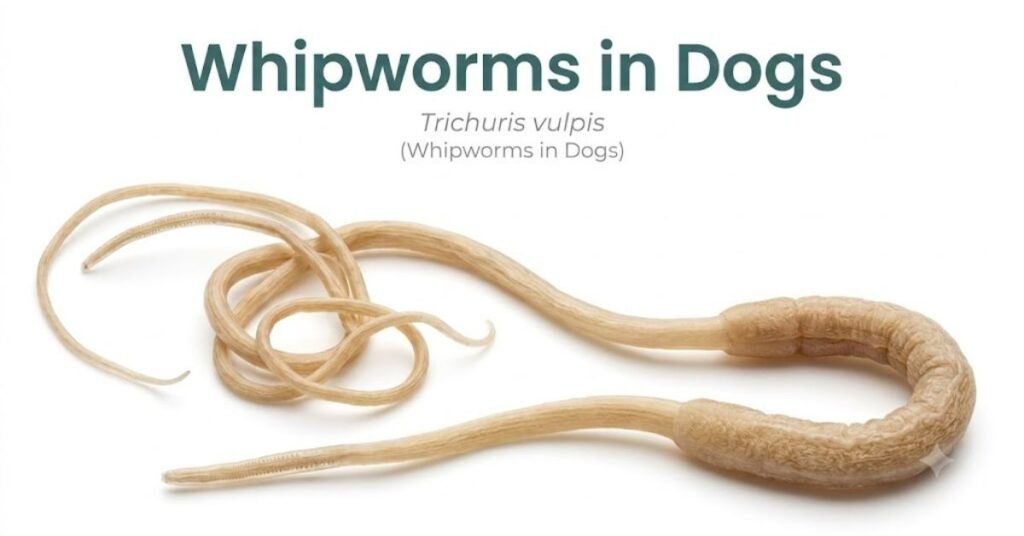
Whip worms in dogs are small intestinal parasites. Their scientific name is Trichuris vulpis. They live mainly in the large intestine and cecum of dogs. These worms have a thin, whip-like shape, which is how they get their name.
Dogs get infected when they swallow whipworm eggs from contaminated soil, water, or feces. Once inside the body, the eggs hatch and grow into adult worms. These worms attach to the intestinal wall and feed on blood and nutrients. This can slowly affect the dog’s health over time.
Understanding Whipworms (Trichuris vulpis)
Whipworms, known as Trichuris vulpis, are intestinal parasites that commonly affect dogs. They live in the large intestine, where they attach to the lining of the gut. These worms are very small, but they can still cause serious health problems if not treated.
The life cycle of whipworms starts when a dog swallows infective eggs from contaminated soil or areas. Inside the body, the eggs hatch and develop into adult worms. These worms then feed on the dog’s blood and nutrients. Over time, this can lead to irritation, weakness, and digestive issues.
Life Cycle of Whip Worms in Dogs
The life cycle of whipworms in dogs begins in the environment. Adult whipworms live in the dog’s large intestine, where they produce thousands of eggs. These eggs are passed out of the body through the dog’s feces. However, they are not immediately infectious. Instead, the eggs remain in the soil for several weeks until they develop into the infective stage.
Once a dog swallows these mature eggs from contaminated soil, grass, or water, the life cycle begins again. Inside the large intestine, the eggs hatch and gradually develop into adult whipworms. As a result, the worms attach to the intestinal lining, feed on tissue and blood, and begin reproducing. Over time, they lay new eggs that are passed in the dog’s feces, continuing the life cycle. Therefore, regular deworming, prompt feces removal, and good environmental hygiene are essential to break the cycle and prevent reinfection.
- Eggs are passed in dog feces into the environment
- Eggs become infective after developing in soil
- Dog swallows contaminated soil, water, or feces
- Eggs hatch inside the intestine
- Worms grow into adults in the large intestine
- Adult worms lay more eggs and repeat the cycle
Egg Stage and Development
The egg stage is the first and one of the most important parts of the whipworm life cycle in dogs. Adult whipworms lay eggs inside the dog’s large intestine, and these eggs are passed out of the body through the dog’s feces. However, freshly passed eggs are not immediately infectious to other dogs. Instead, they must first develop in the environment before they can cause a new infection.
After spending several weeks in the soil, the eggs mature and become infective. Warm and moist conditions help them survive and remain infectious for months or even years. Once another dog swallows these mature eggs from contaminated soil, grass, or water, the life cycle continues inside the dog’s body. As a result, the eggs hatch, develop into adult whipworms, and begin producing new eggs. Therefore, prompt cleanup of dog feces and good environmental hygiene are essential for breaking the whipworm life cycle and preventing future infections.
| Stage | Where It Happens | What Happens | Time Period |
| Egg Release | Inside infected dog | Eggs pass out in feces | Day 0 |
| Environmental Stage | Soil or ground | Eggs mature slowly | 2–4 weeks |
| Infective Stage | Soil | Eggs become ready to infect another dog | After maturation |
| Ingestion | New dog’s mouth | Dog swallows contaminated soil/water | Anytime exposure occurs |
| Hatching | Dog’s intestine | Eggs hatch into larvae | A few days after ingestion |
| Growth Stage | Large intestine | Larvae develop into adult worms | 2–3 months |
Causes of Whip Worms in Dogs
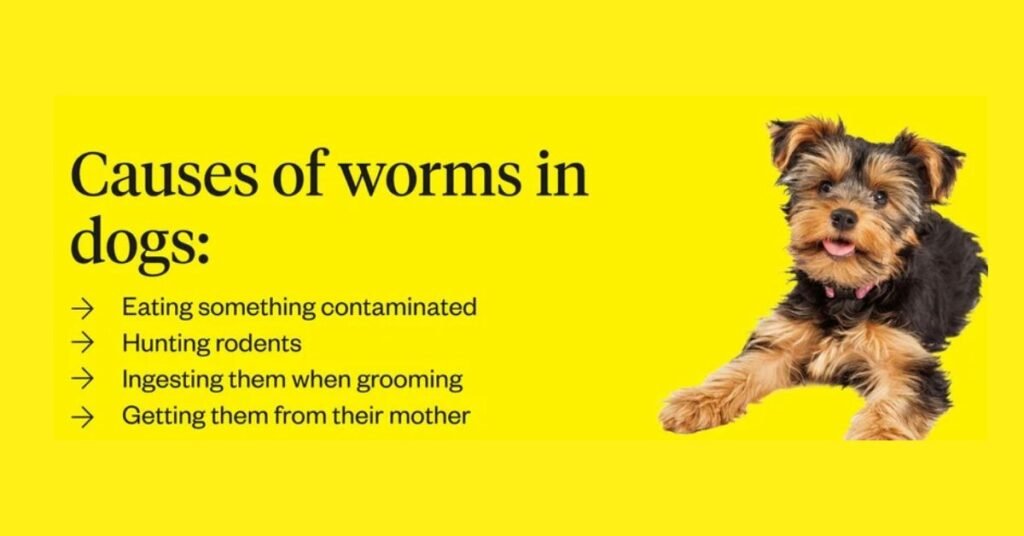
Whip worms in dogs are caused by swallowing infective eggs from the environment. These eggs are passed in the feces of infected dogs. They stay in soil, grass, water, or contaminated areas for weeks or even months. When a healthy dog comes in contact with these areas, infection can happen.
Poor hygiene and shared outdoor spaces increase the risk. Dogs that spend time in parks, kennels, or open grounds are more exposed. Once the eggs enter the dog’s body, they hatch in the intestine and start the infection.
Common causes include:
- Eating or sniffing contaminated soil
- Drinking dirty or stagnant water
- Contact with infected dog feces
- Playing in parks or public areas with poor sanitation
- Sharing kennels or crowded environments
- Not using regular deworming treatment
How Dogs Get Infected
Dogs become infected with whipworms when they swallow microscopic eggs from the environment. These eggs are commonly found in contaminated soil, grass, water, or areas where infected dogs have passed feces. Because the eggs are too small to be seen with the naked eye, dogs can easily ingest them while sniffing, licking, or eating something from the ground.
Once the eggs enter the dog’s body, they travel to the large intestine, where they hatch and develop into adult whipworms. As a result, the parasites begin irritating the intestinal lining and can eventually cause health problems. Dogs often become infected during everyday activities, such as playing outside, walking in parks, or exploring contaminated areas. Therefore, limiting exposure to contaminated environments and maintaining good hygiene are key steps in preventing whipworm infection.
Symptoms of Whip Worms in Dogs
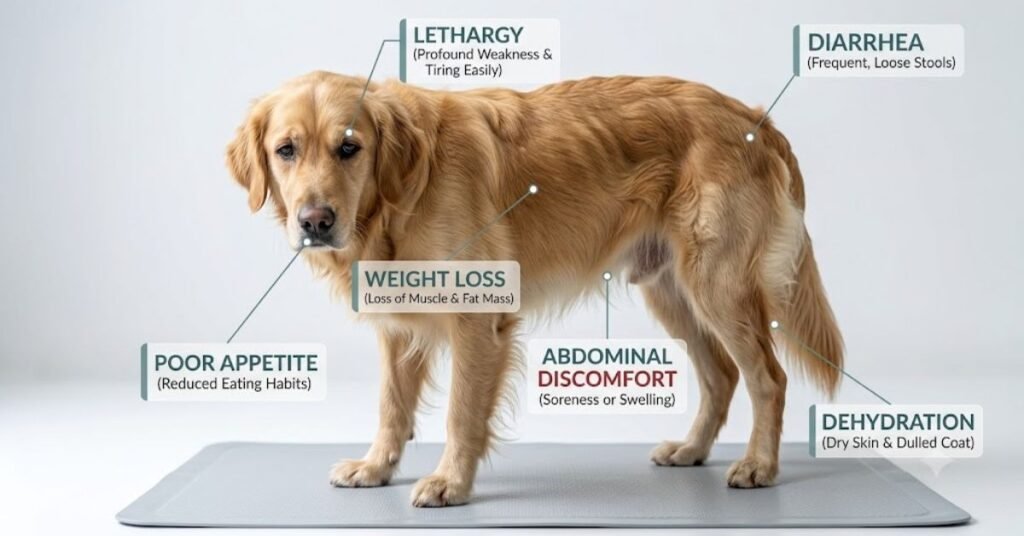
Symptoms of whip worms in dogs can be mild at the start. Many dogs do not show clear signs in early stages. As the infection grows, the condition becomes more serious. The worms damage the intestines and affect digestion and overall health.
Common symptoms include changes in stool and general weakness. Some dogs may also lose weight or feel tired. In severe cases, the infection can cause long-term digestive problems.
Common symptoms are:
- Diarrhea, sometimes with mucus or blood
- Weight loss despite normal eating
- Weakness and low energy
- Poor appetite
- Dehydration in serious cases
- Irritated or sensitive stomach
- Sudden changes in stool consistency
Severe Symptoms and Complications
Severe symptoms of whipworms in dogs appear when the infection is not treated early. The worms damage the lining of the large intestine. This leads to ongoing irritation and poor absorption of nutrients. Over time, the dog may become weak and unhealthy.
Complications can become serious if the infection continues. Chronic diarrhea and blood loss can affect the dog’s overall condition. In some cases, it may lead to dehydration and anemia. Quick treatment is important to prevent long-term damage.
| Symptom / Complication | What It Means | Effect on Dog | Severity Level |
| Bloody Diarrhea | Intestinal damage and bleeding | Weakness and discomfort | High |
| Chronic Diarrhea | Long-term digestive issue | Nutrient loss and weight loss | High |
| Weight Loss | Poor nutrient absorption | Thin body and low energy | Medium to High |
| Dehydration | Fluid loss from diarrhea | Dry gums, weakness | High |
| Anemia | Blood loss due to worms | Pale gums and fatigue | High |
| Lethargy | Low energy levels | Reduced activity | Medium |
| Poor Coat Condition | Lack of nutrients | Dull and rough fur | Medium |
| Electrolyte Imbalance | Loss of essential minerals | Weakness and health risks | High |
| Growth Issues (Puppies) | Nutrient deficiency | Slow development | High |
Diagnosis of Whip Worms in Dogs
Diagnosing whipworms in dogs can sometimes be challenging. This is because whipworm eggs are not always present in every stool sample. As a result, a single fecal test may not detect the infection. Therefore, veterinarians often consider the dog’s medical history, symptoms, and laboratory test results together before making a diagnosis.
The most common diagnostic method is a fecal examination. During this test, a small stool sample is examined under a microscope to look for whipworm eggs. However, if no eggs are found, the veterinarian may recommend repeating the test to confirm the result. Most importantly, early diagnosis allows treatment to begin sooner, helping prevent more serious health problems and reducing the risk of ongoing infection.
Common diagnostic methods include:
- Fecal flotation test to detect eggs
- Microscopic examination of stool samples
- Repeated fecal tests for accurate results
- Physical exam based on symptoms
- Medical history and exposure to contaminated areas
Fecal Testing and Veterinary Exams
Fecal testing is the primary method used to diagnose whipworms in dogs. During the test, the veterinarian collects a small stool sample and examines it under a microscope to look for whipworm eggs. However, these eggs are not always present in every sample. Therefore, the fecal test may need to be repeated to confirm the infection.
In addition to fecal testing, a complete veterinary examination helps confirm the diagnosis. The veterinarian evaluates your dog’s overall health and checks for symptoms such as diarrhea, weight loss, or weakness. They may also ask about your dog’s environment, lifestyle, and recent exposure to contaminated areas. Together, this information helps the veterinarian make a clear and accurate diagnosis and recommend the most effective treatment.
| Test / Exam | Purpose | How It Is Done | Accuracy | Notes |
| Fecal Flotation Test | Detect whipworm eggs | Stool sample is mixed with a solution and examined under a microscope | Moderate | May miss eggs in early stages |
| Direct Smear Test | Quick check for parasites | Small stool sample observed directly | Low to Moderate | Less reliable than flotation |
| Repeated Fecal Test | Confirm infection | Multiple stool samples tested over time | High | Improves chances of detection |
| Physical Examination | Check symptoms | Vet observes dog’s condition | Supportive | Helps with overall assessment |
| Medical History Review | Identify risk factors | Questions about environment and habits | Supportive | Helps guide diagnosis |
| Blood Test (if needed) | Check overall health | Blood sample analysis | Supportive | May show anemia or infection effects |
Treatment for Whip Worms in Dogs
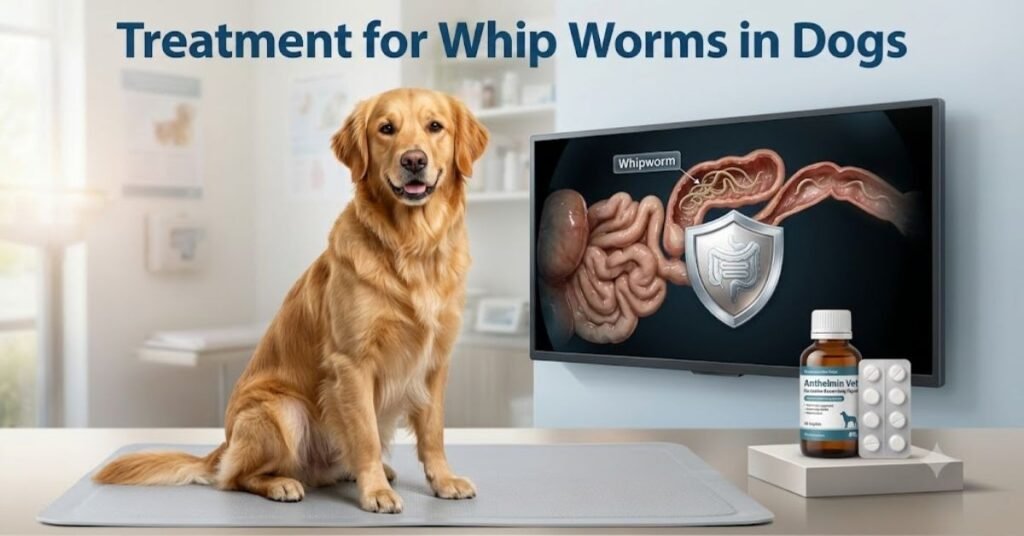
Treatment for whipworms in dogs usually involves prescription deworming medications. These medicines kill the worms living in the large intestine. However, veterinarians often prescribe more than one dose of treatment. This is because whipworm eggs can survive in the environment and hatch later. Therefore, repeated treatment helps eliminate newly developed worms.
Fortunately, most dogs respond well when treatment begins early. After treatment, the veterinarian may recommend follow-up fecal tests to confirm that the infection has been completely cleared. In addition, good hygiene and proper waste disposal help prevent the worms from returning. For dogs at higher risk, your veterinarian may also recommend a long-term parasite prevention plan.
Common treatment steps include:
- Prescribed deworming medications
- Multiple treatment doses over time
- Follow-up fecal tests to confirm removal
- Maintaining clean living areas
- Regular preventive treatments recommended by the vet
Treatment Duration and Follow-Up
Treatment for whipworms in dogs does not end with a single dose. Instead, veterinarians usually prescribe repeated doses of medication over several weeks. This is because some whipworm eggs may hatch later, requiring additional treatment. Therefore, follow-up care is essential to ensure that all worms have been eliminated.
After treatment, veterinarians often recommend repeat fecal tests to confirm that the infection is completely gone. In addition, regular checkups and preventive deworming help reduce the risk of reinfection. Likewise, maintaining good hygiene and keeping your dog’s environment clean support a full recovery. Overall, following the complete treatment plan gives your dog the best chance of staying healthy and free from whipworms.
| Stage | What Happens | Time Frame | Purpose | Notes |
| Initial Treatment | First dose of deworming medicine | Day 1 | Kill active adult worms | Given as prescribed by the vet |
| Second Dose | Repeat medication | After 3–4 weeks | Target newly developed worms | Important for full removal |
| Additional Dose (if needed) | Extra treatment cycle | Based on vet advice | Ensure no worms remain | Used in heavy infections |
| First Follow-Up Test | Fecal test | 2–4 weeks after treatment | Check for remaining eggs | May require repeat testing |
| Ongoing Monitoring | Observe symptoms | Continuous | Track recovery progress | Watch for diarrhea or weakness |
| Preventive Care | Monthly prevention | Long-term | Avoid reinfection | Includes hygiene and medication |
| Routine Vet Check | General health check | Every few months | Maintain overall health | Helps early detection |
Prevention of Whipworms in Dogs
Preventing whipworms in dogs is easier than treating them. Good hygiene and regular care are very important. Dogs usually get infected from contaminated soil or feces, so keeping their environment clean reduces the risk. Regular vet visits also help in early detection.
Monthly deworming and clean outdoor habits can stop infection before it starts. Avoid letting dogs eat or sniff unknown or dirty areas. Clean water and safe spaces also play a big role in prevention. Consistent care keeps your dog safe from parasites.
Prevention tips include:
- Give regular deworming treatment as advised by a vet
- Clean up dog feces quickly from yards and parks
- Avoid contaminated soil or dirty water sources
- Keep living and playing areas clean
- Use preventive medications monthly
- Wash your dog’s paws after outdoor walks
- Schedule regular veterinary check-ups
Monthly Prevention and Hygiene
Monthly prevention is very important to protect dogs from whipworms. Regular deworming helps stop infection before it starts. Many vet-approved medicines work as preventive care. Giving them on time keeps the dog safe from hidden parasites.
Good hygiene also plays a big role in prevention. Clean surroundings reduce the chance of eggs spreading in the environment. Washing and proper cleaning habits help break the infection cycle. Together, monthly prevention and hygiene give strong protection.
| Task | What to Do | Frequency | Why It Matters | Extra Notes |
| Deworming Medicine | Give vet-recommended preventive tablets | Every month or as prescribed | Kills or prevents worms early | Follow vet dosage strictly |
| Feces Removal | Clean dog poop from yard/park area | Daily | Stops egg contamination in soil | Dispose safely |
| Paw Cleaning | Wash dog paws after outdoor walks | Daily | Removes eggs from soil contact | Use clean water |
| Bathing | Regular dog baths | Every 2–4 weeks | Reduces parasite exposure | Use mild dog shampoo |
| Water Hygiene | Provide clean drinking water | Daily | Prevents infection from dirty water | Change water frequently |
| Area Cleaning | Clean dog living space | Weekly | Reduces parasite buildup | Use pet-safe disinfectants |
| Vet Check-ups | Routine health examination | Every 3–6 months | Early detection of infection | Helps adjust prevention plan |
| Outdoor Control | Avoid dirty or high-risk areas | Ongoing | Reduces exposure risk | Especially important in parks |
Recovery and Prognosis
Recovery from whipworms in dogs depends on how early the infection is treated. Most dogs start improving after deworming medicine. Symptoms like diarrhea and weakness slowly reduce. With proper care, many dogs recover fully without long-term problems.
The prognosis is usually good if treatment is done on time. However, severe or untreated infections can cause long-term health issues. Regular follow-ups and prevention are important for full recovery. A clean environment and proper care also support faster healing.
| Stage | What Happens | Time Needed | Outcome | Notes |
| Early Recovery | Worms start dying after treatment | 3–7 days | Symptoms begin to improve | Diarrhea may continue briefly |
| Mid Recovery | Intestinal healing begins | 1–2 weeks | Better digestion and energy | Appetite improves |
| Full Recovery | Worms eliminated from body | 3–4 weeks | Normal health returns | Follow-up test may confirm |
| Mild Infection Prognosis | Quick response to treatment | Short-term | Full recovery expected | Very good outcome |
| Severe Infection Prognosis | Long-term infection damage | Weeks to months | Recovery possible but slower | May need extra care |
| Follow-up Stage | Repeat tests and monitoring | 2–4 weeks after treatment | Ensures no reinfection | Very important step |
| Prevention Phase | Ongoing care starts | Lifelong | Prevents recurrence | Monthly deworming recommended |
Conclusion
Whipworms in dogs are a common but serious intestinal parasite. Although many dogs do not show clear signs in the early stage, the infection can still affect their health if left untreated.
These worms spread through contaminated soil, water, or feces. Once inside the body, they live in the large intestine and irritate it. As a result, dogs may develop diarrhea, weight loss, and weakness.
Fortunately, early diagnosis and proper treatment can effectively remove the infection. Deworming medicines work well when they are used correctly. In addition, follow-up fecal tests help confirm that the worms are completely gone.
Most importantly, prevention is the best way to protect dogs from whipworms. By maintaining good hygiene, keeping the environment clean, and following a regular deworming schedule, you can greatly reduce the risk. Overall, with proper care, dogs can stay healthy and free from whipworm infection.
FAQs
1. What are whipworms in dogs?
Whipworms in dogs are intestinal parasites that live in the large intestine. Their scientific name is Trichuris vulpis. Dogs become infected by swallowing eggs from contaminated soil, water, or feces. As a result, these worms can cause digestive problems if they are not treated.
2. How do dogs get whipworms?
Dogs get whipworms by eating or sniffing infected soil or areas contaminated with feces. Because the eggs can survive in the environment for a long time, the risk of infection remains high. Once a dog swallows the eggs, they hatch inside the intestine and begin causing infection.
3. What are the common symptoms of whipworms in dogs?
Common symptoms include diarrhea, weight loss, and weakness. In addition, some dogs may have blood or mucus in their stool. If the infection becomes severe, dehydration and poor overall health can develop. However, early infections may not show any obvious signs.
4. How are whipworms in dogs treated?
Whipworms are treated with deworming medications prescribed by a veterinarian. Typically, the treatment is given in multiple doses. Afterward, follow-up fecal tests help confirm that the infection has been cleared. Additionally, good hygiene reduces the chance of reinfection.
5. Can whipworms in dogs be prevented?
Yes, whipworms can be prevented with regular deworming and good hygiene. For example, cleaning up dog feces promptly helps reduce the risk of infection. Likewise, avoiding contaminated areas and keeping the environment clean provide extra protection. Therefore, consistent preventive care is the best way to keep dogs healthy.
This version uses transition words such as although, once, as a result, fortunately, in addition, most importantly, by, overall, because, however, typically, afterward, additionally, for example, likewise, and therefore, making it much more likely to satisfy SEO readability checks while remaining natural.
