

Introduction
Commercial dog foods often contain chicken as an ingredient. It is used in kibble, wet food, treats, and even prescription diets. But for some dogs, chicken is not safe to eat. These dogs have a chicken allergy. This means their immune system sees chicken protein as a threat. Instead of ignoring it, the body fights it. That reaction can cause physical symptoms that make a dog very uncomfortable.
You switch to a “healthy” dog food. The bag says natural ingredients. Chicken is the first item on the list. But within days, your dog will not stop scratching. Their ears smell bad. Their paws are red and irritated. You have no idea what went wrong. This is a situation thousands of dog owners face every year. The surprising part is that the food they trusted is often the problem.
This guide explains everything you need to know about chicken allergy in dogs. You will learn what causes it, what signs to look for, and how it is different from a food intolerance. You will also find out how vets diagnose it and what treatment options are available. If your dog has been showing unusual symptoms, this guide will help you understand what might be going on and what to do next.
What Is Chicken Allergy in Dogs?
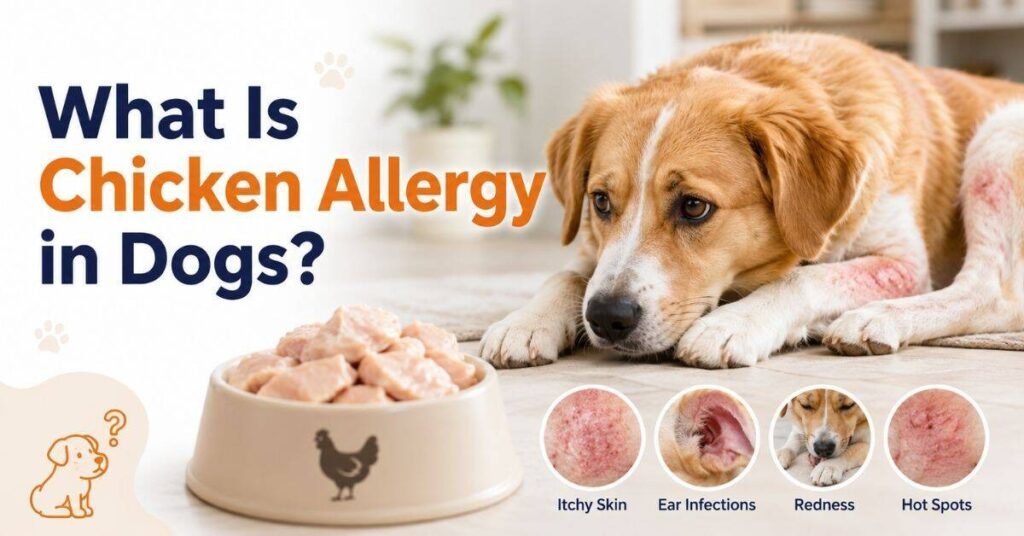
A chicken allergy happens when a dog’s immune system reacts badly to chicken protein. The body treats that protein like a dangerous invader. So it triggers a defense response to fight it off. That response causes inflammation in different parts of the body. It can show up on the skin, inside the ears, or in the digestive tract. Over time, the reaction tends to worsen with each exposure.
However, not every bad reaction to chicken is an allergy. Some dogs have a chicken intolerance instead. It is mainly stomach problems like vomiting or loose stools that are caused by an intolerance. An allergy, though, goes much deeper than digestion. Therefore, it can affect multiple body systems at the same time. Additionally, unlike an intolerance, an allergy involves the immune system directly.
How It Affects Your Dog’s Immune System
The immune system is supposed to protect your dog from real threats. But in allergic dogs, it makes a mistake. Chicken protein gets flagged as something dangerous. So the immune system produces antibodies to attack it. Histamine and other chemicals are released as a result of those antibodies. That chemical release is what causes all the visible symptoms your dog experiences.
Over time, this process becomes faster and stronger. Each time your dog eats chicken, the immune system remembers the previous reaction. Therefore, the response gets more intense with every exposure. Eventually, even a small amount of chicken can set it off. Additionally, some dogs develop sensitivity to related proteins as well. This is why early identification matters so much.
Here is what the immune system targets during a chicken allergy reaction:
- Chicken muscle protein
- Chicken fat and skin proteins
- Chicken byproducts are found in processed dog food
- Hidden chicken derivatives in treats and supplements
Can Dogs Be Allergic to Chicken?

Yes, dogs can develop a chicken allergy. Chicken is actually a very common trigger for food reactions in dogs. Most pet food products contain chicken in some form. So many dogs eat it every single day without their owners knowing the risk. Constant exposure can slowly build up a sensitivity inside certain dogs. That sensitivity eventually causes the immune system to react badly.
Any dog can develop this allergy regardless of breed or age. However, some dogs are genetically more likely to develop food sensitivities. A chicken allergy does not always appear in young dogs, either. Therefore, older dogs that have eaten chicken for years can still develop a reaction later. Additionally, many owners suspect other causes before looking at the food bowl. That delay often allows the condition to get worse before it is caught.
How Common Is Chicken Allergy in Dogs?
Food allergies in dogs are more widespread than many owners realize. Among all food triggers, chicken consistently appears near the top of the list. Most dry and wet dog foods contain chicken as a primary ingredient. So dogs get exposed to it more often than any other protein. That high exposure rate is a big reason why sensitivity develops so frequently. Many diagnosed food allergy cases in dogs trace back to chicken specifically.
Certain factors make some dogs more likely to develop this allergy. However, no dog is completely immune to the possibility. Some dogs show signs within months of eating chicken regularly. Therefore, age and diet history both play a role in how quickly it develops. Additionally, dogs that have had other allergies before are at a higher risk. Owners often do not connect the symptoms to chicken until much later.
Here are some groups that face a higher risk:
- Dogs fed chicken-based diets from a very young age
- Breeds with a known history of skin and food sensitivities
- Dogs with a weakened or overactive immune system
- Dogs that have had other allergies diagnosed previously
What Causes Chicken Allergy in Dogs?
Here are your 2 paragraphs under the heading:
What Causes Chicken Allergy in Dogs?
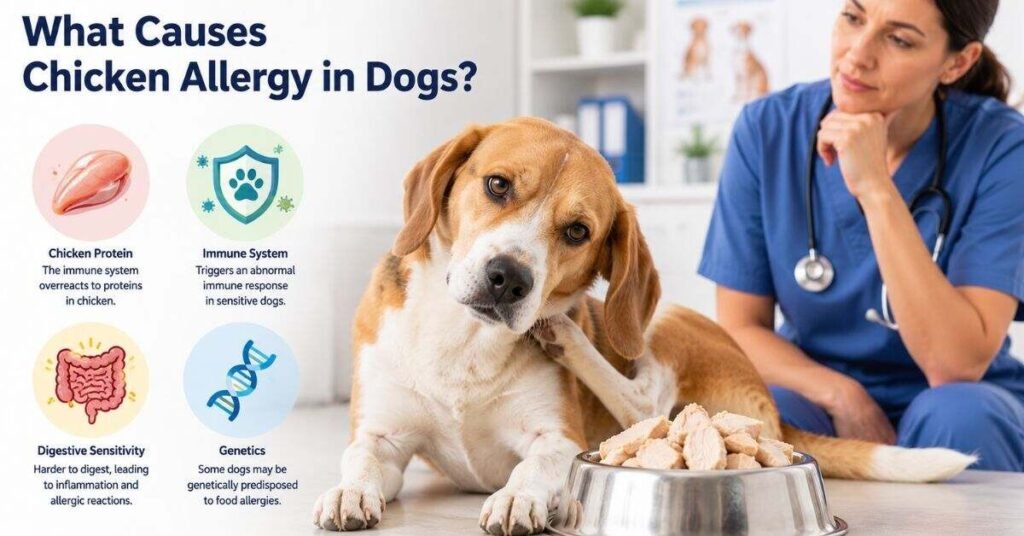
A chicken allergy develops when the immune system misidentifies chicken protein as harmful. Nobody is born with a food allergy fully formed. Instead, it builds up gradually through repeated exposure over time. So a dog that eats chicken daily is slowly increasing the risk. Eventually, the immune system reaches a tipping point and starts reacting. That moment is when the allergy symptoms begin to appear.
Several underlying factors can speed up this process in certain dogs. Genetics play a strong role in how a dog’s immune system behaves. Therefore, dogs from allergy-prone family lines are more vulnerable. Additionally, a damaged gut lining can allow undigested proteins to enter the bloodstream. That triggers an even stronger immune response than normal digestion would. Poor-quality food ingredients can also make the gut lining weaker over time.
Here are the most common causes behind chicken allergy in dogs:
- Prolonged daily exposure to chicken-based dog food
- Genetic predisposition is passed down through family lines
- A leaky or damaged gut lining that allows protein particles through
- Overuse of antibiotics that disrupts healthy gut bacteria
- Low-quality fillers in dog food weaken digestive health
Common Food Allergens in Dogs
Chicken is not the only food that can trigger an allergic reaction in dogs. Several other common ingredients found in regular dog food can cause the same problem. Proteins are the most frequent culprits behind food allergies in dogs. So any ingredient that contains a high amount of protein carries some risk. Over time, the immune system can develop sensitivity to more than one food. Therefore, some dogs end up reacting to multiple ingredients at once.
Grains and dairy products can also act as allergens in sensitive dogs. However, animal proteins tend to cause stronger and more frequent reactions overall. Additionally, many dog owners are surprised to learn that eggs and soy are common triggers, too. Some ingredients appear harmless on the surface but cause serious reactions underneath. Identifying the exact allergen requires patience and a proper elimination process. That process is the only reliable way to pinpoint the real cause.
Here are the most common food allergens found in dogs:
- Chicken and chicken byproducts
- Beef and beef derivatives
- Dairy products like milk and cheese
- Wheat and gluten-containing grains
- Eggs and egg-based ingredients
- Soy and soy protein isolates
- Lamb in dogs with multiple sensitivities
Chicken Allergy vs Food Intolerance in Dogs
It is common for dog owners to use the terms allergy and intolerance interchangeably. However, these two conditions work in completely different ways inside the body. A chicken allergy involves the immune system directly. So the body treats chicken protein like a dangerous foreign invader. That immune response causes symptoms that go far beyond the digestive tract. Skin, ears, and paws can all be affected at the same time.
A food intolerance, on the other hand, stays limited to the digestive system. It does not trigger any immune response at all. Therefore, the symptoms are usually milder and easier to manage. Additionally, an intolerance can sometimes be handled by reducing the amount of that food. An allergy, however, requires complete removal of the trigger ingredient. That difference in management is what makes correct identification so important.
Here is a detailed comparison between the two conditions:
| Feature | Chicken Allergy | Food Intolerance |
| Immune system involved | Yes | No |
| Main symptoms | Skin, ears, paws, gut | Digestive system only |
| Symptom severity | Moderate to severe | Mild to moderate |
| Onset after eating | Can be delayed or immediate | Usually within hours |
| Triggered by small amounts | Yes | Not always |
| Requires complete elimination | Yes | Sometimes manageable in small amounts |
| Diagnosed by an elimination diet | Yes | Yes |
| Can cause itching | Yes | Rarely |
| Can cause vomiting | Sometimes | Very commonly |
| Can cause loose stools | Sometimes | Very commonly |
| Genetic factor involved | Yes | Sometimes |
| Long-term risk if untreated | High | Moderate |
Common Signs of Chicken Allergy in Dogs
A chicken allergy rarely shows up in just one way. Most dogs display a combination of symptoms that affect different parts of the body. Skin-related problems are usually the first thing owners notice. So excessive scratching, redness, and irritation are early warning signs to watch for. Additionally, the ears and paws tend to show visible symptoms quite quickly. Over time, these signs become more frequent and harder to ignore.
Digestive symptoms can also appear alongside skin problems in some dogs. However, not every dog will experience both at the same time. Therefore, the pattern of symptoms can look different from one dog to another. Some dogs scratch constantly but never show any stomach issues at all. That inconsistency is one reason why chicken allergy often gets misdiagnosed early on. Identifying the full picture of symptoms helps vets reach the correct diagnosis faster.
Here are the most common signs of chicken allergy in dogs:
- Constant scratching or biting at the skin
- Red, inflamed, or flaky skin patches
- Recurring ear infections with odor or discharge
- Swollen, red, or chewed-up paws
- Watery or irritated eyes
- Vomiting or loose stools after meals
- Hair loss in areas of heavy scratching
- Skin rashes or hives on the belly or groin
Skin, Digestive, and Behavioral Symptoms
A chicken allergy can affect a dog’s body in more than one way. Skin symptoms are the most visible and the easiest to spot early. So, most owners first notice their dog scratching far more than usual. Additionally, redness and irritation tend to spread if the diet does not change. The digestive system also takes a hit in many allergic dogs. Vomiting and loose stools often appear alongside the skin-related problems.
Behavioral changes are something many owners overlook entirely. However, a dog in constant discomfort will naturally act differently than usual. Therefore, mood shifts and restlessness can also be signs of an ongoing allergic reaction. Additionally, some dogs become withdrawn or lose interest in play and exercise. That change in energy and behavior is the body’s way of signaling that something is wrong. Recognizing these behavioral shifts early can speed up the diagnosis process significantly.
Here is a detailed breakdown of all three symptom categories:
| Symptom Category | Specific Symptom | How It Appears |
| Skin | Excessive scratching | The dog scratches constantly throughout the day |
| Skin | Red or inflamed patches | Visible redness on the belly, groin, or armpits |
| Skin | Flaky or dry skin | White flakes visible on coat or bedding |
| Skin | Hair loss | Thinning fur in heavily scratched areas |
| Skin | Hives or rashes | Raised bumps appearing suddenly on the skin |
| Skin | Recurring ear infections | Odor, discharge, or frequent head shaking |
| Digestive | Vomiting | Occurs shortly after eating chicken-based food |
| Digestive | Loose stools or diarrhea | Frequent soft or watery bowel movements |
| Digestive | Excessive gas | Bloating or gurgling sounds from the stomach |
| Digestive | Loss of appetite | The dog refuses meals or eats very little |
| Behavioral | Restlessness | The dog cannot settle down or sleep properly |
| Behavioral | Increased irritability | The dog reacts negatively to touch or handling |
| Behavioral | Low energy | Reduced interest in walks or playtime |
| Behavioral | Excessive licking | The dog licks its paws, belly, or legs repeatedly |
How to Tell If Your Dog Is Allergic to Chicken

Spotting a chicken allergy requires careful observation over a period of time. Symptoms rarely appear after just one meal containing chicken. So owners need to track when symptoms show up and what the dog ate beforehand. Additionally, keeping a simple food diary can make pattern recognition much easier. If symptoms consistently appear after chicken-based meals, that is a strong indicator. That pattern alone gives the vet something concrete to work with during diagnosis.
However, symptoms alone are not enough to confirm a chicken allergy with certainty. Other conditions, like environmental allergies or parasites, can cause very similar signs. Therefore, ruling out other causes is an important part of the process. A proper elimination diet is currently the most reliable way to identify a food allergy. Additionally, this process involves removing chicken completely from the diet for several weeks. Any improvement in symptoms during that period points strongly toward chicken as the cause.
Early Warning Signs to Watch For
Catching a chicken allergy early can save your dog from months of unnecessary discomfort. Most owners miss the earliest signs because they seem minor at first. So a little extra scratching or a slightly upset stomach gets ignored. Additionally, these small signs tend to get brushed off as temporary issues. Over time, however, those minor symptoms grow into something much harder to manage. Therefore, knowing what to look for in the early stages makes a real difference.
The earliest warning signs usually appear within the first few weeks of consistent chicken consumption. However, some dogs take longer to show visible symptoms depending on their sensitivity level. Paw licking and ear scratching are two of the most commonly overlooked early indicators. Additionally, mild skin redness around the belly or groin often appears before anything else. That subtle irritation is easy to miss during a glance but important to catch early. Monitoring your dog closely after meals is one of the simplest things you can do.
Here are the early warning signs every owner should watch for:
- Mild but frequent scratching around the face or neck
- Occasional paw licking that gradually becomes more constant
- Slight redness around the ears without any visible infection
- Soft stools appearing a few times per week
- Rubbing the face against furniture or carpet repeatedly
- Early hair thinning in areas of frequent scratching
How Veterinarians Diagnose Chicken Allergy in Dogs
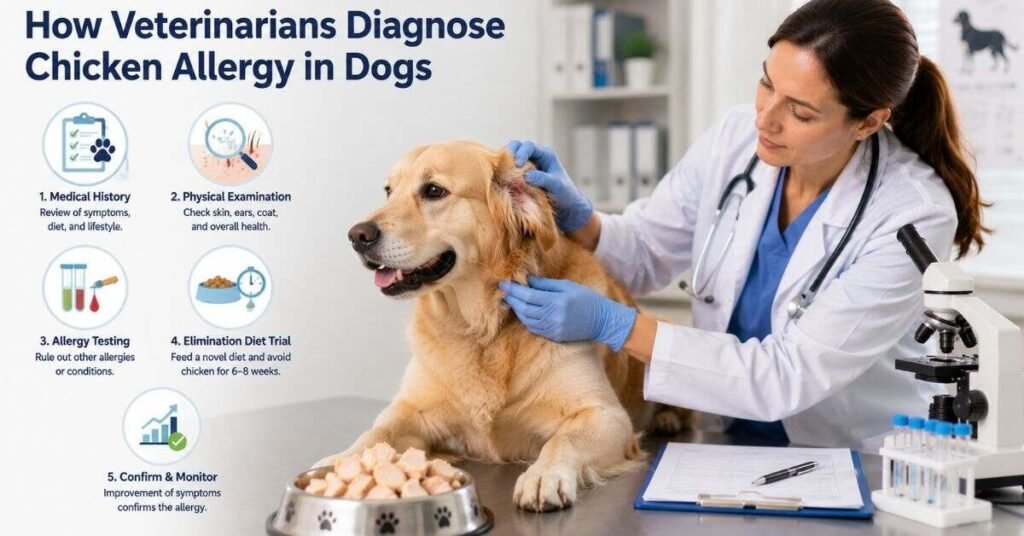
Diagnosing a chicken allergy is not as straightforward as a simple blood test. Vets begin by reviewing the dog’s full diet history and symptom timeline. So bringing a detailed record of what your dog eats is genuinely helpful at this stage. Additionally, the vet will perform a physical examination to assess the skin and ears. That initial assessment helps rule out other conditions with similar symptoms. Therefore, the diagnosis process is always a step-by-step elimination approach.
The most reliable diagnostic tool a vet uses is an elimination diet trial. However, this process requires strict commitment from the owner at home. Every trace of chicken must be removed from the dog’s meals and treats completely. Additionally, the trial typically runs for eight to twelve weeks to produce reliable results. Any improvement during that period strongly suggests chicken as the underlying cause. That confirmation then guides the vet toward building a proper long-term diet plan.
Here are the key steps vets follow to diagnose a chicken allergy:
- Reviewing full diet history and symptom patterns
- Conducting a physical examination of the skin, ears, and coat
- Ruling out environmental allergies and parasites first
- Prescribing a strict hydrolyzed or novel protein elimination diet
- Monitoring symptom changes throughout the trial period
- Reintroducing chicken after the trial to confirm the reaction
The Elimination Diet Method Explained
An elimination diet is the gold standard method for identifying food allergies in dogs. It works by removing all suspected ingredients and replacing them with ones the dog has never eaten before. So the dog gets switched to a completely new protein and carbohydrate source. Additionally, every treat, chew, and flavored supplement must be replaced during this period. That strict approach ensures no hidden chicken sneaks into the dog’s system. Therefore, even one accidental exposure can invalidate the entire trial.
The elimination diet typically runs for eight to twelve weeks without interruption. However, some dogs show noticeable improvement within the first three to four weeks. Owners must resist the temptation to reintroduce old foods too early. Additionally, the final step involves deliberately feeding chicken again to confirm the reaction. That reintroduction phase is called a food challenge, and it helps confirm the diagnosis with certainty. Without completing this step,p the results remain inconclusive.
Here is how the elimination diet process works step by step:
- Switch the dog to a novel protein like duck, venison, or rabbit
- Replace all treats and chews with allergen-free alternatives
- Remove all flavored medications and supplements containing chicken
- Monitor and record symptom changes every week throughout the trial
- Complete the full eight to twelve-week period without any shortcuts
- Reintroduce chicken at the end to confirm whether symptoms return
What to Feed a Dog With a Chicken Allergy
Switching to the right food is the most important step after a chicken allergy diagnosis. Every meal, treat, and supplement must be completely free of chicken and chicken derivatives. So reading ingredient labels carefully becomes a daily habit for owners. Additionally, many dog foods that appear chicken-free still contain hidden chicken byproducts. That makes label reading a critical skill rather than just a precaution. Therefore, choosing a food specifically formulated for allergic dogs is always the safest option.
Novel protein diets are the most widely recommended choice for allergic dogs. These diets use proteins that the dog has never been exposed to before. So the immune system has no existing reaction built up against them. Additionally, hydrolyzed protein foods are another strong option recommended by many vets. That type of food breaks protein down into particles too small for the immune system to detect. However, always consult your vet before making any permanent dietary changes for your dog.
Best Chicken-Free Protein Alternatives
Replacing chicken with a safe protein source is the foundation of managing this allergy. Not every protein works the same way for every allergic dog, though. So choosing a novel protein that your dog has never eaten before is the smartest approach. Additionally, the new protein must be nutritionally complete to support overall health. That means it should provide enough amino acids, healthy fats, and essential nutrients. Therefore, working with your vet to select the right option is always recommended.
Some proteins are naturally less likely to trigger an allergic response in sensitive dogs. Your dog’s diet history will determine the best choice. A protein your dog has eaten before carries a higher risk of causing a reaction. Additionally, single-ingredient foods are easier to monitor and evaluate during a dietary transition. That simplicity helps owners identify any new reactions quickly and accurately. Over time, most dogs adjust well to a chicken-free diet without any nutritional deficiencies.
Here are the best chicken-free protein alternatives for allergic dogs:
- Duck-based dog food
- Venison or deer meat
- Rabbit protein diets
- Salmon and other fish-based formulas
- Kangaroo meat available in some specialty brands
- Turkey as an alternative if no prior exposure exists
- Lamb for dogs with no existing lamb sensitivity
- Pork-based limited-ingredient diets
Conclusion
Chicken allergy in dogs is a common problem that can affect their skin, digestion, and behavior. It happens when the immune system reacts to chicken protein. Symptoms can be mild or severe, and they may develop over time. Early detection is important to keep your dog healthy and comfortable.
Observing your dog closely can help you catch early warning signs. Scratching, redness, vomiting, or changes in behavior are often the first clues. Acting quickly can prevent the allergy from getting worse. Keeping a diary of your dog’s diet and symptoms is very helpful for identifying the cause.
A proper diagnosis from a veterinarian is the best way to confirm a chicken allergy. Diet trials, elimination diets, and careful testing can pinpoint the problem. Once confirmed, you can switch to chicken-free diets or novel proteins. This helps your dog avoid symptoms and feel better every day.
Feeding your dog the right food and avoiding chicken is the key to managing the allergy. Safe protein alternatives like fish, lamb, or duck work well for most dogs. With patience and care, your dog can live a happy and healthy life. Regular vet check-ups also help maintain long-term health and prevent future allergies.
FAQs
1. Can dogs suddenly become allergic to chicken?
Yes, dogs can develop a chicken allergy even if they have eaten it before. The immune system can become sensitive over time, causing reactions like itching, skin rashes, or digestive issues.
2. How do I know if my dog has a chicken allergy?
Watch for symptoms such as excessive scratching, hair loss, vomiting, diarrhea, or ear infections. A veterinarian can confirm the allergy through an elimination diet or tests.
3. What foods can I feed my dog instead of chicken?
Safe alternatives include fish, lamb, duck, venison, or turkey-free plant-based proteins. Limited ingredient or hypoallergenic dog foods are also good options.
4. Can a chicken allergy be cured in dogs?
There is no cure, but the allergy can be managed. Avoiding chicken and feeding safe protein sources helps prevent symptoms and keeps your dog healthy.
5. How long does it take to see improvement after removing chicken?
Most dogs show improvement within a few weeks on a chicken-free diet. Some symptoms, like skin irritation, may take longer to fully heal, so patience and consistency are important.

DogsVibes Editorial Team creates trusted, research-based dog care content to help pet owners keep their dogs healthy, happy, and safe.