


Introduction
Dogs throwing up blood, also called hematemesis, is when a dog vomits blood from its stomach or intestines. This can look like bright red blood or dark, coffee-ground-like vomit. It is a serious sign and should never be ignored.
If your dog suddenly vomits blood, it can be scary. You might wonder what caused it or if it’s an emergency. Many dog owners panic, but knowing the causes and what steps to take can save your dog’s life.
There are several reasons a dog might throw up blood. It can be due to stomach ulcers, eating something toxic, infections, or even serious health problems. In this guide, we will explain the causes, symptoms to watch for, and immediate actions to help your dog.
What Does It Mean When a Dog Is Throwing Up Blood?

When a dog throws up blood, it means there is bleeding somewhere in the digestive system. The blood can come from the stomach, intestines, or even the mouth. It can appear bright red or dark like coffee grounds. It is a serious sign that should not be ignored.
Vomiting blood can happen for many reasons. It might be caused by stomach ulcers, eating something toxic, or swallowing a foreign object. Infections and bleeding disorders can also lead to bloody vomit. Understanding what it means can help you act quickly and keep your dog safe.
Understanding Hematemesis in Dogs
Hematemesis is the medical term for vomiting blood. It happens when a dog bleeds in the stomach or upper intestines. The vomit may look bright red or dark like coffee grounds. Hematemesis is often a sign of a serious problem.
There are many possible causes, and it’s important to know them:
- Stomach ulcers or irritation
- Swallowing a foreign object
- Poison or toxin exposure
- Infections or parasites
- Bleeding or clotting disorders
How Serious Is Bloody Vomit?
Bloody vomit in dogs is always a warning sign. It shows that something is wrong in the digestive system. Sometimes it can be minor, like a small stomach irritation. But often, it points to a more serious problem that needs immediate attention.
The seriousness depends on the cause and amount of blood. Large amounts of bright red blood or repeated vomiting can be life-threatening. Even small amounts should not be ignored. Contact a veterinarian as soon as possible to keep your dog safe.
What Does Blood in Dog Vomit Look Like?

Blood in a dog’s vomit can appear in different ways. Sometimes it is bright red and fresh. Other times, it looks dark, like coffee grounds. The color can help indicate where the bleeding is coming from.
Here are some common appearances to watch for:
- Bright red blood – often from the stomach or mouth
- Dark, coffee-ground-like vomit – usually from the stomach or upper intestines
- Blood mixed with mucus or bile – can show irritation or infection
- Small streaks of blood – might appear after vomiting dry food
Bright Red Blood
Bright red blood in a dog’s vomit usually comes from the stomach or mouth. It looks fresh and bright, not dark or clotted. This can happen if there is a small cut, irritation, or bleeding ulcer in the digestive tract.
Even a small amount of bright red blood should not be ignored. It may indicate a serious problem that needs veterinary care. Always monitor your dog’s behavior and contact a vet immediately if you notice bright red blood in the vomit.
Blood Mixed with Bile or Mucus
Sometimes a dog’s vomit contains blood mixed with bile or mucus. This can make the vomit look yellowish, green, or slimy with streaks of blood. It often happens when the stomach is irritated or inflamed.
Even small amounts should be taken seriously. It may be caused by infections, ulcers, or digestive problems. Watch your dog closely and contact a veterinarian to check the cause and get proper treatment.
Common Causes of a Dog Throwing Up Blood

Dogs can vomit blood for many reasons. Sometimes it is mild, but often it shows a serious problem in the stomach or intestines. Knowing the cause can help your veterinarian treat your dog quickly.
Some common causes include:
- Stomach ulcers or irritation – often from medications or stress
- Swallowing a foreign object – like bones, toys, or sticks
- Poison or toxin exposure – chemicals, plants, or bad food
- Infections or parasites – bacterial, viral, or worms
- Bleeding or clotting disorders – problems with blood clotting
Poisoning or Toxin Exposure
Dogs can vomit blood if they eat something poisonous or toxic. Common toxins include household chemicals, certain plants, spoiled food, or human medicines. Even small amounts can be dangerous and cause bleeding in the stomach.
It’s important to recognize what your dog might have eaten. The table below shows some common poisons and their effects:
| Poison / Toxin | Common Sources | Possible Symptoms in Dogs |
| Household chemicals | Cleaning products, antifreeze | Vomiting, blood in vomit, weakness |
| Human medications | Painkillers, antidepressants | Vomiting, bleeding, stomach pain |
| Plants | Lilies, sago palm, oleander | Vomiting, diarrhea, blood in vomit |
| Spoiled or rotten food | Meat, dairy, leftovers | Vomiting, stomach irritation, lethargy |
| Insecticides / Rodenticides | Pesticides, rat poison | Vomiting, bleeding, seizures |
Infections and Parasites
Infections and parasites can cause dogs to vomit blood. Bacteria, viruses, or worms can irritate the stomach and intestines. This irritation may lead to bleeding and serious health problems if untreated.
The table below shows some common infections and parasites in dogs:
| Infection / Parasite | Common Source or Cause | Possible Symptoms in Dogs |
| Parvovirus | Contaminated feces | Severe vomiting, blood in vomit, diarrhea |
| Giardia | Contaminated water or soil | Vomiting, diarrhea, lethargy |
| Hookworms | Soil or infected animals | Blood in vomit, diarrhea, anemia |
| Salmonella | Raw meat or contaminated food | Vomiting, bloody stool, fever |
| Canine Distemper | Virus spread by contact | Vomiting, bloody vomit, cough, fever |
Bleeding or Clotting Disorders
Some dogs vomit blood because of problems with their blood. Bleeding or clotting disorders make it hard for blood to stop or clot properly. Even minor injuries or stomach irritation can cause vomiting blood in these dogs.
These disorders can be inherited or caused by disease. Common signs include excessive bruising, nosebleeds, or blood in urine and stool. If you notice any of these signs, take your dog to a veterinarian immediately for testing and treatment.
Symptoms That May Appear Alongside Bloody Vomit
Dogs that vomit blood often show other symptoms too. These signs help you and your vet understand how serious the problem is. Watching your dog closely can save its life.
Common symptoms to look for include:
- Lethargy or weakness
- Loss of appetite
- Diarrhea or bloody stool
- Pale or bluish gums
- Abdominal pain or bloating
- Excessive drooling or lip-smacking
Lethargy, Diarrhea, Pale Gums, or Abdominal Pain
When a dog vomits blood, it may show other signs like lethargy, diarrhea, pale gums, or abdominal pain. These symptoms often indicate that the dog is very sick and needs immediate attention. Even if the vomiting seems mild, these signs can show the condition is serious.
The table below shows what these symptoms might mean:
| Symptom | What It May Indicate | Action to Take |
| Lethargy | Weakness, dehydration, or blood loss | Keep dog warm, contact vet immediately |
| Diarrhea | Infection, parasites, or digestive upset | Monitor, collect sample, see vet |
| Pale gums | Low blood count, anemia, or internal bleeding | Urgent veterinary care |
| Abdominal pain | Stomach irritation, ulcers, or foreign object | Avoid feeding, take to vet immediately |
| Vomiting along with these signs | Serious underlying issue | Emergency vet visit required |
When Is a Dog Throwing Up Blood an Emergency?

Seeing your dog vomit blood is always alarming. It becomes an emergency when the blood is bright red, appears in large amounts, or your dog vomits repeatedly. These signs mean your dog may be losing blood quickly and needs urgent care.
Other warning signs include pale or bluish gums, weakness, collapse, or severe stomach pain. Even small amounts of blood can be dangerous if your dog shows these symptoms. Always call or visit a veterinarian immediately to keep your dog safe.
Warning Signs Requiring Immediate Vet Care
Some dogs that vomit blood need urgent attention. Recognizing the warning signs early can save their life. Even a small amount of blood can be serious if your dog shows other symptoms.
Watch for these signs:
- Repeated vomiting or large amounts of blood
- Pale, blue, or gray gums
- Weakness, collapse, or lethargy
- Severe abdominal pain or bloating
- Difficulty breathing
- Blood in stool or urine
What To Do Immediately If Your Dog Is Throwing Up Blood
If your dog starts vomiting blood, stay calm but act fast. Even small amounts can be serious. A quick response can make a big difference in your dog’s recovery.
Follow these steps right away:
- Keep your dog calm – prevent running or jumping
- Pause feeding and water – avoid irritating the stomach
- Take note of the vomit – color, amount, and consistency
- Look for other symptoms – weakness, pale gums, diarrhea
- Call your veterinarian immediately – explain everything clearly
- Follow all instructions from the vet – go to the clinic if necessary
Steps to Take Before Reaching the Vet
If your dog is vomiting blood, you may have a short time before reaching the vet. Staying calm and preparing can help your dog get the right care quickly.Simple actions can have a big impact.
Follow these steps while on the way:
- Keep your dog calm and warm – use a blanket or towel if needed
- Collect a sample of the vomit – note the color and consistency
- Bring any recent food or medicine info – helps the vet identify the cause
- Monitor breathing and heart rate – call the vet if breathing is hard or rapid
- Avoid giving food or water – until the vet advises
- Drive safely but quickly – get your dog to the clinic as soon as possible
How Veterinarians Diagnose Bloody Vomit in Dogs
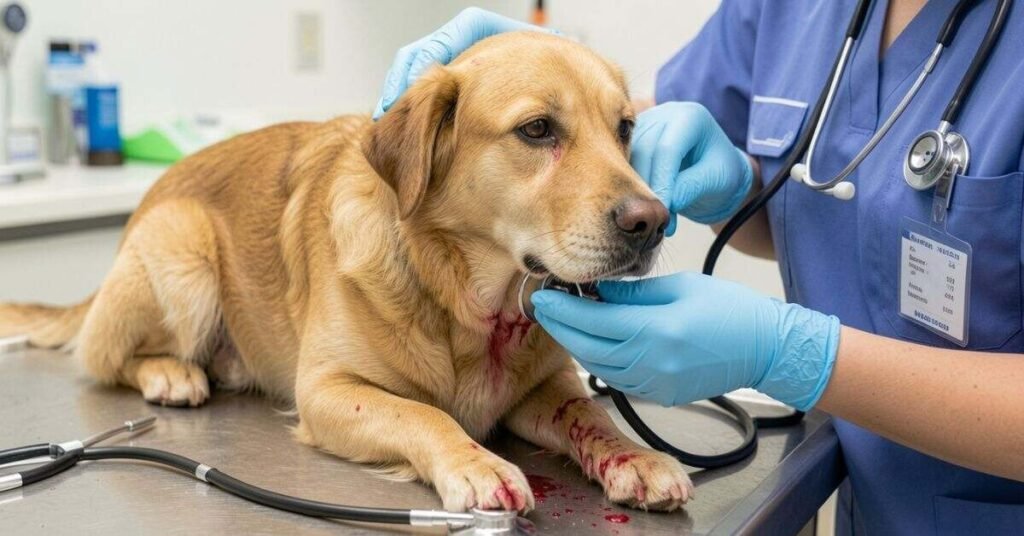
When a dog vomits blood, a veterinarian will first perform a physical exam. They check your dog’s gums, heart, and abdomen. They also ask about recent food, medications, and behavior. This helps the vet understand the severity and possible cause.
The vet may also run tests to find the exact problem. Common tests include blood work, X-rays, ultrasounds, and fecal exams. In some cases, an endoscopy may be used to look inside the stomach. These tests help the vet decide the best treatment quickly.
Physical Exams and Diagnostic Tests
When a dog vomits blood, the veterinarian starts with a physical exam. They check the gums, heart rate, abdomen, and overall condition. This helps them see how sick the dog is and find possible causes.
The vet may also perform diagnostic tests. These tests help identify infections, bleeding, or other issues in the stomach or intestines. The table below shows common exams and tests:
| Test / Exam | Purpose | What It Shows |
| Physical Examination | Check gums, heart, abdomen | General health, signs of blood loss |
| Blood Tests | Evaluate blood count and organ function | Anemia, infection, clotting problems |
| X-rays | Look for foreign objects or blockages | Obstructions or tumors in the digestive tract |
| Ultrasound | Check stomach and intestines | Ulcers, tumors, fluid, organ damage |
| Fecal Examination | Check for parasites or blood | Worms, bacterial infection, bleeding |
| Endoscopy | Directly view stomach and upper intestines | Ulcers, tumors, internal bleeding |
Conclusion
Vomiting blood in dogs is always a serious sign. It can happen for many reasons, from stomach irritation to poisoning or serious illness. Even a small amount should never be ignored.
Pay close attention to other symptoms like lethargy, pale gums, diarrhea, or abdominal pain. These signs can show how urgent the situation is. Acting quickly can save your dog’s life.
If your dog vomits blood, contact a veterinarian immediately. Collect information about what your dog ate, how the vomit looks, and any other symptoms. This helps the vet diagnose and treat the problem faster.
Remember, early care is the best care. Watching your dog closely and seeking help quickly can prevent complications. Your quick action can make a big difference in your dog’s health and recovery.
FAQs
1. Why is my dog throwing up blood?
Dogs can vomit blood for many reasons, such as stomach ulcers, foreign objects, poisoning, infections, or bleeding disorders. Even a small amount of blood can be serious. Always consult a veterinarian.
2. What does the color of the blood mean?
Bright red blood usually comes from the stomach or mouth, while dark, coffee-ground-like blood often comes from the upper intestines. Blood mixed with bile or mucus can indicate irritation or infection.
3. Can a dog vomiting blood be treated at home?
No, vomiting blood is serious and should never be treated at home. Home care may only help until you reach a veterinarian. Immediate professional care is essential for recovery.
4. When should I call a vet immediately?
Call a vet immediately if your dog vomits large amounts of blood, vomits repeatedly, has pale gums, shows weakness, or has severe abdominal pain. These are signs of a medical emergency.
5. How do veterinarians find the cause of dog throwing a blood?
Veterinarians start with a full physical exam to check your dog’s overall health. They may ask about recent diet, behavior, or possible toxin exposure.They then use tests like blood work, X-rays, ultrasounds, fecal exams, and sometimes endoscopy. These help confirm the exact cause of dog throwing a blood and guide the right treatment quickly.
