


Introduction
Sushi is a popular Japanese dish made with rice, seaweed, fish, and vegetables. Many types of sushi include raw fish, while others use cooked seafood or simple ingredients like cucumber and avocado. People love sushi for its fresh taste and health benefits. But when your dog looks at your plate with curious eyes, you may wonder if it is safe to share.
Can dogs eat sushi, or could it make them sick? Some ingredients may seem harmless, but others can upset your dog’s stomach or even cause serious health problems. Raw fish, soy sauce, and spicy wasabi are common in sushi, and they are not always safe for dogs. That is why it is important to know what is inside each roll before offering a bite.
In this complete guide for pet owners, you will learn which sushi ingredients are safe and which ones to avoid. We will also explain the risks of raw fish, signs of a bad reaction, and safer alternatives you can give your dog instead. By the end, you will know exactly what to do the next time sushi is on the menu.
Can Dogs Eat Sushi Safely?

Many pet owners ask, can dogs eat sushi safely? The short answer is not always. Some parts of sushi may seem harmless, like plain rice or cooked fish. But many sushi rolls contain ingredients that are not good for dogs. Raw fish, soy sauce, and wasabi can cause stomach problems or other health risks.
Dogs have sensitive digestive systems. Raw seafood may carry bacteria or parasites. Soy sauce is high in salt, which can lead to dehydration. Spicy ingredients can irritate your dog’s stomach. If you want to share, it is safer to offer small amounts of plain, cooked fish without seasoning. Always check the ingredients first before giving your dog a bite.
Is Sushi Safe for Dogs or Risky?
Sushi is a popular food for people, but it is not always safe for dogs. Some sushi contains raw fish, rice, seaweed, and seasonings. Plain cooked fish and small amounts of rice may be safe for dogs. However, many sushi rolls include sauces, salt, or spices. These ingredients can upset a dog’s stomach. Raw fish may also carry harmful bacteria or parasites.
Some sushi ingredients can be risky for dogs. For example, sauces and seasonings may contain too much salt. Certain rolls may include avocado or spicy ingredients. Raw seafood can also expose dogs to bacteria like Salmonella or parasites. Eating contaminated fish may cause illness in dogs. Because of these risks, sushi should not be a regular treat for dogs.
| Sushi Ingredient | Safe or Risky for Dogs | Reason | Possible Health Risk |
| Plain Cooked Fish | Usually safe in small amounts | Good source of protein | Overfeeding may cause stomach upset |
| Raw Fish | Risky | May contain parasites or bacteria | Infection or digestive illness |
| Sushi Rice | Safe in small amounts | Simple carbohydrate | Too much may cause weight gain |
| Seaweed (Nori) | Usually safe in small pieces | Contains minerals | Large amounts may upset stomach |
| Soy Sauce | Unsafe | Very high in salt | Dehydration or sodium poisoning |
| Wasabi | Unsafe | Very spicy and irritating | Stomach irritation |
| Spicy Sauces | Unsafe | Contains spices and oils | Digestive problems |
| Avocado | Risky | Contains persin compound | Vomiting or diarrhea |
| Crab Sticks (Imitation Crab) | Not recommended | Processed with salt and additives | Digestive upset |
| Fried Sushi Rolls | Unsafe | High fat and oil content | Weight gain and stomach upset |
| Pickled Ginger | Risky | Contains sugar and vinegar | Digestive irritation |
| Raw Shellfish | Unsafe | High risk of bacteria | Food poisoning |
What Happens If a Dog Eats Sushi?
If a dog eats sushi, the reaction depends on the ingredients and the amount eaten. A small bite of plain rice or cooked fish may not cause harm. But sushi with raw fish, soy sauce, or spicy toppings can upset your dog’s stomach. Some dogs may show mild symptoms, while others may feel very sick.Watch your dog closely after they eat sushi.
Common signs of a bad reaction include:
- Vomiting
- Diarrhea
- Stomach pain or bloating
- Excessive thirst (from salty soy sauce)
- Lethargy or weakness
What Is Sushi Made Of?
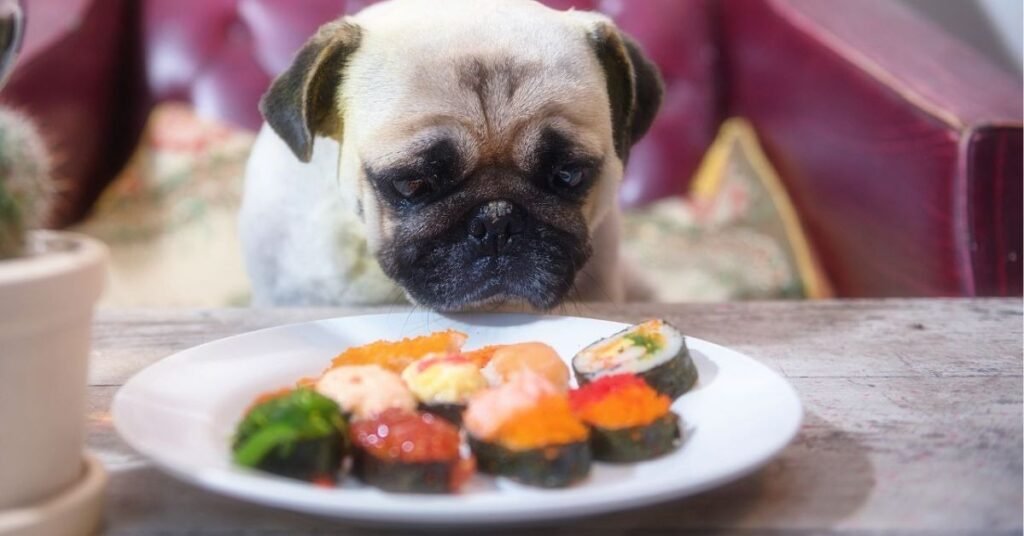
Sushi is made from a few basic ingredients. The main part is cooked rice mixed with vinegar. It is often wrapped in seaweed called nori. Many sushi rolls include raw fish like salmon or tuna. Some rolls use cooked seafood instead.
Sushi can also contain vegetables and sauces. Common fillings include cucumber, avocado, and carrots. Some rolls have cream cheese or imitation crab. Soy sauce, wasabi, and pickled ginger are usually served on the side. The ingredients may look simple, but not all of them are safe for dogs.
Raw Fish (Salmon, Tuna & Other Seafood)
Raw fish is a common ingredient in many sushi rolls. Popular choices include salmon, tuna, shrimp, and other seafood. Fish contains healthy nutrients like protein and omega-3 fatty acids. However, raw fish can be unsafe for dogs. It may carry bacteria or parasites that can cause illness.
Dogs that eat raw seafood may develop vomiting or diarrhea. In serious cases, raw salmon can carry parasites that lead to salmon poisoning disease. Tuna may contain high levels of mercury, which is harmful if eaten often. For these reasons, raw fish from sushi is not a safe option for dogs.
| Seafood Type | Commonly Used In Sushi | Safe for Dogs? | Possible Risks | Recommendation |
| Salmon (raw) | Nigiri, sashimi, rolls | Risky | Parasites, bacteria, salmon poisoning disease | Avoid raw; only give fully cooked |
| Tuna (raw) | Nigiri, spicy tuna rolls | Not recommended | High mercury levels, bacteria | Avoid raw; limit even if cooked |
| Shrimp (raw) | Specialty rolls | Risky | Bacteria, choking hazard | Only plain, cooked, no seasoning |
| Crab (raw or imitation) | California rolls | Risky | Processed salts, additives | Avoid imitation; small cooked plain only |
| Yellowtail | Nigiri, sashimi | Risky | Parasites, digestive upset | Avoid raw completely |
| Octopus (raw) | Specialty sushi | Risky | Tough texture, choking risk | Not recommended |
| Scallops (raw) | Sashimi | Risky | Bacteria, stomach upset | Avoid raw completely |
Sushi Ingredients Dogs Should Avoid

Not all sushi ingredients are safe for dogs. Some can upset their stomach or cause serious health problems. Raw fish, sauces, and spicy toppings are the main concerns. Even small amounts of certain ingredients can be harmful.
Here are common sushi ingredients dogs should avoid:
- Raw fish like salmon or tuna
- Soy sauce and other salty sauces
- Wasabi and spicy toppings
- Avocado and cream cheese
- Tempura or fried items
- Imitation crab or processed seafood
Raw Fish and Parasites Risk
Raw fish is a common ingredient in sushi, but it can be risky for dogs. It may contain parasites that are harmful to their health. Even a small amount of raw fish can cause serious illness in some dogs.
Parasites in raw fish can lead to vomiting, diarrhea, and stomach pain. Salmon is especially risky because it can carry a parasite that causes salmon poisoning disease. Other fish may also carry bacteria that upset your dog’s digestive system. It is always safer to give your dog fully cooked fish instead of raw sushi.
Soy Sauce and High Sodium
Soy sauce is a common condiment served with sushi. It contains a lot of salt, which can be harmful to dogs. Eating too much sodium can cause dehydration, vomiting, and even more serious health problems. Even a small amount of soy sauce can upset your dog’s stomach.
It is important to know which sushi ingredients are high in sodium and unsafe for dogs. Avoid giving your dog any sauces or salty seasonings. Stick to plain, cooked fish or rice if you want to share sushi safely.
| Ingredient | Found In | Sodium Level | Risks for Dogs | Recommendation |
| Soy Sauce | All sushi types, dipping sauce | Very high | Dehydration, vomiting, high blood pressure | Avoid completely |
| Teriyaki Sauce | Specialty rolls | High | Upset stomach, excessive salt intake | Avoid completely |
| Pickled Ginger | Side dish | Moderate | Can cause mild stomach upset | Limit or avoid |
| Miso Paste | Some sushi rolls | High | Salt overload, digestive issues | Avoid giving |
| Imitation Crab | California rolls, sushi rolls | Moderate to high | Salt, additives, digestive upset | Avoid or give plain cooked only |
| Seaweed Snacks | Nori sheets with added salt | Moderate | Excess sodium, digestive upset | Use plain, unsalted only |
| Wasabi Paste | Sushi condiment | Low sodium but spicy | Stomach irritation, burning sensation | Avoid spicy condiments |
Are Any Types of Sushi Safe for Dogs?

Not all sushi is unsafe for dogs. Some ingredients can be given in small amounts if prepared carefully. Plain, cooked fish and rice are usually the safest options. Avoid raw fish, sauces, and spicy toppings to protect your dog’s health.
Here are some safer sushi options for dogs:
- Plain, cooked salmon or tuna (no seasoning)
- Small amounts of plain rice
- Cucumber or avocado (in moderation)
- Cooked shrimp without salt or spices
- Homemade sushi rolls made specifically for dogs
Homemade Dog-Friendly Sushi Alternatives
You don’t have to give your dog regular sushi to share the experience. You can make simple, healthy sushi at home just for your dog. These rolls use safe ingredients and avoid raw fish, salt, and spices. Homemade sushi is fun and keeps your dog safe from stomach problems.
Here are some ideas for dog-friendly sushi:
- Small rolls with plain cooked salmon or chicken
- Rice wrapped in a thin layer of unsalted nori (seaweed)
- Add vegetables like cucumber, carrot, or avocado in moderation
- Use mashed sweet potato as a filling instead of sauces
- Cut rolls into small, bite-sized pieces for easy feeding
Can Dogs Eat Raw Fish?

Dogs should not eat raw fish from sushi or other sources. Raw fish can contain bacteria and parasites that make dogs very sick. Even small amounts of raw salmon, tuna, or other seafood can cause vomiting, diarrhea, or serious illnesses like salmon poisoning disease.
If you want to give fish to your dog, always cook it thoroughly. Plain, cooked fish without salt, spices, or sauces is much safer. Avoid feeding raw fish entirely and stick to dog-friendly alternatives to keep your pet healthy.
Salmon Poisoning Disease Risk
Salmon poisoning disease is a serious illness that dogs can get from eating raw salmon or other infected fish. It is caused by a parasite called Neorickettsia helminthoeca. Dogs that eat raw, infected salmon can become very sick within a few days. Symptoms include vomiting, diarrhea, fever, and loss of appetite.
This disease can be fatal if not treated quickly. Dogs need veterinary care immediately if they eat raw salmon or show symptoms. To protect your dog, always avoid giving raw salmon and other risky fish.
| Fish Type | Raw or Cooked | Risk of Salmon Poisoning | Common Symptoms in Dogs | Safe for Dogs? | Recommendation |
| Wild Salmon | Raw | High | Vomiting, diarrhea, fever, lethargy | No | Avoid completely |
| Wild Salmon | Cooked | Low | None | Yes | Fully cook before feeding |
| Rainbow Trout | Raw | High | Vomiting, diarrhea, fever | No | Avoid raw; cook thoroughly |
| Steelhead Trout | Raw | High | Vomiting, diarrhea, fever | No | Avoid raw; fully cook |
| Farmed Salmon | Raw | Low to Medium | Mild digestive upset possible | Limited | Cook thoroughly before feeding |
| Tuna | Raw | Low | Digestive upset possible | Limited | Cooked plain only |
| Other Raw Freshwater Fish | Raw | Variable | Vomiting, diarrhea | No | Avoid raw; cook fully |
Bacteria and Parasites in Raw Seafood
Raw seafood, like the fish used in sushi, can contain harmful bacteria and parasites. These tiny organisms can make your dog very sick. Eating raw fish or shellfish may cause vomiting, diarrhea, or stomach pain. Some parasites can even lead to serious illnesses if not treated quickly.
Dogs have sensitive digestive systems, so raw seafood is risky for them. Cooking fish kills most bacteria and parasites, making it much safer. Always avoid giving raw seafood to your dog. Stick to plain, cooked fish or other safe treats to protect their health.
Signs Your Dog Is Having a Bad Reaction to Sushi
If your dog eats sushi with unsafe ingredients, they may show signs of a bad reaction. Some dogs get sick immediately, while others may take a few hours to show symptoms. It is important to watch your dog closely after they eat sushi.
Common signs of a bad reaction include:
- Vomiting or diarrhea
- Stomach pain or bloating
- Loss of appetite
- Lethargy or unusual tiredness
- Excessive thirst from salty foods
- Allergic reactions, like itching or swelling
Vomiting and Diarrhea
Vomiting and diarrhea are common problems in dogs. They often happen when a dog eats something that upsets the stomach. Sudden diet changes can also cause digestive trouble. Some dogs may vomit after eating spoiled food or garbage. Mild cases may improve after a short rest and plenty of water.
However, frequent vomiting or diarrhea can be a sign of illness. Infections, parasites, or food intolerance may cause these symptoms. Dogs can also develop stomach inflammation such as Gastroenteritis. Severe diarrhea may lead to dehydration if not treated. If symptoms last more than a day or become worse, a veterinarian should examine the dog.
| Cause | What Happens | Common Symptoms | When to Seek Help |
| Sudden Diet Change | Digestive system struggles to adjust | Vomiting, loose stool | If it lasts more than 24 hours |
| Eating Spoiled Food | Bacteria irritate the stomach | Vomiting, diarrhea, weakness | If symptoms are severe |
| Food Allergy or Intolerance | Body reacts poorly to certain foods | Itching, stomach upset | If symptoms repeat often |
| Parasite Infection | Intestinal parasites affect digestion | Diarrhea, weight loss | Vet treatment needed |
| Bacterial Infection | Harmful bacteria enter digestive system | Vomiting, fever | Immediate vet care if severe |
| Viral Infection | Virus attacks digestive tract | Diarrhea, vomiting, lethargy | Veterinary diagnosis needed |
| Gastroenteritis | Inflammation of stomach and intestines | Vomiting, diarrhea, pain | Vet care if symptoms persist |
| Toxin Ingestion | Dog eats harmful substances | Severe vomiting or diarrhea | Emergency veterinary care |
| Stress or Anxiety | Stress affects digestion | Temporary diarrhea | Monitor and reduce stress |
| Overeating | Eating too much food quickly | Vomiting or bloating | Usually mild but monitor |
| Medication Side Effects | Some drugs irritate stomach | Vomiting or loose stool | Contact vet if persistent |
| Dehydration | Fluid loss from diarrhea | Weakness and dry gums | Immediate care if severe |
Allergic Reactions
Some dogs can have allergic reactions after eating sushi. Ingredients like fish, avocado, or cream cheese may trigger these reactions. Allergies can happen even if your dog has eaten the same food before.
Common signs of an allergic reaction include:
- Itching or scratching
- Swelling of the face, ears, or paws
- Red or irritated skin
- Vomiting or diarrhea
- Sneezing or coughing
When to Call a Veterinarian
You should call a veterinarian if your dog shows serious signs after eating sushi. Symptoms like repeated vomiting, diarrhea that lasts more than a day, or extreme weakness are warning signs. Quick action can prevent serious health problems.
Also contact a vet if your dog shows allergic reactions, such as swelling, severe itching, or trouble breathing. Even small amounts of raw fish, soy sauce, or spicy ingredients can be dangerous. It’s always better to get professional advice to keep your dog safe and healthy.
Health Benefits and Risks of Sushi for Dogs

Sushi may seem healthy because it contains fish, rice, and vegetables. Some ingredients, like cooked fish, can provide protein and omega-3 fatty acids that are good for dogs. Small amounts of plain vegetables, like cucumber or carrot, can also add nutrients.
However, sushi also carries risks for dogs. Raw fish, soy sauce, spicy toppings, and processed seafood can make dogs sick. Even small bites of unsafe ingredients can cause vomiting, diarrhea, or more serious problems. It is important to know which ingredients are safe and which should be avoided.
| Ingredient | Health Benefits | Risks for Dogs | Recommendation |
| Cooked Salmon | High in protein, omega-3 fatty acids | Low risk if cooked properly | Safe in small portions |
| Cooked Tuna | Protein and omega-3 | Mercury if eaten often | Feed occasionally, cooked plain |
| Rice | Easy to digest, energy source | Too much can cause weight gain | Small amounts only |
| Cucumber | Low calorie, vitamins | Choking risk if large pieces | Cut into small pieces |
| Carrot | Vitamins and fiber | Choking risk | Small pieces, raw or cooked |
| Raw Salmon | Protein, omega-3 | Parasites, salmon poisoning disease | Avoid completely |
| Raw Tuna | Protein | Mercury, bacteria | Avoid raw; cook plain |
| Avocado | Nutrients like vitamins | Persin can be toxic to dogs | Avoid feeding |
| Cream Cheese | Protein, fat | High fat, can cause digestive upset | Avoid feeding |
| Soy Sauce | None | High sodium, dehydration, vomiting | Avoid completely |
| Wasabi | None | Spicy, burns mouth and stomach | Avoid completely |
| Tempura/Fried Rolls | None | High fat, spices, salt | Avoid feeding |
| Imitation Crab | None | Additives, high sodium | Avoid feeding |
Omega-3 Fatty Acids from Fish
Fish such as salmon and tuna are rich sources of omega-3 fatty acids, which are healthy fats for dogs. They can help support your dog’s heart, brain, and skin health. These fats also reduce inflammation and improve joint function in dogs.
Here are the benefits of omega-3 fatty acids for dogs:
- Supports heart health and circulation
- Improves coat shine and skin condition
- Reduces inflammation in joints
- Supports brain development in puppies
- May help with allergies and skin problems
Mercury Levels in Tuna
Tuna is a popular fish in sushi, but it can contain high levels of mercury. Mercury is a heavy metal that can be harmful to dogs if eaten often. Small amounts of cooked tuna occasionally are usually safe, but regular consumption can cause health problems.
Mercury can affect a dog’s nervous system, kidneys, and overall health. Puppies and small dogs are more sensitive to mercury than larger dogs. It is best to limit tuna and choose safer fish options.
| Fish Type | Typical Mercury Level | Safe for Dogs? | Notes / Recommendation |
| Albacore Tuna | High | Limit | Feed only small, cooked portions occasionally |
| Skipjack Tuna | Moderate | Limited | Can feed occasionally, fully cooked |
| Yellowfin Tuna | High | Limit | Small cooked portions only |
| Salmon (Wild or Farmed) | Low | Safe | Fully cooked, no seasoning |
| Cod | Low | Safe | Fully cooked, plain |
| Tilapia | Low | Safe | Fully cooked, plain |
| Mackerel | Moderate | Limited | Feed occasionally, fully cooked |
| Swordfish | Very High | Avoid | Not safe for dogs |
| Shark | Very High | Avoid | Not safe for dogs |
| Anchovies | Low | Safe | Small cooked portions only |
Safe Feeding Guidelines

If you want to give your dog sushi or fish, it is important to follow safe feeding guidelines. Only offer small portions of plain, cooked ingredients. Avoid raw fish, sauces, and spicy toppings. Watch your dog carefully for any signs of stomach upset.
Here are some tips for feeding sushi safely to dogs:
- Serve small, bite-sized pieces
- Use plain cooked fish like salmon or tuna
- Include plain rice or small vegetables like cucumber or carrot
- Avoid raw fish, soy sauce, wasabi, and avocado
- Feed sushi as an occasional treat, not a regular meal
- Always provide fresh water alongside the treat
Better Treat Alternatives for Dogs
Instead of giving sushi, you can offer safer and healthier treats to your dog. These alternatives provide nutrients without the risks of raw fish, sauces, or spices. Treats should be easy to digest and safe for your dog’s stomach.
Here are some better treat options for dogs:
- Small pieces of cooked chicken or turkey
- Plain cooked fish like salmon or cod
- Baby carrots, cucumber slices, or apple pieces
- Sweet potato bites, baked or steamed
- Commercial dog treats made from natural ingredients
- Frozen plain yogurt or small ice cubes for a cool snack
Conclusion
Sushi is a popular and tasty food for people, but many pet owners ask, Can Dogs Eat Sushi safely? The answer is not always simple. Many sushi rolls contain raw fish, salty sauces, and spicy ingredients. These can upset your dog’s stomach or even cause serious health problems. That’s why it is important to understand what is inside before sharing.
When asking Can Dogs Eat Sushi, it’s important to look at the ingredients. Some parts, like plain cooked fish and small amounts of rice, may be safe in moderation. However, sushi should never replace your dog’s regular diet. Raw fish, soy sauce, wasabi, and processed seafood should always be avoided. Simple and plain foods are the safest choice.
If you’re wondering Can Dogs Eat Sushi after your dog sneaks a bite, monitor them closely. Vomiting, diarrhea, weakness, or itching are warning signs. These symptoms may show that something in the sushi didn’t suit your dog. Seek veterinary care right away if your dog seems unwell.
So, Can Dogs Eat Sushi as an occasional treat? It’s still risky in most cases. Your dog’s health should always come first. It is better to choose safe, dog-friendly treats instead of taking chances with sushi. Making smart food choices helps your furry friend stay happy and healthy.
FAQs
1. Can dogs eat sushi rice?
If you’re asking Can Dogs Eat Sushi, rice is one part to consider. Dogs can have a small amount of plain sushi rice. It must be unseasoned and free from vinegar, salt, or sugar. Rice should only be given occasionally to avoid weight gain.
2. Is raw fish from sushi safe for dogs?
When people ask Can Dogs Eat Sushi, raw fish is a major concern. It is not a safe choice because it can carry bacteria or parasites. Fish should always be fully cooked and served plain.
3. Can soy sauce harm dogs?
Yes, soy sauce can be harmful due to its high salt content. Too much sodium can cause dehydration and digestive issues. It is best to avoid all salty sauces.
4. What if my dog ate sushi without me knowing?
If you’re worried and asking Can Dogs Eat Sushi, observe your dog carefully. Watch for vomiting, loose stool, or low energy. If symptoms appear or continue, contact your vet quickly.
5. Are there safer alternatives to sushi for dogs?
If you’re still unsure Can Dogs Eat Sushi, it’s better to choose safer foods. Plain cooked chicken, turkey, or fish are good options. Dog-safe vegetables also make healthy treats.
