

Introduction
Dog vomiting white foam happens when a dog throws up a bubbly, foamy liquid. It is usually clear or white in color. This foam often comes from saliva mixed with stomach fluids. It can happen when the stomach is empty or irritated.
But is it something minor, or a serious health warning? Many dog owners feel scared when they see white foam on the floor. It can look alarming and unexpected. Sometimes it is harmless. Other times, it can signal a deeper problem.
In this guide, you will learn the common causes and urgent warning signs. You will also discover when to monitor at home and when to call the vet. Understanding the difference can help you protect your dog’s health quickly and calmly.
What Does It Mean When a Dog Vomits White Foam?
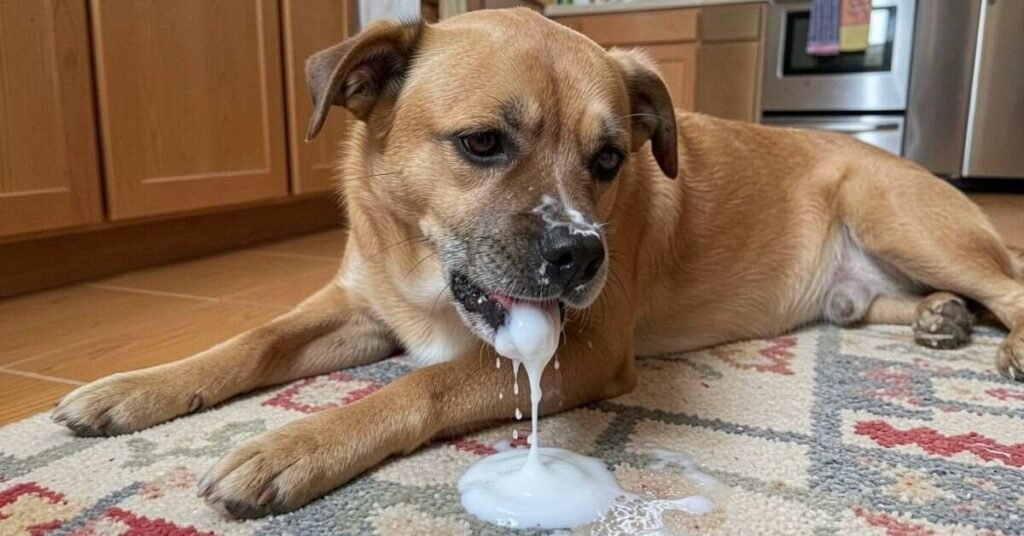
If your dog vomits white foam, it often means the stomach has little or no food inside. The white, frothy liquid is usually made from saliva and digestive fluids. This can happen after long gaps between meals.It may occur due to irritation inside the stomach.
Sometimes it is a small, short-term issue. Other times, it can signal a problem like acid buildup or mild inflammation. If your dog vomits once but acts normal, it may not be serious. If vomiting continues or your dog acts differently, take it seriously.
Is White Foam Vomit Normal or Serious?
White foam vomit is often normal, especially if it happens once in a while. Dogs can vomit foam when their stomachs are empty or after eating too fast. Puppies and older dogs may get it more often. In many cases, your dog acts normal and shows no other signs of illness.
Sometimes, white foam vomiting can be serious. Repeated vomiting, weakness, diarrhea, or loss of appetite may indicate a bigger problem. Conditions like stomach irritation, infections, or blockages need veterinary attention. Watching your dog closely helps you decide when to act.
| Situation | Signs | How Serious | What to Do |
| Occasional foam vomit | Dog is playful, normal appetite | Mild | Monitor at home, small meals |
| Early morning foam | Stomach empty | Mild | Feed smaller meals, offer water |
| After unusual food | Mild upset stomach | Moderate | Stop food causing upset, watch closely |
| Repeated vomiting | Weakness, lethargy | Serious | Contact vet immediately |
| Vomit with blood | Blood in foam or stool | Emergency | Go to vet or emergency clinic |
| Loss of appetite | Refuses food or water | Serious | Seek veterinary care quickly |
| Other symptoms | Diarrhea, vomiting, unusual behavior | Serious | Call vet, monitor closely |
Common Causes of Dog Vomiting White Foam
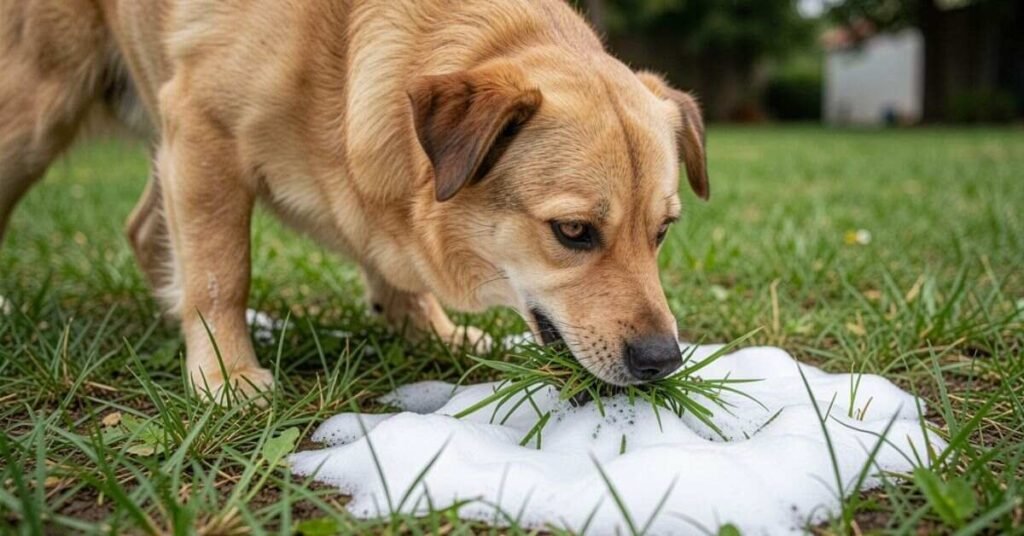
One common cause is an empty stomach. When your dog hasn’t eaten for a long time, stomach acids build up and can cause foamy vomit. Eating too fast or swallowing air while eating can also trigger it. Stress or excitement may make it worse.
Other causes include mild digestive upset, dietary changes, or eating something unusual. In some cases, it can be linked to infections, stomach irritation, or more serious health problems. Watching your dog’s behavior and noting patterns helps identify the cause.
Empty Stomach or Bilious Vomiting Syndrome
Bilious vomiting often happens when a dog’s stomach is empty for too long. The bile and stomach acid mix with saliva, creating white or yellow foam. This usually occurs early in the morning or late at night. Dogs may vomit once or a few times but act normal otherwise.
Feeding smaller, more frequent meals can help prevent this problem. It is usually not serious, but repeated vomiting should be watched closely. Some dogs may need a special feeding schedule or vet advice to manage it.
| Sign | Description | How Serious | What to Do |
| Vomiting in the morning | White or yellow foam after waking | Mild | Feed small breakfast, offer water |
| Late-night vomiting | Stomach empty overnight | Mild | Give small evening snack |
| Occasional vomit | Dog is playful and eating normally | Mild | Monitor at home |
| Repeated vomiting | Multiple times a day or night | Moderate | Adjust feeding schedule, call vet if needed |
| Loss of appetite | Refuses meals after vomiting | Serious | Contact vet promptly |
| Lethargy | Unusual tiredness or weakness | Serious | Seek veterinary care |
| Vomit with blood | Red or dark streaks in foam | Emergency | Go to vet immediately |
Indigestion, Gas, or Dietary Changes
Dogs can vomit white foam due to indigestion or gas. Eating too fast, overeating, or swallowing air can cause stomach upset. Sudden changes in diet or new treats can also trigger vomiting. Most of the time, it is mild and short-term.
Keeping your dog on a consistent diet and feeding schedule can help prevent these issues. Monitoring portion sizes and avoiding table scraps can reduce stomach problems. If vomiting continues or other symptoms appear, a vet visit may be needed.
| Cause | Signs | How Serious | What to Do |
| Eating too fast | Gurgling, foam vomit shortly after meals | Mild | Feed smaller, slower meals |
| Overeating | Vomiting, bloating, discomfort | Moderate | Reduce portion sizes, split meals |
| Swallowing air | Belching, foam vomit | Mild | Feed calmly, avoid excitement during meals |
| Sudden diet change | Vomiting, loose stools | Moderate | Introduce new food gradually over 5–7 days |
| New treats or table scraps | Foam vomit, mild upset | Mild | Limit treats, stick to dog-safe snacks |
| Gas buildup | Bloating, discomfort, foamy vomit | Moderate | Monitor, consider vet if persistent |
| Persistent vomiting | Repeated foam vomit, lethargy | Serious | Seek veterinary care immediately |
More Serious Medical Conditions
In some cases, white foam vomiting may point to a more serious illness. Problems like pancreatitis, kidney or liver disease, infections, or intestinal blockages can cause repeated vomiting. Your dog may also show signs like weakness, diarrhea, or refusing food and water.
Acting quickly is crucial when serious symptoms appear. A veterinarian can find the underlying cause and start proper treatment. Early care can prevent complications and help your dog recover faster.
- Vomiting that happens repeatedly over hours or days
- Foam mixed with blood or unusual colors
- Extreme tiredness or low energy
- Refusal to eat or drink
- Abdominal pain, bloating, or discomfort’
When to Worry About Dog Vomiting White Foam
You should worry if your dog vomits white foam often or repeatedly. Occasional vomiting may be normal, but frequent episodes can signal a problem. Watch for other symptoms like diarrhea, lethargy, or loss of appetite. These signs could mean something serious is happening inside your dog’s body.
Other warning signs include blood in the vomit, refusal to drink water, or unusual behavior. Puppies, older dogs, and dogs with existing health issues are at higher risk. Acting quickly and contacting a vet can prevent complications. Early care helps your dog recover faster and stay healthy.
What to Do If Your Dog Is Throwing Up White Foam
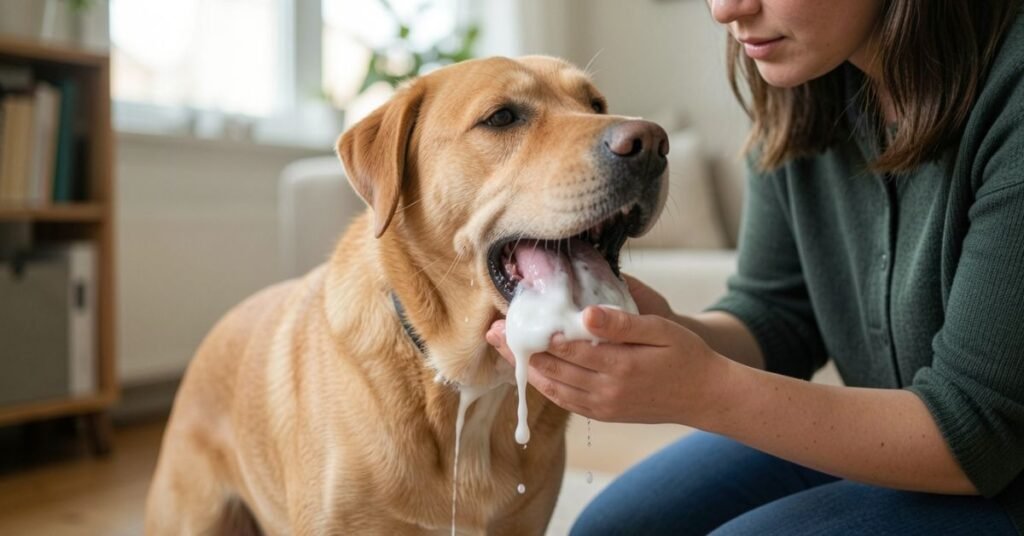
If your dog vomits white foam, stay calm and watch closely. Remove any food for a few hours to let the stomach settle. Make sure your dog has fresh water to prevent dehydration. Keep them in a quiet, comfortable area while monitoring their behavior.
You can also follow some simple steps at home, but call the vet if vomiting continues or other symptoms appear.
- Offer small sips of water, not large amounts at once
- Avoid feeding treats or human food immediately after vomiting
- Note the time, frequency, and appearance of vomit for the vet
- Keep your dog calm and stress-free
- Contact a veterinarian if vomiting repeats, contains blood, or your dog seems weak
At-Home Care for Mild Cases
If your dog vomits white foam occasionally but seems otherwise fine, you can try gentle care at home. Let their stomach rest by withholding food for a few hours. Always keep fresh water available to prevent dehydration.
When you reintroduce food, give small portions of bland meals like plain boiled chicken and rice. Keep your dog in a quiet, stress-free space and watch for any changes. If vomiting comes back or your dog seems unwell, contact your vet right away.
- Pause meals for 4–6 hours to settle the stomach
- Offer small sips of fresh water frequently
- Introduce bland food in tiny portions
- Maintain a calm and comfortable environment
- Track vomiting episodes and unusual behaviors for the vet
When to Call or Visit the Vet
You should contact a vet if your dog vomits white foam repeatedly or seems unwell. Other warning signs include lethargy, loss of appetite, or diarrhea. Puppies, older dogs, and dogs with existing health issues need extra attention. Quick action can prevent serious problems.
Sometimes foam vomiting comes with blood, bloating, or severe pain. These cases demand urgent care from a veterinarian.Even mild but persistent vomiting should be checked. Watching your dog closely and acting early can save their life.
| Situation | Signs | Urgency | What to Do |
| Single, mild vomiting | Dog acts normal | Low | Monitor at home, offer small bland meal |
| Repeated vomiting | Vomiting more than twice in a day | Moderate | Call vet for advice, keep hydrated |
| Vomit with blood | Red or dark streaks | High | Go to vet immediately |
| Lethargy | Weakness, low energy | High | Contact vet |
| Loss of appetite | Refuses food or water | High | Seek veterinary care |
| Bloating or abdominal pain | Distended stomach, discomfort | Emergency | Immediate vet visit |
| Other unusual signs | Trembling, vomiting with diarrhea | Emergency | Call or visit vet urgently |
How Veterinarians Diagnose and Treat the Problem
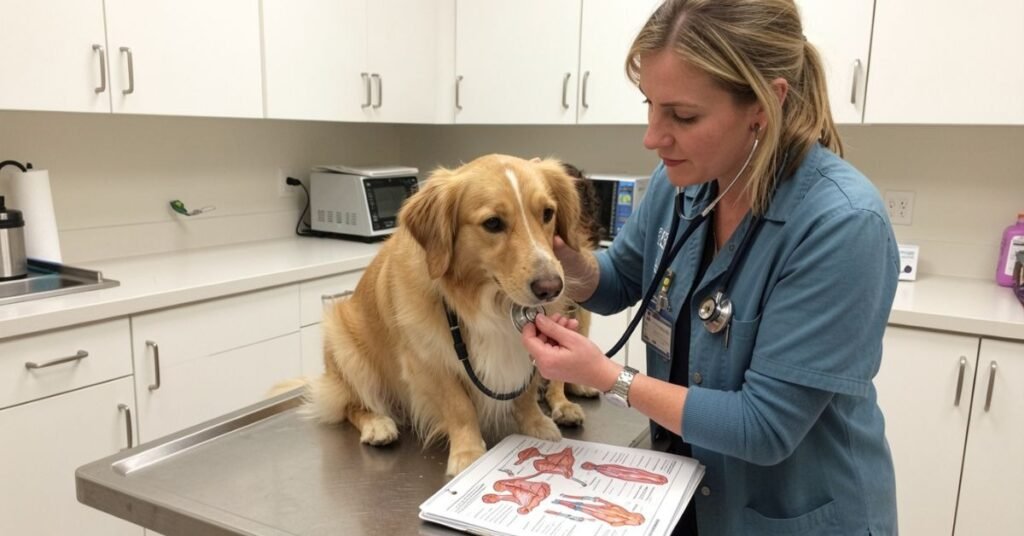
When your dog vomits white foam, a vet will first ask about symptoms and medical history. They may examine your dog’s stomach and check vital signs. Blood tests, urine tests, and X-rays can help find the cause. Early diagnosis is key to preventing serious complications.
Treatment depends on the underlying problem. Mild cases may need fluids, a special diet, or medications to calm the stomach. Serious conditions like infections, pancreatitis, or blockages may require stronger medications or surgery. Vets also give advice on home care and follow-up.
| Step | Purpose | What to Expect |
| Medical history | Understand patterns and prior health issues | Questions about meals, vomiting frequency, behavior |
| Physical exam | Check stomach, hydration, and overall health | Vet may palpate the abdomen and check temperature |
| Blood tests | Detect infections, organ problems, or dehydration | Sample taken from a vein, results in hours to days |
| Urine tests | Check kidney function and other conditions | Collect urine, lab analysis |
| Imaging (X-ray/ultrasound) | Look for blockages, tumors, or organ issues | Non-invasive scan, sometimes requires sedation |
| Medications | Reduce vomiting, acid, or infection | Prescribed based on diagnosis |
| IV fluids | Prevent dehydration | Administered in clinic if vomiting is severe |
| Surgery | Remove blockages or treat serious conditions | Only if tests show urgent need |
| Follow-up care | Monitor recovery and prevent recurrence | Vet may recommend diet changes and home monitoring |
Recovery and Home Management After Vomiting
After your dog stops vomiting, gentle care at home helps them recover. Start by offering small, bland meals such as boiled chicken and rice.Offer fresh water frequently in small amounts. Keep your dog calm and stress-free while their stomach heals.
Monitoring your dog during recovery is important. Watch for repeated vomiting, diarrhea, or unusual behavior. Adjust feeding schedules and avoid giving treats or table scraps. Follow your vet’s instructions for medications or diet changes to ensure full recovery.
| Step | How to Do It | Why It Helps |
| Small, bland meals | Feed 2–3 times a day in small portions | Prevents stomach overload and irritation |
| Fresh water | Offer in small sips frequently | Keeps your dog hydrated |
| Calm environment | Limit activity and loud noises | Reduces stress on the stomach |
| Monitor symptoms | Note vomiting, diarrhea, or behavior changes | Detects early signs of complications |
| Gradual diet reintroduction | Slowly return to regular dog food | Avoids sudden stomach upset |
| Medications | Give as prescribed by vet | Helps treat underlying issues and prevent recurrence |
| Avoid table scraps | Stick to dog-safe food | Prevents irritation or digestive problems |
| Follow-up vet visit | Check recovery progress | Ensures long-term health and early detection of problems |
How to Prevent Future Episodes of White Foam Vomiting
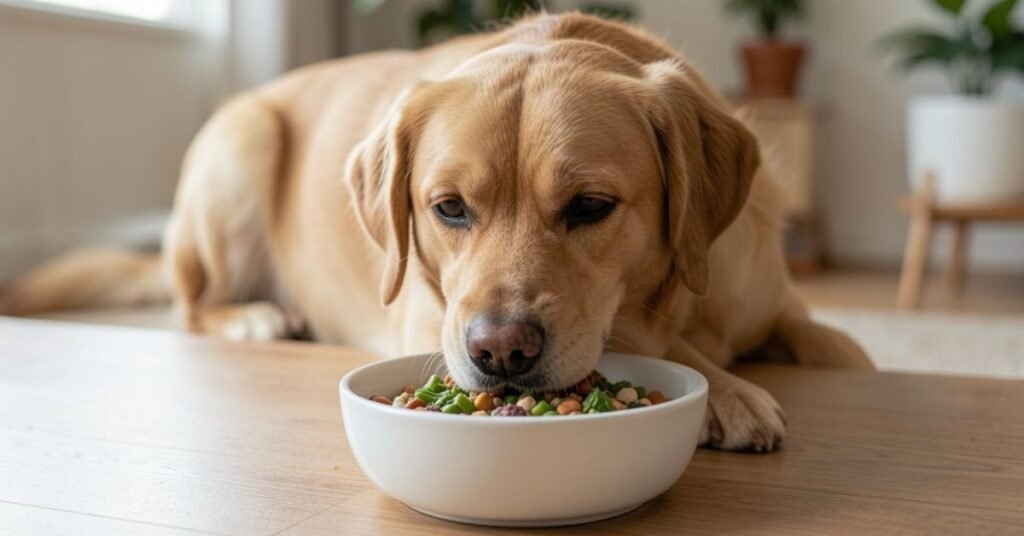
Keep your dog’s diet simple and consistent. Avoid giving human food or table scraps. Feed smaller meals more often instead of one large meal. Make sure fresh water is always available. Sudden diet changes can upset the stomach.
Watch your dog’s behavior and health closely. Limit access to trash or harmful objects. Regular exercise helps digestion. If your dog has allergies or sensitivities, follow your vet’s advice. Regular check-ups can catch problems early. This reduces the chance of vomiting episodes.
Conclusion
Pay close attention to your dog’s daily habits. Tiny signs, like unusual behavior or restlessness, can tell you something is off. Catching issues early keeps them safe and comfortable.
Stick to simple, gentle meals that won’t upset their stomach. Avoid sudden treats or rich foods. Fresh water and consistent feeding routines make a big difference.
Keep your dog active with walks and playtime. Movement helps digestion and lifts their mood. Protect them by removing anything that could be harmful around the house.
Visit the vet regularly, even when your dog seems fine. Early check-ups prevent bigger problems. With care, love, and attention, your dog can live a long, joyful, and healthy life.
FAQs
1. Why does my dog vomit white foam?
Dog Vomiting White Foam often happens when a dog’s stomach is empty or irritated. It may also be caused by eating too fast, stress, or mild digestive issues. If it happens often, a vet check is important.
2. Can diet changes prevent Dog Vomiting White Foam?
Yes. Feeding small, bland meals like boiled chicken and rice can help. Do not switch foods suddenly, and keep treats simple and low in fat. A regular feeding schedule also helps prevent Dog Vomiting White Foam.
3. When should I worry about Dog Vomiting White Foam?
If vomiting happens many times, lasts more than a day, or your dog seems weak, has diarrhea, or stops eating, contact a vet. Dog Vomiting White Foam in these cases may signal a serious problem.
4. How can I help my dog at home?
Offer small, bland meals and fresh water. Keep your dog calm and stop them from eating harmful items. Watch their behavior closely and note any changes.
5. Can exercise affect vomiting?
Yes. Gentle daily exercise helps digestion. Avoid heavy activity right after meals. A balanced routine of play and rest can reduce the chances of vomiting.

DogsVibes Editorial Team creates trusted, research-based dog care content to help pet owners keep their dogs healthy, happy, and safe.