


Introduction
Focal seizures in dogs are a type of seizure that affects only one part of the brain. Unlike generalized seizures, they don’t make your dog collapse, but they can cause unusual movements, behaviors, or small muscle twitches. These seizures can be confusing for dog owners because they often look like minor or strange behaviors.
Noticing a focal seizure early can make a big difference. Many dogs show subtle signs that are easy to miss, like staring, twitching, or sudden odd movements. By learning what to watch for, you can help your dog get timely care and prevent complications.
In this article, we will cover the most common signs of focal seizures, what causes them, and how they are treated. You will also learn what to do if your dog experiences one, so you can keep your furry friend safe and healthy.
What Are Focal Seizures in Dogs?

Focal seizures in dogs are seizures that affect only one part of the brain. They are different from full-body seizures, which involve the whole brain. During a focal seizure, a dog may have unusual movements, twitching, or strange behaviors in a specific part of the body. These seizures can be very brief, sometimes lasting just a few seconds or minutes.
Even though focal seizures are often mild, they should not be ignored. They can sometimes progress into larger, generalized seizures. Understanding these seizures helps dog owners spot them early. Early detection can make treatment easier and keep your dog safe.
How focal seizures differ from generalized seizures
Focal seizures start in one small area of the brain. Because of this, the signs usually affect only one part of the body. A dog may twitch on one side of the face, move one leg strangely, or suddenly stare into space. Many dogs stay conscious and may even respond to their name during the episode.
Generalized seizures involve the entire brain from the beginning. The dog often falls over, loses awareness, and has full-body shaking or stiff movements. These seizures are usually more intense and easier to recognize. Knowing the difference helps you describe the episode clearly to your veterinarian and get the right treatment plan.
Signs and Symptoms of Focal Seizures in Dogs

Focal seizures in dogs often cause small but unusual changes in behavior or movement. Only one part of the body may be affected, such as the face, one leg, or the mouth. Some dogs may stare, blink rapidly, twitch, or make chewing motions. These episodes are usually short and may last only a few seconds or minutes.
Because the signs can be mild, they are sometimes mistaken for normal behavior. A dog may suddenly act confused, anxious, or restless. Others may drool, vomit, or show repeated movements that seem out of place. Watching closely and noting these changes can help your veterinarian make the right diagnosis.
| Symptom Type | Common Signs | What It May Look Like |
| Motor (Movement) | Facial twitching | One side of the face moves or jerks repeatedly |
| Motor (Movement) | Leg jerking | One leg kicks or stiffens without control |
| Motor (Movement) | Lip smacking | Repeated chewing or licking motions |
| Motor (Movement) | Head turning | Head pulls or turns to one side |
| Autonomic (Body Function) | Drooling | Sudden excessive saliva |
| Autonomic (Body Function) | Vomiting | Throwing up without another clear cause |
| Autonomic (Body Function) | Dilated pupils | Eyes appear larger than normal |
| Autonomic (Body Function) | Rapid heart rate | Fast heartbeat during the episode |
| Behavioral | Sudden fear | Acting scared for no clear reason |
| Behavioral | Staring spells | Fixed gaze that does not respond to distraction |
| Behavioral | Confusion | Seeming lost or unaware for a short time |
| Behavioral | Repetitive actions | Pacing, circling, or snapping at the air |
| Sensory | Fly-biting behavior | Snapping at something invisible |
| Sensory | Sudden aggression | Unusual growling or snapping |
| Awareness | Alert but distracted | Dog seems awake but not fully responsive |
| Duration | Brief episodes | Usually lasts seconds to a few minutes |
Motor symptoms
Motor symptoms are physical movements that happen during a focal seizure. These movements usually affect only one part of the body. You may notice twitching, jerking, or stiff muscles on one side. Your dog might stay awake but seem unable to control that movement.
These signs can be brief and mild, so they are easy to miss. Some dogs repeat the same movement each time they have a seizure. Watching closely can help you describe the episode clearly to your vet.
Common motor symptoms include:
- Twitching on one side of the face
- Jerking of one leg
- Repeated lip smacking or chewing motions
- Head turning to one side
- Eyelid blinking or rapid eye movement
- Sudden stiffening of a small muscle group
Autonomic symptoms
Autonomic symptoms affect the body’s automatic functions. These are things your dog cannot control, like heart rate, digestion, or saliva production. During a focal seizure, you may notice sudden changes in these body functions. The signs can appear quickly and may stop just as fast.
These symptoms can be confusing because they may look like a stomach issue or stress. However, when they happen repeatedly or along with unusual behavior, they may point to a focal seizure. Paying attention to patterns can help your veterinarian understand what is happening.
Common autonomic symptoms include:
- Sudden drooling or excessive saliva
- Vomiting without a clear reason
- Dilated pupils
- Rapid breathing
- Fast heartbeat
- Loss of bladder or bowel control
Behavioral symptoms
Behavioral symptoms can look like sudden changes in your dog’s normal actions. During a focal seizure, your dog may act confused, scared, or distracted for a short time. These changes often come without warning and may stop quickly. Because the signs are subtle, many owners do not realize they are related to a seizure.
Some dogs may repeat the same unusual behavior during each episode. The dog might seem awake but not fully aware of what is happening. Watching for patterns can help you explain the behavior clearly to your veterinarian.
Common behavioral symptoms include:
- Staring into space
- Sudden fear or anxiety
- Snapping at the air (fly-biting behavior)
- Repetitive pacing or circling
- Unusual aggression
- Acting confused or disoriented
Causes of Focal Seizures in Dogs
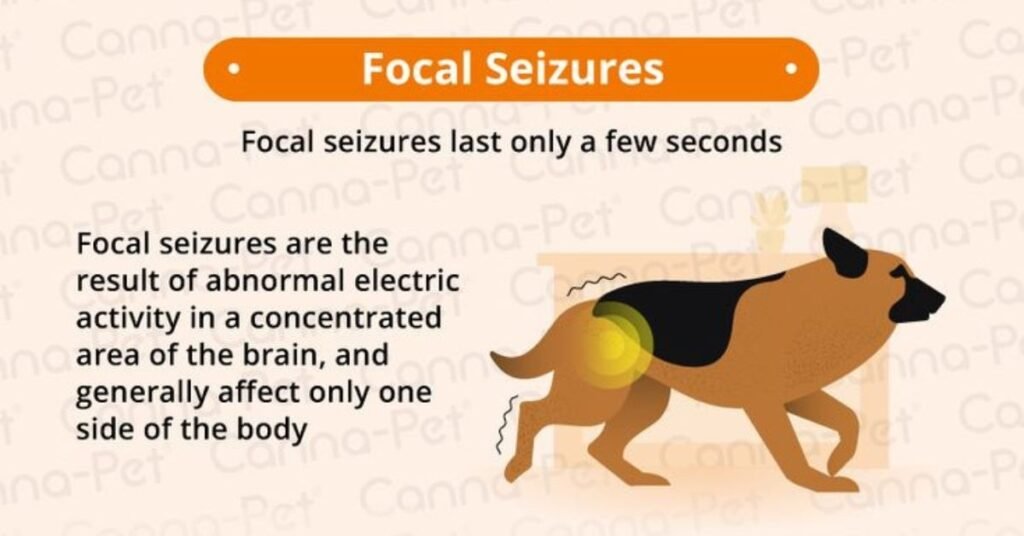
Focal seizures in dogs happen when there is abnormal electrical activity in one area of the brain. This can be caused by a structural problem, a medical condition, or sometimes an unknown reason. Some dogs are born with brain abnormalities. Others may develop seizures later because of illness or injury.
In many cases, the cause can be identified with proper testing. However, sometimes no clear reason is found, and the condition is called idiopathic epilepsy. Understanding the cause is important because it helps guide treatment and long-term care.
Possible causes include:
- Brain tumors
- Head trauma or injury
- Brain infections
- Congenital brain defects
- Liver disease or metabolic disorders
- Exposure to toxins
- Idiopathic epilepsy (unknown cause)
Congenital causes Vs Acquired causes
Congenital causes are conditions a dog is born with. These problems usually happen because the brain did not develop normally before birth. Dogs with congenital causes may show seizure signs at a young age.Genetics can also play a role in some cases.
Acquired causes develop later in life. They happen because of illness, injury, or exposure to harmful substances. A dog may be healthy for years and then suddenly begin having seizures. Finding out whether the cause is congenital or acquired helps the vet choose the right treatment plan.
| Feature | Congenital Causes | Acquired Causes |
| When it develops | Present at birth | Develops later in life |
| Age of symptoms | Often seen in puppies or young dogs | Can appear at any age |
| Main reason | Abnormal brain development | Injury, disease, or toxins |
| Genetic link | May be inherited | Usually not inherited |
| Brain structure | Brain may not form normally | Brain may be damaged after birth |
| Onset of seizures | May start early and continue | May begin suddenly |
| Common examples | Brain malformations, genetic disorders | Brain tumors, head trauma, infections |
| Prevention | Usually not preventable | Some causes can be prevented (avoiding toxins, injuries) |
| Treatment focus | Long-term management | Treat underlying cause when possible |
| Prognosis | Depends on severity | Depends on cause and early treatment |
Diagnosing Focal Seizures in Dogs

Diagnosing focal seizures begins with careful observation of your dog. The veterinarian will ask about what you saw, how long it lasted, and how often it happens. Keeping a video of the seizure can make it easier for the vet to understand what is going on.
A complete physical and neurological exam is usually the next step. Blood tests can help rule out other health issues. Sometimes imaging tests like MRI or CT scans are needed to check the brain. These steps help the vet figure out the cause and plan the right treatment for your dog.
How veterinarians determine the cause
Veterinarians use several steps to find out why a dog has focal seizures. They start by asking detailed questions about the dog’s health, age, and behavior during seizures. Observing the seizure directly or through a video helps them see exactly what is happening.
Next, the vet will run tests to check for underlying problems. These tests help rule out diseases or injuries that could cause seizures. Common steps include:
- Blood tests to check liver, kidney, and blood sugar levels
- Urine tests to detect infections or toxins
- Neurological exams to check brain and nerve function
- Imaging tests like MRI or CT scans to look for brain abnormalities
- Electroencephalogram (EEG) in some cases to measure brain activity
Treatment Options for Focal Seizures
Treatment for focal seizures in dogs depends on the cause and severity. Some dogs may only need monitoring if the seizures are mild. Others may require medications to control or reduce the episodes. The goal is to keep the dog safe and improve quality of life.
Common treatment options include:
- Anti-seizure medications prescribed by a veterinarian
- Special diets or supplements to support brain health
- Managing underlying health issues, like liver or kidney problems
- Avoiding triggers that may cause seizures
- Regular check-ups to adjust treatment as needed
Anti-seizure medications
Anti-seizure medications help control and reduce the number of seizures in dogs. They work by calming the overactive electrical activity in the brain. These medications do not always cure seizures, but they make them less frequent and less severe.
Your veterinarian will choose the right medication based on your dog’s age, breed, and health. Dogs may need regular blood tests to check how the medicine is working. It is important to give the medication exactly as prescribed and not skip doses. Over time, the vet may adjust the dose to keep your dog safe and comfortable.
Diet, supplements, and lifestyle adjustments
Diet, supplements, and lifestyle changes can help support dogs with focal seizures. A healthy diet keeps the brain and body strong. Some supplements may help reduce seizure frequency or improve overall brain health. Lifestyle adjustments, like reducing stress and avoiding triggers, can also make a difference.
These changes are not a replacement for medications but can improve quality of life. Consistency is important, and owners should work closely with their veterinarian to find the best plan for their dog.
| Area | Recommendations | How It Helps |
| Diet | High-quality, balanced dog food | Supports overall health and brain function |
| Diet | Diets rich in omega-3 fatty acids | May reduce inflammation and support brain health |
| Supplements | Fish oil or omega-3 capsules | Helps nerve and brain function |
| Supplements | Vitamins B and E | Supports nervous system health |
| Lifestyle | Reduce stress | Minimizes triggers that can cause seizures |
| Lifestyle | Keep a routine | Helps the dog feel safe and stable |
| Lifestyle | Avoid known toxins | Prevents seizures caused by harmful substances |
| Lifestyle | Regular exercise | Maintains physical health without overexertion |
| Monitoring | Track seizure frequency | Helps vet adjust treatment and detect triggers |
| Environment | Safe, calm space | Reduces risk of injury during a seizure |
Managing Focal Seizures at Home
Managing focal seizures at home starts with knowing the signs and being prepared. Keep track of when seizures happen, how long they last, and what your dog does during the episode. This information helps your veterinarian adjust treatment and care.
During a seizure, stay calm and keep your dog safe. Move any dangerous objects away and avoid touching their mouth. Do not try to restrain them. After the seizure, let your dog rest in a quiet, comfortable space. Regular monitoring, a safe environment, and following your vet’s advice can make a big difference in your dog’s quality of life.
Safety tips during a seizure
When your dog has a seizure, safety is the most important thing. Stay calm and focus on protecting your dog from injury. Keep other pets and children away until the episode ends. Most focal seizures are brief, but your dog may be confused or unsteady afterward.
Here are some safety tips you can follow:
- Move furniture or sharp objects away to prevent injury
- Do not try to hold or restrain your dog
- Avoid putting your hands near the dog’s mouth
- Time the seizure to share details with your veterinarian
- Speak softly and stay close to reassure your dog
- After the seizure, provide a quiet and comfortable space to rest
When to Call the Vet Immediately
You should call the vet right away if your dog has a seizure that lasts more than a few minutes. Long seizures can be dangerous and may require urgent care. Also, if your dog has repeated seizures in a short time, it is important to get help quickly.
Other reasons to call the vet immediately include injuries during a seizure, difficulty breathing, or unusual behavior after the episode. Even if the seizure stops on its own, contacting your veterinarian ensures your dog gets the right evaluation and treatment. Quick action can prevent complications and keep your dog safe.
Conclusion
Focal seizures in dogs can be scary for owners, but understanding them helps a lot. They usually affect only one part of the brain and may show as twitching, staring, or unusual behavior. Recognizing the signs early makes it easier to get help.
Knowing the difference between focal and generalized seizures is important. Focal seizures are often subtle, while generalized seizures affect the whole body. By paying attention to your dog’s behavior, you can describe the episodes clearly to your vet. This helps in finding the right treatment.
Treatment may include medications, diet changes, supplements, or lifestyle adjustments. At-home care and monitoring are also very important. Keeping a safe environment and tracking seizures can improve your dog’s quality of life.
Always work closely with your veterinarian. They can help determine the cause, suggest treatment, and guide you on managing seizures safely. With care and attention, most dogs with focal seizures can live happy and comfortable lives.
FAQs
1. What are focal seizures in dogs?
There is only one part of the brain affected by focal seizures. They may cause twitching, staring, unusual movements, or strange behavior in a small area of the body. Dogs usually stay awake and aware during these episodes.
2. How can I tell if my dog is having a focal seizure?
Signs include twitching of the face or limbs, sudden staring, lip smacking, or unusual repetitive movements. Keeping a video of the episode can help your veterinarian diagnose it.
3. What causes focal seizures in dogs?
They can be caused by congenital brain problems, injuries, infections, toxins, or idiopathic epilepsy (unknown cause). Sometimes genetics may also play a role.
4. Can focal seizures be treated?
Yes. Treatment may include anti-seizure medications, diet or supplement changes, and lifestyle adjustments. Early detection and proper care help reduce frequency and severity.
5. What should I do during a seizure?
Stay calm and keep your dog safe. Move dangerous objects away, do not touch their mouth, and provide a quiet space to rest afterward. Always contact your veterinarian if seizures are frequent or long-lasting.

DogsVibes Editorial Team creates trusted, research-based dog care content to help pet owners keep their dogs healthy, happy, and safe.